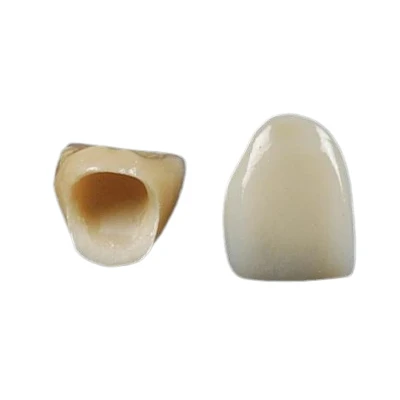
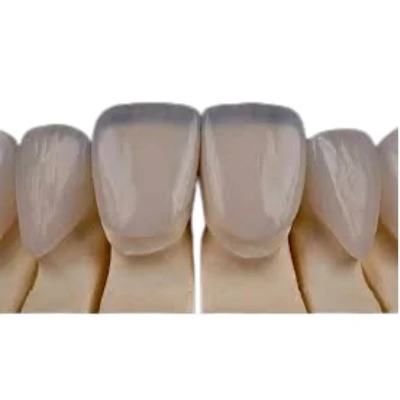
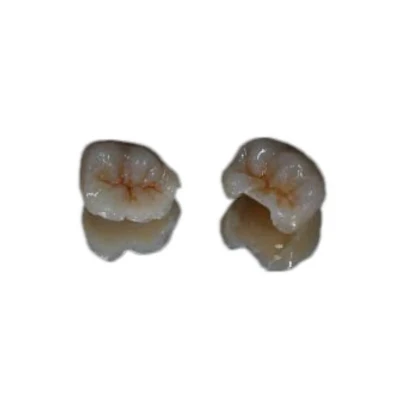
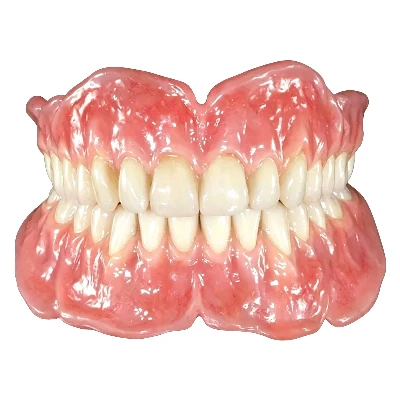


Dental labs do not charge one fixed price for a crown.
As a general market estimate, many permanent crown lab fees fall somewhere around $89 to $150+ per unit for standard cases. Simple temporary crowns may cost far less, while implant crowns, layered anterior crowns, rush cases, high-noble metal crowns, and complex bridges can cost more.
That number is not the same as what a patient pays at a dental clinic.
In the United States, a patient may pay $800 to $3,000+ for a dental crown. That total fee includes diagnosis, tooth preparation, impression or digital scan, chair time, cementation, clinic overhead, and the dentist's profit. The dental lab crown cost is only the manufacturing fee charged by the dental laboratory.
For dentists and dental labs, that distinction matters. A crown lab fee affects case profitability, remake risk, delivery speed, and how much chairside adjustment the dentist has to do before seating the crown.
A cheap crown is not always a low-cost crown.

Dental Lab Crown Cost vs Patient Crown Cost
A dental lab fee is the amount a dentist, clinic, or another dental laboratory pays to have a restoration manufactured. For a crown, this usually covers the design, material, production process, finishing, inspection, and packaging.
A patient crown cost is the final clinical fee charged to the patient. It is much broader.
|
Cost Type |
Who Pays It |
What It Usually Includes |
|
Dental lab crown fee |
Dentist, clinic, or dental lab |
CAD design, material, milling or pressing, sintering, staining, glazing, layering if needed, QC |
|
Patient crown cost |
Patient |
Diagnosis, tooth preparation, scan or impression, temporary crown, try-in, cementation, chair time, overhead, lab fee, profit |
|
Extra clinical procedures |
Patient |
Root canal, post and core, core build-up, X-rays, periodontal treatment, implant surgery |
This is why a zirconia crown that costs a clinic around $100 to $150 from a lab may still be part of a $1,200 clinical treatment plan for the patient. The dentist is not simply "marking up a crown." The clinical fee includes time, risk, facility cost, local labor, and professional responsibility.
From the lab side, the fee reflects a different set of realities: material selection, technician time, CAD/CAM workflow, finishing quality, remake policy, and communication. A full-contour posterior zirconia crown can move efficiently through a digital workflow. A single central incisor with custom shade, incisal translucency, and layered porcelain cannot be priced the same way.
The key is simple: patient price and lab fee are different cost categories. Mixing them together leads to bad pricing decisions.
Average Dental Lab Fees by Crown Type
Dental lab crown fees vary by country, case volume, material brand, workflow, and service level. Still, general fee estimates are useful because they give dentists and lab owners a baseline when comparing quotes.
The table below uses broad market-based estimates. These are not fixed prices, and they should not replace a case-specific quotation.
|
Crown Type |
General Lab Fee Estimate |
Main Cost Driver |
Typical Use |
|
Solid / monolithic zirconia crown |
$89–$139 |
CAD/CAM efficiency, zirconia grade, staining |
Posterior crowns, routine crowns, bridges |
|
IPS e.max / lithium disilicate crown |
$119–$129 |
Material handling, shade control, aesthetics |
Anterior crowns, single-unit cosmetic cases |
|
PFM crown |
$66–$93 |
Metal coping, porcelain layering, technician time |
Traditional cases, some bridges, posterior work |
|
Full gold / high noble crown |
$93 + metal cost |
Precious metal market price |
Molars, heavy occlusion, long-term durability |
|
PMMA temporary crown |
$16–$55 |
Temporary material, simpler finishing |
Provisional restorations, short-term use |
|
Implant crown / abutment-related case |
Often +$100–$300+ for components |
Ti-base, custom abutment, implant system, precision fit |
Implant restorations |
These numbers explain why one crown lab quote can look much cheaper than another. A $90 monolithic zirconia crown and a $180 layered anterior crown may both be "zirconia crowns," but they are not the same product.
One is mostly a digitally designed and milled restoration with controlled staining and glazing. The other may require more human judgment: cutback design, porcelain layering, value control, surface texture, and shade matching.
A crown lab quote is not just a material price. It is also a measure of technician time, process control, quality inspection, communication, and remake responsibility.
Why Crown Lab Fees Vary by Crown Type
Different crown materials behave differently in production. They also serve different clinical purposes. That is why a dental lab cannot price every crown as if it were the same unit.
Zirconia Crowns
A zirconia crown is a ceramic crown made from zirconium dioxide. It is widely used because it combines strength, biocompatibility, and compatibility with CAD/CAM production.
For many dental labs, monolithic zirconia is one of the most cost-efficient permanent crown options. A typical digital workflow may include STL file receiving, CAD design, nesting, milling, sintering, staining, glazing, and final inspection. When the case is a posterior full-contour crown, the process is predictable.
But zirconia is not one product.
A basic posterior monolithic zirconia crown is different from:
- a high-translucency anterior zirconia crown
- a layered zirconia crown
- a multi-unit zirconia bridge
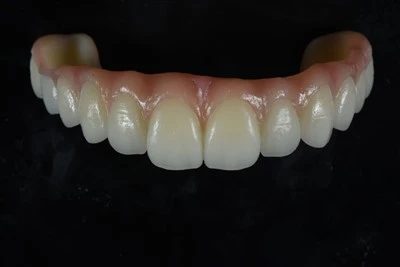
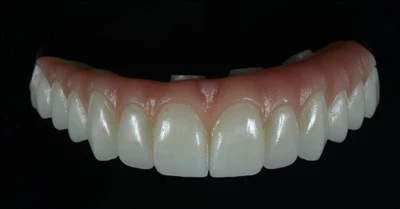
- a full-arch zirconia restoration
- a custom-stained crown for a demanding shade match
The lab fee rises when the case needs custom shade work, porcelain layering, incisal effects, gingival porcelain, or more detailed contouring.
For routine posterior cases, zirconia crown lab fees are usually easier to control. For anterior esthetic cases, the price depends much more on technician skill.
PFM and Metal-Ceramic Crowns
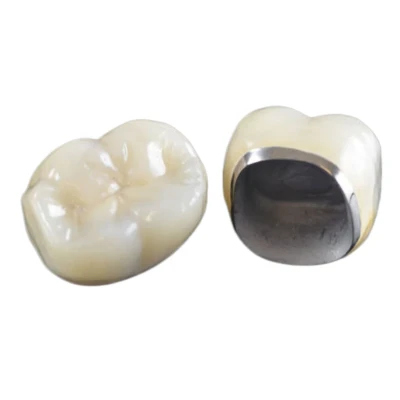
A PFM crown, or porcelain-fused-to-metal crown, has a metal substructure covered with porcelain. It has been used for decades because it offers strength and acceptable esthetics.
PFM crown lab cost depends on the alloy, metal coping design, porcelain layering, and finishing. Base metal and high-noble metal cases are not priced the same. Long-span bridges also add more work because fit, framework design, and porcelain support become more demanding.
PFM is less dominant than it once was in many digital workflows, but it still has a place. Some dentists prefer it for certain posterior cases, long bridges, or patients with heavy occlusion.
The limitation is also clear. PFM restorations may show a dark margin over time, and porcelain chipping can become a concern if framework support or occlusion is poor.
E.max and Lithium Disilicate Crowns
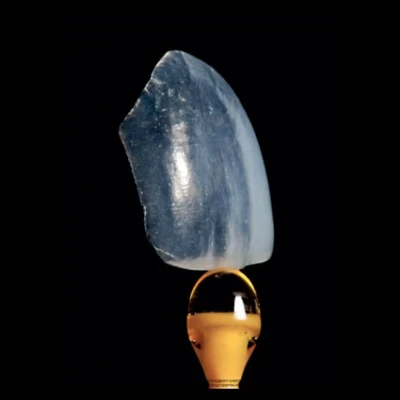
E.max is a lithium disilicate ceramic known for its translucency and esthetic performance. It is often chosen for anterior crowns, premolars, and single-unit cosmetic restorations.
The cost of an E.max crown is not only about the ceramic block or ingot. The real cost is shade control.
A single anterior E.max crown may require careful management of:
- stump shade
- translucency
- incisal halo
- surface texture
- value and chroma
- final glaze or polish
This is why E.max crown lab fees often sit above basic posterior zirconia fees. The material itself matters, but the technician's eye matters more.
A crown that looks acceptable on a model can still fail clinically if it is too gray, too bright, too opaque, or too flat next to natural teeth.
Implant Crowns
An implant crown is a restoration supported by a dental implant rather than a natural tooth. It may be screw-retained, cement-retained, or connected through a Ti-base or custom abutment.
Implant crown lab fees are usually higher than regular crown fees because the case involves more than a crown shape.
The lab may need to manage:
- implant system compatibility
- scan body data
- Ti-base selection
- custom abutment design
- screw access channel position
- emergence profile
- soft tissue contour
- occlusal load
- passive fit
The abutment or implant component cost is often quoted separately. That is why comparing an implant crown to a standard tooth-supported crown by unit price alone is misleading.
A regular crown needs good margins. An implant crown needs good fit, correct component matching, proper emergence, and controlled occlusion. The risk profile is different.
Temporary Crowns and Special Cases
Temporary crowns, often made from PMMA or resin, cost much less than permanent crowns because the material and finishing requirements are different. A temporary crown is not expected to provide the same long-term strength, shade stability, or wear resistance.
Special cases need separate pricing. Full-mouth reconstruction, long-span bridges, diagnostic wax-ups, gingival porcelain, and complex bite changes cannot be treated like simple single crowns.
If a case requires 12 units, vertical dimension changes, implant integration, and multiple try-ins, the lab fee is no longer just "price per crown." It becomes a case planning and production fee.

Key Factors That Affect Dental Crown Lab Pricing
Material matters, but it is only one part of the price.
Two dental labs can quote different fees for the same crown type because they are not necessarily including the same work, same materials, or same service responsibility.
Material Grade and Brand
Zirconia blocks, lithium disilicate systems, porcelain powders, alloys, stains, and glazes all have different cost levels. A standard opaque zirconia for a posterior molar does not cost the same as a high-translucency zirconia selected for an anterior case.
Metal pricing is even more variable. Gold and high-noble alloys depend on market prices, so the final fee may include a base production fee plus metal cost.
For dentists comparing crown lab pricing, "zirconia crown" is not enough information. The lab should be able to explain what kind of zirconia is being used and why it fits the case.
Case Complexity and Esthetic Requirements
A single lower molar crown is usually straightforward. A maxillary central incisor is not.
Anterior cases require more control over value, texture, translucency, line angles, and shade transition. Bridge cases require connector design, path of insertion, occlusal balance, and framework strength. Full-mouth cases require even more planning.
The more the crown depends on human esthetic judgment, the more technician time it requires.
This is where low prices often become risky. If a lab quotes every crown at the same fee, regardless of anterior esthetics, custom shade, or bridge span, something is being compressed: time, material, inspection, or remake support.
Digital Workflow and CAD/CAM Production
A digital dental lab workflow means the lab can receive digital scan files, design restorations in CAD software, manufacture them through milling or printing, and finish them through controlled production steps.
A typical digital crown workflow may include:
- Receiving STL, PLY, or OBJ files
- Checking scan quality and margins
- CAD design
- Nesting
- Milling
- Sintering or crystallization
- Staining and glazing
- Contact, margin, and occlusion inspection
- Packing and shipping
Digital production can reduce manual error and improve consistency, but it does not automatically make a crown cheap. A poorly designed digital crown is still a poor crown.
The real advantage of CAD/CAM is repeatability. When a lab has a stable workflow, the dentist can expect more consistent fit, contact, occlusion, and turnaround time.
Turnaround Time, Remakes, and Service Level
Rush cases cost more because they disrupt production planning. A 3-day turnaround is not the same as a 7- or 10-day workflow. The lab may need to prioritize design, milling, sintering, finishing, and shipping in a compressed schedule.
Remake policy also affects pricing.
A lab that offers clear remake handling, case communication, and quality control is carrying more service responsibility than a lab that only manufactures and ships. That support has value, especially for overseas outsourcing where communication and logistics need to be managed carefully.
A lab with a clear remake policy and stable quality control may not be the lowest-priced option, but it can be the lower-risk option.
Order Volume and Long-Term Cooperation
Stable order volume usually helps lower the average cost per unit. When a dentist or local dental lab sends consistent crown cases, the production team can standardize preferences for occlusion, contacts, shade, anatomy, and margin design.
That is where long-term outsourcing becomes more efficient.
The best pricing usually comes when both sides are clear about:
- material selection
- turnaround time
- prescription format
- design preferences
- remake responsibility
- shipping schedule
- communication channel
A one-time crown quote tells you the unit price. A long-term lab relationship tells you the real cost.
Local Dental Lab vs Overseas Dental Lab: Why Prices Differ
Local dental labs and overseas dental labs often have different cost structures.
A local lab may offer faster physical case pickup, easier chairside communication, and direct access for shade appointments. It may also have higher labor cost, rent, insurance, and operating expenses.
An overseas dental lab, especially a digital dental lab in China, may reduce unit cost through production scale, CAD/CAM workflow, technician specialization, and higher equipment utilization. When cases are digital, the distance becomes less of a barrier because the file can be sent instantly.
The price difference is not only about labor.
A well-organized overseas dental lab can control cost through:
- centralized CAD design teams
- milling center production
- batch sintering
- standardized staining and glazing steps
- dedicated QC technicians
- stable shipping schedules
- case management systems
- experience with repeat overseas clients
But overseas outsourcing only works when the lab is organized. A low price without communication, consistent fit, remake support, or delivery discipline will create problems for the dentist.
The value of a China digital dental lab is not only a lower unit fee. It is the ability to deliver predictable crown production at scale.
For overseas dentists and dental labs that need regular crown production, this matters. If the lab can handle zirconia crowns, implant crowns, bridges, and custom restorations with consistent workflow, the savings are not only in the crown fee. They are also in fewer delays, fewer adjustments, and better production capacity.
Why the Cheapest Crown Lab Fee Is Not Always the Best Deal
There is nothing wrong with a competitive crown lab fee.
The problem is a low fee without stable fit, shade control, communication, and remake responsibility.
A very cheap crown can become expensive when it causes:
- open margins
- tight or weak contacts
- unstable occlusion
- shade mismatch
- excessive chairside adjustment
- porcelain chipping
- remakes
- delayed delivery
- patient complaints
- extra staff communication
For a dental practice, the real cost of a crown is not only the lab bill. It also includes chair time, patient return visits, schedule disruption, staff coordination, and reputation risk.
A dentist may save $20 on a crown lab fee, then lose 30 minutes adjusting contacts and occlusion. That is not a saving. It is a cost transfer from the lab invoice to the dental chair.
The same applies to local dental labs that outsource production. If outsourced crowns come back inconsistent, the local lab must absorb the communication burden, remake pressure, and customer dissatisfaction.
A low lab fee only makes business sense when the crown seats smoothly, matches the prescription, and does not create extra chairside work.
That is why serious buyers do not choose a crown lab by price alone. They compare the total effect on workflow, remake rate, delivery, and customer trust.
How to Compare Crown Lab Quotes Before Choosing a Partner
A crown lab quote should be read like a production agreement, not just a price list.
Before choosing a dental lab outsourcing partner, dentists and lab owners should check what the price includes and what is charged separately.
Check What Is Included in the Price
Ask direct questions before comparing unit fees:
- Is CAD design included?
- Is model work included?
- Are staining and glazing included?
- Is porcelain layering included or extra?
- Are custom shades priced separately?
- Are implant components quoted separately?
- Is shipping included?
- What is the remake policy?
- Is case consultation included?
- Are rush cases charged differently?
Two labs may both quote a "zirconia crown," but one fee may include staining, glazing, QC, and remake support, while the other may only cover basic production.
A transparent quote is easier to work with than a cheap quote full of unclear add-ons.
Ask About Materials, Workflow, and Quality Control
A reliable dental lab should be able to explain its crown production workflow. It does not need to reveal every internal detail, but it should be able to answer practical questions.
Ask:
- What zirconia or ceramic materials are available?
- How are margins checked?
- How are contacts and occlusion inspected?
- How are shades managed?
- Can the lab receive STL, PLY, or OBJ files?
- What happens if scan data is unclear?
- Is there a final QC step before shipping?
- How are implant components selected and verified?
These questions quickly separate a production partner from a price seller.
If a lab cannot explain how it controls fit and consistency, the low fee is not enough reason to trust it with regular cases.
Start With Trial Cases Before Bulk Orders
Trial cases are useful because they test the real workflow.
A good trial should include different case types, not just the easiest posterior crown. For example:
- one posterior monolithic zirconia crown
- one anterior esthetic crown
- one small bridge
- one implant crown if implant work is part of your regular demand
During trial cases, evaluate the details that affect daily work:
- fit
- margins
- proximal contacts
- occlusion
- shade
- anatomy
- communication speed
- turnaround time
- remake handling
Bulk pricing only matters after the lab proves it can produce consistently.
Compare Total Cost, Not Only Unit Price
The cheapest quote is not always the most cost-effective quote.
A slightly higher unit fee can be cheaper in the long run if it reduces remakes, chairside adjustments, delivery problems, and patient complaints. This is especially true for dentists and local dental labs that rely on stable production every week.
For overseas dentists and dental labs, working with a China digital dental lab can be a practical way to control crown costs while keeping production stable. ADS dental laboratory Ltd supports long-term outsourcing for custom restorations, including zirconia crowns, implant crowns, bridges, and other digital cases.
The goal is not only to reduce the unit crown lab fee. The better goal is to make cost, quality, communication, and turnaround more predictable.

Conclusion
Dental labs may charge around $89 to $150+ per unit for many standard permanent crowns, but the real answer depends on material, case complexity, esthetic demand, implant components, turnaround time, and service level.
The right crown lab is not always the cheapest one. It is the one that helps you control total cost through stable fit, predictable communication, clear pricing, and consistent delivery.
ADS dental laboratory Ltd is a China digital dental lab supporting overseas dentists and dental labs with long-term outsourcing for custom dental restorations . If you need stable crown production for zirconia crowns, implant crowns, bridges, or other digital cases, contact us to discuss your case requirements and pricing.

FAQ
How much does a dental lab charge for a zirconia crown?
As a general estimate, solid or monolithic zirconia crown lab fees often fall around $89 to $139 per unit for standard cases. The fee can increase for high-translucency zirconia, anterior crowns, custom staining, layered porcelain, bridges, rush turnaround, or special design requirements.
A posterior monolithic zirconia crown and an anterior layered zirconia crown should not be priced as the same product.
Are dental lab fees the same as patient crown costs?
No. Dental lab fees are manufacturing charges paid to the lab. Patient crown costs are clinical fees paid to the dental practice.
A patient may pay $800 to $3,000+ for a crown in the U.S., but that includes clinical care, dentist time, overhead, cementation, local operating cost, and profit. The lab fee is only one part of that total.
Why are implant crowns more expensive than regular crowns?
Implant crowns require more components and more precision. The lab may need to work with a scan body, Ti-base, custom abutment, screw access channel, emergence profile, and implant system compatibility.
The abutment or implant component cost is often charged separately. That is why an implant crown lab fee is usually higher than a standard tooth-supported crown.
Are overseas dental labs cheaper for crowns?
Often, yes. Overseas dental labs may offer lower crown production costs because of scale, labor structure, digital workflow, and specialized production teams.
But price alone is not enough. Dentists and local labs should also check material quality, communication, turnaround time, shipping, remake policy, and quality control. A cheap overseas lab with poor consistency can cost more than it saves.
How can dentists reduce crown lab costs without lowering quality?
Dentists can reduce crown lab costs by using digital scans, sending clear prescriptions, standardizing material choices, giving complete shade information, avoiding unnecessary rush cases, and building long-term relationships with reliable labs.
For regular crown production, consistency matters more than chasing the lowest quote for every case.
Is the lowest crown lab fee always the best choice?
No. The lowest crown lab fee is only valuable if the crown fits, looks right, arrives on time, and does not create extra chairside work.
A crown that needs repeated adjustment, remake, or patient return visits is not cheap. It is just underpriced at the invoice level and expensive in daily practice.