


Dental lab profit margins are under pressure from several directions at once: higher labor costs, material price changes, CAD/CAM equipment investment, remake costs, faster turnaround expectations, and stronger price competition.
For many dental labs, the problem is not a lack of cases. The problem is that too many cases do not leave enough profit after technician time, materials, remakes, shipping, equipment, software, and overhead are counted.
A lab can grow revenue and still feel cash-strapped.
That is why improving dental lab profit margins requires more than "getting more dentists" or "charging more." It requires a clearer view of which cases make money, which workflows waste time, and which production steps should stay in-house or be outsourced.

How Can Dental Labs Improve Profit Margins?
Dental labs can improve profit margins by increasing the value of each case, pricing services based on true production costs, reducing remakes, improving CAD/CAM and digital workflows, controlling material and inventory waste, improving labor scheduling, tracking key performance indicators, and outsourcing selected restorations to a reliable dental lab partner.
For many overseas labs, working with a China dental laboratory can help reduce fixed overhead, expand production capacity, and support long-term profitability without immediately hiring more technicians, buying more machines, or expanding workspace.
The goal is not simply to cut costs.
The goal is to protect restoration quality while making production more profitable.
What Are Dental Lab Profit Margins?
A dental lab profit margin is the percentage of revenue that remains as profit after costs are deducted. In a dental laboratory, those costs usually include materials, technician labor, equipment, rent, software, shipping, remakes, administration, and customer service.
Profit margin is not the same as revenue.
A lab processing 1,000 cases per month may look healthy from the outside, but if many of those cases are underpriced, rushed, remade, or produced with overtime labor, the actual margin may be weak.
A smaller lab with fewer cases can sometimes be more profitable if it focuses on higher-value restorations, controls remakes, and manages technician time well.
Gross Profit Margin vs. Net Profit Margin
Gross profit margin refers to the revenue left after direct production costs, such as materials and direct labor, are deducted.
Net profit margin refers to what remains after all business expenses are included, such as rent, salaries, machine maintenance, software subscriptions, shipping, marketing, taxes, and administration.
For dental lab owners, net profit margin is often the more useful number because it shows whether the business is truly profitable after the full cost of running the lab is counted.
A zirconia crown may look profitable if only the zirconia disc and basic technician time are counted. But once scanning, CAD design, milling, sintering, staining, glazing, quality control, packing, remake risk, and customer communication are included, the real margin may look different.
Profit margin varies by country, lab size, product mix, labor cost, equipment investment, and client type. A small removable lab, a full-service crown and bridge lab, and a digital implant-focused lab will not have the same cost structure.
The first step is knowing which margin you are measuring.
Why Dental Lab Profit Margins Are Under Pressure
Most dental labs face the same basic challenge: production has become more technical, but customers still expect competitive pricing and fast delivery.
A lab owner now has to manage technician capacity, CAD/CAM systems, 3D printers, milling machines, implant components, shade communication, digital files, logistics, and customer service. Each part adds cost if it is not controlled.
Labor, Material, and Equipment Costs
Labor remains one of the largest costs in a dental laboratory. Skilled technicians are not easy to replace. Training takes time. Overtime becomes expensive. When a senior ceramist or implant technician leaves, the cost is not only salary replacement. It also affects quality consistency, turnaround time, and client confidence.
Material costs also affect margins directly. Zirconia discs, lithium disilicate blocks, PMMA, resins, alloys, implant parts, denture teeth, and stains all carry cost pressure. Waste from poor nesting, wrong shade selection, remakes, or expired inventory can quietly reduce profit.
Then there is equipment.
CAD/CAM systems, milling machines, sintering furnaces, 3D printers, scanners, design software, nesting software, and dust collection systems can improve productivity. But they also create fixed costs: purchase price, maintenance, subscriptions, repairs, calibration, training, and depreciation.
Digital technology can improve margins only when the lab has enough suitable cases to keep the equipment productive.
Buying a second milling machine may make sense for a lab running full schedules every day. It may hurt a lab that only needs extra capacity during short peak periods.
Remakes, Delays, and Hidden Operational Costs
Remakes are one of the most damaging hidden costs in dental labs because they consume technician time, materials, shipping resources, communication effort, and client trust at the same time.
A remake is rarely just "one more crown."
It can involve reviewing the original file, contacting the dentist, checking photos, redesigning the restoration, milling again, sintering again, staining again, shipping again, and explaining the delay.
Common remake causes include:
- unclear margin lines
- poor scan quality
- incomplete implant information
- shade mismatch
- contact or occlusion issues
- wrong material selection
- communication gaps between the clinic and lab
Even a small remake rate can damage profitability if the lab is working on tight margins.
Delays create similar pressure. When cases pile up before delivery dates, labs may rely on overtime, rushed finishing, or expensive shipping. The case may still go out, but the margin is already reduced.
More Case Volume Does Not Always Mean More Profit
Higher case volume can increase revenue, but it does not automatically improve dental laboratory profitability.
If a lab accepts too many low-margin cases, depends on overtime, or has a high remake rate, more cases may create more pressure rather than more profit.
This is a common trap.
A lab adds new dentists, increases monthly case volume, and feels busier than ever. But technicians are overloaded, remakes increase, machines run late, delivery deadlines become tighter, and the owner sees little improvement in net profit.
Growth is only useful when the workflow can absorb it.
A profitable lab does not chase every case. It knows which cases fit its production strengths, which clients are worth the time, and which products create healthy margins.

Key Factors and KPIs That Affect Dental Laboratory Profitability
Dental laboratory profitability is affected by three groups of factors: revenue quality, cost control, and production efficiency.
Revenue quality comes from pricing, case type, product mix, client quality, and value-added services. A lab producing implant restorations, custom abutments, veneers, and premium zirconia cases may have a different profit profile than a lab competing mainly on basic single crowns.
Cost control includes labor, materials, rent, equipment, software, shipping, remakes, and inventory. These costs must be tracked by case type where possible, not only at the end of the month.
Production efficiency covers technician hours, digital workflow, turnaround time, remake rate, equipment use, and outsourcing performance.
The lab needs numbers, not guesses.
Dental Lab Profitability KPI Table
|
KPI |
Why It Matters |
|
Labor hours per case |
Shows whether technician time is being used efficiently |
|
Labor cost as % of revenue |
Helps identify whether staffing cost is too high for current pricing |
|
Material cost per case |
Reveals waste, pricing issues, and supplier cost pressure |
|
Remake rate |
Measures hidden quality, communication, and workflow problems |
|
Turnaround time |
Affects capacity, client satisfaction, and order flow |
|
On-time delivery rate |
Shows whether the lab can meet commitments consistently |
|
Profit by restoration type |
Identifies high-margin and low-margin products |
|
Equipment utilization rate |
Shows whether CAD/CAM and 3D printing investments are producing enough output |
|
Outsourced case success rate |
Helps measure whether outsourcing is improving or hurting profitability |
Dental labs cannot improve what they do not measure. Tracking labor hours, material costs, remake rates, turnaround time, and profit by restoration type helps owners see which cases are profitable and which workflows are reducing margins.
A lab may find that single-unit zirconia crowns are profitable only at certain volumes, while implant bridges require more communication but deliver better margin. Another lab may discover that denture repairs are profitable because they are fast, while low-priced rush crowns are hurting technician capacity.
The point is not to track every possible number.
The point is to track the numbers that change decisions.
Strategies to Boost Earnings in a Dental Lab
Increasing dental lab earnings does not always mean increasing case volume. It often means improving the value of the cases already coming through the lab.
A lab should ask: Which services deserve better pricing? Which products create strong margins? Which clients send complete information and pay on time? Which cases use too much technician time for too little return?
Review Pricing Based on True Case Costs
Dental lab pricing should reflect the real cost of production, not only the market average.
A crown price should account for material, design time, milling time, sintering, finishing, staining, quality control, packing, communication, remake risk, and delivery requirements. If the case requires rush service, complex shade work, or implant components, the price should reflect that.
Many labs lose margin because they keep old pricing while costs rise around them.
A price list created three years ago may not reflect today's zirconia costs, software fees, technician wages, shipping fees, or remake rates. Even a small annual price review can protect margins better than waiting until the lab is already under pressure.
Pricing should also separate simple cases from complex ones. A standard posterior zirconia crown and a screw-retained implant crown do not carry the same production risk or communication burden.
They should not be priced as if they do.
Focus on High-Margin Restorations and Product Mix
Product mix has a direct effect on dental lab profit margins.
High-volume basic crowns can be profitable when production is efficient and remake rates are low. But a lab that relies only on low-priced commodity work may struggle when labor and material costs rise.
Many labs improve earnings by increasing the share of higher-value restorations, such as:
- implant crowns and bridges
- custom abutments
- premium zirconia crowns
- E.max restorations
- veneers
- digital dentures
- night guards
- complex esthetic anterior cases
The right product mix depends on the lab's skills, equipment, and client base. A lab should not add premium services without the technical ability to support them. Poorly executed high-value work leads to expensive remakes and damaged relationships.
But when the skills and workflow are in place, higher-value cases can raise average revenue per case without requiring the same increase in case count.
Offer Value-Added Services to Avoid Low-Price Competition
Competing only on price is a weak position for most dental labs.
Value-added services help a lab become harder to replace. These may include digital case planning, implant planning support, custom shade consultation, digital smile design, rush case handling, chairside communication support, or design previews for selected cases.
A dentist may tolerate a slightly higher lab fee if the lab reduces chairside adjustment, communicates clearly, and delivers consistent results.
This matters because dental practices do not only buy restorations. They buy reduced chair time, fewer patient complaints, predictable fit, and dependable delivery.
The most profitable dental labs are not always the labs with the highest case volume. They are often the labs that understand which restorations, clients, and services generate the strongest margin.

Strategies to Reduce Dental Lab Costs Without Sacrificing Quality
Cost reduction in a dental lab should not mean using poor materials, rushing technicians, or lowering quality standards. That approach usually creates remakes and damages the lab's reputation.
Better cost control means reducing waste.
Reduce Remakes Through Stronger Quality Control
Reducing remakes is one of the fastest ways to protect margins.
A strong quality control process should begin before production, not only at final inspection. Labs should check scan quality, margin clarity, bite records, shade photos, implant system details, material selection, and special instructions before the case enters production.
For digital cases, file review is especially important. A poor scan, missing opposing arch, unclear margin, or incomplete implant scan body information can lead to downstream problems.
Key QC checkpoints may include:
- incoming file check
- CAD design review
- margin and contact check
- occlusion check
- shade and photo review
- implant component verification
- final fit and surface inspection
A remake prevented before milling costs far less than a remake discovered after delivery.
Improve CAD/CAM and Digital Workflow Efficiency
CAD/CAM dental lab workflows can reduce labor time and improve consistency when used correctly. Digital impressions, CAD design, milling, 3D printing, and digital case tracking can shorten production steps and reduce manual errors.
But digital workflow does not automatically solve a profit problem.
A lab can own good equipment and still lose money if files are poorly organized, technicians repeat the same corrections, machines sit idle, or design standards vary from one technician to another.
The benefit comes from process control: clear file naming, standard design parameters, organized nesting, calibrated machines, consistent material selection, and repeatable finishing protocols.
3D printing can also reduce cost in the right use cases, such as models, surgical guides, denture bases, custom trays, and certain temporary restorations. But resin handling, printer maintenance, post-curing, cleaning, and staff training must be included in the cost calculation.
Digital tools improve profit when they reduce rework and technician hours per successful case.
Optimize Procurement, Inventory, and Supplier Contracts
Material cost is not only about the price of a zirconia disc or resin bottle.
Inventory waste also hurts margins. Overstock ties up cash. Expired materials create loss. Shortages delay production. Too many material systems increase training burden and error risk.
Labs should review material usage by product type and compare it against case volume. If certain shades, blocks, discs, or implant parts sit unused for months, the inventory system may be too loose.
Supplier negotiation also matters. Better pricing, bulk purchase terms, payment terms, and reliable delivery can all improve cost control. Some labs benefit from grouping purchases or reducing the number of suppliers to gain better terms.
The best purchasing system is not always the cheapest one. It is the one that supports consistent quality, predictable delivery, and lower waste.
Improve Labor Scheduling and Technician Productivity
Labor scheduling has a direct effect on dental lab costs.
If the lab overstaffs during slow periods, labor cost rises. If it understaffs during peak periods, overtime and errors increase. If senior technicians spend too much time on simple tasks, high-value production slows down.
Scheduling should match case volume, case complexity, and technician skill level.
For example, basic digital crown design may be assigned to trained CAD technicians under review, while complex implant or anterior esthetic cases stay with senior technicians. Finishing, staining, printing, and packing can also be arranged based on daily production flow rather than habit.
Dental labs do not only need more technicians; they need better use of technician hours. Better scheduling, training, workflow standards, and outsourcing support can reduce labor waste without sacrificing quality.
How Outsourcing Dental Lab Work Can Improve Profit Margins
Outsourcing dental lab work can improve profit margins when it is used as a production strategy, not as a desperate search for the lowest unit price.
The strongest value of outsourcing is cost flexibility.
A lab can keep its core strengths in-house while sending selected restorations or production stages to a trusted partner. This can help manage peak demand, reduce labor pressure, and avoid large equipment purchases before the lab is ready.
Convert Fixed Production Costs into Variable Costs
Outsourcing helps dental labs convert part of their fixed production cost into variable cost.
Instead of hiring more technicians, buying new machines, expanding workspace, or adding more software seats, labs can outsource selected restorations and pay based on actual case volume.
This is especially useful when demand is uneven.
A lab may have heavy crown and bridge demand during some months and slower production during others. If the lab hires permanently for peak volume, labor cost remains during slow periods. If it buys extra equipment for temporary demand, depreciation continues even when the machine is underused.
Outsourcing gives the lab another option: increase capacity without permanently increasing overhead.
Scale Production Without Overexpanding
Scaling production can improve margins only when demand, workflow, staffing, and equipment use are under control.
Blind expansion can do the opposite.
A lab that adds machines, benches, technicians, and floor space too quickly may increase fixed costs faster than revenue. If case volume drops, those costs remain. If new technicians are not trained well, quality becomes less stable.
Outsourcing selected case types can be a lower-risk way to grow. The lab can keep client relationships, case planning, final quality expectations, and local service control while using an external partner for production support.
This works best when the outsourced work is clearly defined: specific products, clear file requirements, agreed turnaround times, quality standards, and communication rules.
In-House Production vs. Outsourcing to a China Dental Lab
|
Factor |
In-House Production |
Outsourcing to a China Dental Lab |
|
Labor cost |
Higher fixed labor and training cost |
More flexible case-based production cost |
|
Equipment investment |
Requires machines, software, maintenance, and upgrades |
Reduces need for immediate equipment expansion |
|
Capacity |
Limited by technicians, machines, and workspace |
Easier to scale selected case types |
|
Quality control |
Controlled internally |
Depends on partner QC system and communication |
|
Turnaround flexibility |
Direct control, but limited by workload |
Depends on partner workflow and shipping planning |
|
Remake risk |
Depends on internal process |
Depends on file quality, partner skill, and QC |
|
Profit impact |
Strong if capacity is fully used |
Strong if quality, communication, and case selection are managed well |
Outsourcing does not replace good management. It adds another production option.
The labs that benefit most are usually the ones that define what should stay in-house and what can be sent out. Complex chairside communication, urgent shade-sensitive anterior cases, or local adjustments may stay closer to the client. Standard digital cases, zirconia production, selected implant restorations, night guards, or removable work may be suitable for a partner depending on the lab's model.
Which Restorations Are Suitable for Outsourcing?
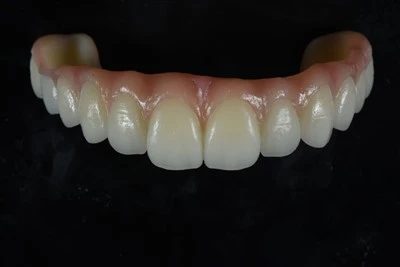
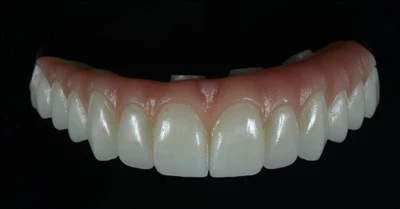
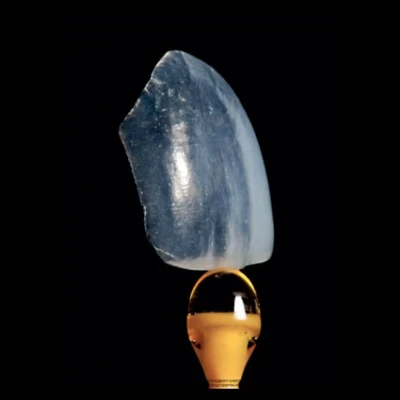
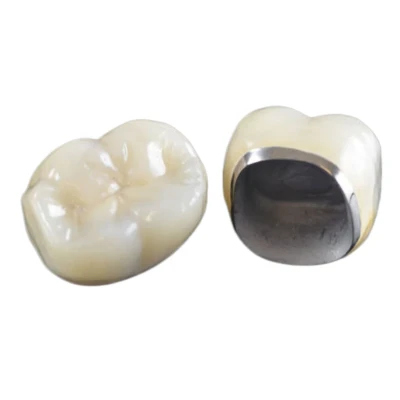
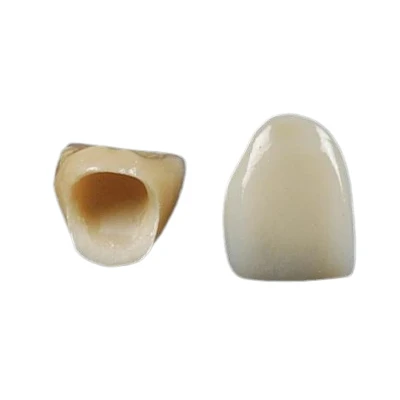
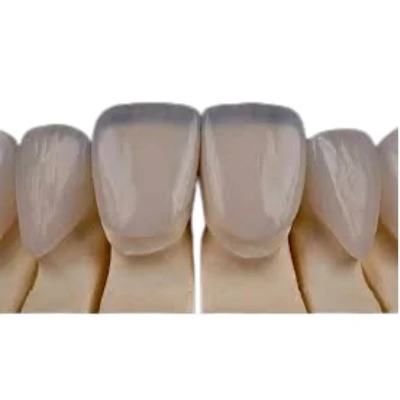
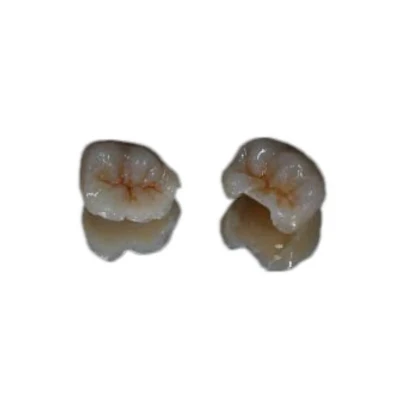
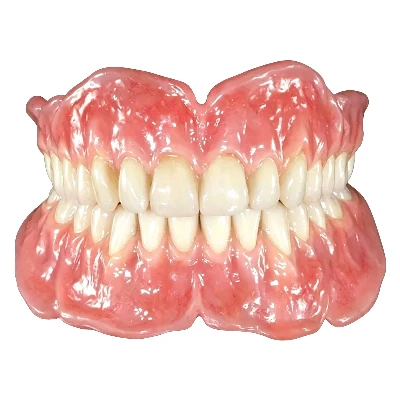
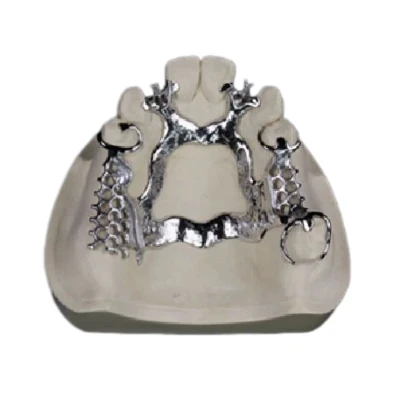
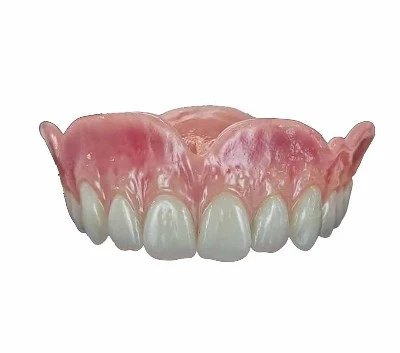
Common outsourced dental restorations include zirconia crowns and bridges, PFM crowns, E.max crowns and veneers, implant crowns and bridges, custom abutments, dentures, digital dentures, night guards, 3D printed models, and digital scan cases.
The key is not the product name alone.
The key is whether the lab can provide complete case information and whether the partner can deliver consistent quality. For implant cases, that means correct implant system, platform size, scan body information, emergence profile expectations, and restoration type. For esthetic cases, it means photos, shade instructions, stump shade, and design expectations.
The cheapest outsourcing option is not always the most profitable one. Dental labs should evaluate partners based on the total cost per successful case, including quality consistency, remake rate, communication efficiency, turnaround reliability, and long-term production stability.
How to Choose the Right Dental Lab Outsourcing Partner
Choosing a dental lab outsourcing partner should be treated like choosing a production extension of your own lab.
A low unit price may look attractive, but if the partner creates remakes, slow communication, unclear delivery dates, or inconsistent materials, the real cost becomes much higher.
A reliable partner should help your lab reduce total production costs, maintain consistent restoration quality, communicate clearly, and support growth over time.
Quality Control and Remake Management
Quality control should be visible before the first case is sent.
Ask how the partner checks fit, margins, contacts, occlusion, shade, surface finish, implant components, and final packing. Ask how remake cases are handled. Ask what information they need before starting production.
A good outsourcing partner should not accept incomplete cases silently just to keep the order moving. They should flag missing details early.
That protects both sides.
Digital File Support and Case Communication
Digital file support is now a basic requirement for overseas dental lab outsourcing.
A partner should be able to receive STL files, intraoral scan files, photos, bite records, shade information, implant details, and design instructions. Communication should be clear enough that technicians do not guess.
For digital cases, the difference between a smooth case and a remake is often found in the first file review.
If the margin is unclear, if the bite is unstable, or if the implant scan body information is incomplete, the partner should ask before production begins.
Materials, Product Range, and Technical Capability
A strong outsourcing partner should have stable materials, trained technicians, and a product range that matches the lab's needs.
Common product categories may include zirconia restorations, PFM, E.max, implant restorations, dentures, night guards, and digital cases. But product range alone is not enough.
The partner must show consistency.
A lab does not need a supplier that can make everything once. It needs a partner that can make the same product reliably across hundreds or thousands of cases.
Turnaround Time and Long-Term Stability
Turnaround time must be realistic.
Overseas outsourcing involves production time, quality control, packing, shipping, customs, and local delivery. A partner who promises unrealistic speed may create stress later.
Stable turnaround is usually better than an aggressive promise.
The best outsourcing partner is not simply the lowest-priced dental lab. It is the one that can support your production plan, protect your client relationships, and solve problems without creating extra work for your team.
A Practical Option for Overseas Dental Labs
For labs looking to reduce production pressure without expanding fixed overhead, working with a specialized China digital dental laboratory can be one practical option.
ADS Dental Laboratory Ltd supports overseas dentists and dental labs with custom restoration outsourcing, digital scan workflows, stable production capacity, and long-term manufacturing cooperation. For labs that want to control costs while maintaining consistent case quality, this type of partnership can become part of a broader profit margin strategy rather than a one-time purchasing decision.

Improving Dental Lab Profit Margins Requires Smarter Cost Control
Dental lab profit margins improve when the lab manages both sides of the business: earning more from the right cases and losing less through waste.
That means accurate pricing, better product mix, fewer remakes, stronger quality control, efficient CAD/CAM workflows, disciplined inventory, smarter labor scheduling, and clear KPI tracking. It also means knowing when in-house production is the right choice and when outsourcing can protect capacity without adding fixed overhead.
Cutting costs alone is not enough. A lab must reduce waste while protecting the quality that keeps dentists coming back.
If your lab is looking for a reliable long-term outsourcing partner, ADS Dental Laboratory Ltd can support overseas dental labs and dentists with custom restorations, digital case workflows, and stable production capacity from China. Contact us to discuss how outsourcing selected cases can fit into your lab's profit margin strategy.

FAQ
What is a good profit margin for a dental lab?
A good dental lab profit margin depends on location, lab size, product mix, labor cost, equipment investment, and business model. Instead of relying on one universal benchmark, lab owners should track gross margin, net margin, cash flow, remake rate, and profit by restoration type. A lab with stable net profit, low remakes, and healthy cash flow is in a stronger position than a high-volume lab with weak margins.
How can dental labs reduce production costs?
Dental labs can reduce production costs by lowering remake rates, improving CAD/CAM workflow, controlling material waste, negotiating supplier terms, managing inventory, improving labor scheduling, and outsourcing selected case types. The best cost reduction comes from removing waste, not lowering restoration quality.
Does outsourcing dental lab work increase profit margins?
Outsourcing can increase profit margins when the partner provides consistent quality, clear communication, and reliable turnaround. It helps labs reduce fixed labor and equipment pressure while adding flexible production capacity. Poor outsourcing can damage margins if it causes remakes, delays, or client complaints, so partner selection matters.
Why do dental labs outsource to China?
Many dental labs outsource to China because Chinese dental laboratories can offer mature production capacity, digital workflows, broad product options, and cost-effective manufacturing. The decision should not be based only on unit price. Quality control, communication, material stability, turnaround time, and long-term reliability are the factors that decide whether outsourcing improves profit.
What types of dental restorations can be outsourced?
Common outsourced restorations include zirconia crowns and bridges, PFM crowns, E.max crowns and veneers, implant crowns and bridges, custom abutments, dentures, digital dentures, night guards, 3D printed models, and digital scan cases. Complex cases can also be outsourced when case records, design expectations, and communication are clear.
What KPIs should dental labs track to improve profitability?
Dental labs should track labor hours per case, labor cost as a percentage of revenue, material cost per case, remake rate, turnaround time, on-time delivery rate, profit by restoration type, equipment use, and outsourced case success rate. These KPIs show where profit is being created and where it is being lost.