


Crown thickness directly influences the longevity, strength, and esthetics of a restoration. In daily practice, many issues-fractures, chipping, or remake requests-trace back to how much reduction was achieved and whether the final material thickness met the case demands.
Dental crown thickness requirements are not a single number. They vary by material, tooth position, occlusal forces, and the overall treatment plan. This guide walks through the practical details every dentist should consider when planning preparations.

Why Crown Thickness Is a Critical Clinical Decision
A dental crown must survive years of chewing forces, temperature swings, moisture, and chemical exposure in the mouth. Thickness plays a central role in that survival.
Too little material often leads to fracture or porcelain chipping, especially under heavy load. Too much bulk creates high occlusion, poor emergence profiles, and gingival irritation. In one common scenario, a posterior monolithic zirconia crown seated perfectly at delivery but developed a hairline crack six months later after the patient adjusted their bite. The occlusal thickness had dropped below 1.0 mm following chairside adjustments.
Thickness also affects esthetics. Adequate facial and incisal reduction allows proper translucency and shade masking, particularly over dark stump shades. Without it, even the best material looks flat or gray.
The key principle is clear: minimum thickness is a safety limit, not the design target. Ideal thickness balances strength, tooth preservation, and function for that specific patient.
Minimum and Ideal Thickness Requirements by Material
Different materials tolerate different minimum dimensions because of their inherent strength and layering needs. Understanding these differences prevents under-preparation or over-reduction.
Monolithic Zirconia Crowns High flexural strength makes monolithic zirconia forgiving in limited space. Axial walls can often stay at a minimum 0.5 mm, with ideal thickness around 1.0–1.5 mm. Occlusal reduction typically targets 1.0–1.5 mm. This material shines in posterior cases with restricted clearance. However, high-translucency versions usually need slightly more bulk to maintain strength, and bruxism patients should stay well above the absolute minimum.
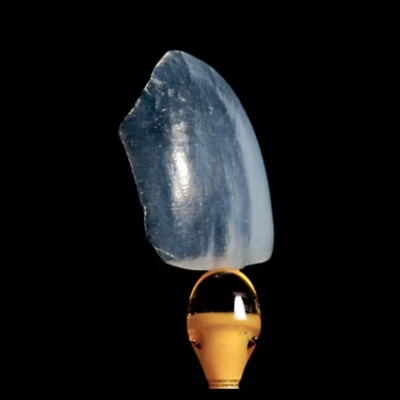
Lithium Disilicate (e.g., IPS e.max) These crowns deliver excellent translucency and bonding. Plan for 1.5–2.0 mm incisal or occlusal reduction and 1.0–1.2 mm axial walls. They perform beautifully in anterior and premolar esthetic zones but require disciplined reduction-especially when masking darker preparations.
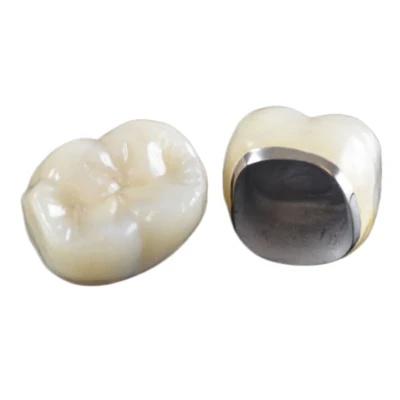
Porcelain-Fused-to-Metal (PFM) Crowns PFM restorations need space for both layers. Aim for 1.5–2.0 mm total occlusal/incisal reduction (up to 2.5 mm in heavily layered esthetic cases). The metal coping is typically 0.3–0.5 mm, while the porcelain veneer needs 0.7–1.2 mm for proper shade and durability.
Full Metal / Gold Crowns In space-limited posterior situations, full metal crowns remain practical. Occlusal reduction of 1.0–1.5 mm and axial walls of 0.5–1.0 mm often suffice. The alloy's ductility allows thinner dimensions while still resisting fracture.
Layered Zirconia / Layered Ceramic Adding veneering porcelain increases demands. The framework needs solid support, and the layering ceramic must have enough thickness to avoid chipping. Unsupported thin porcelain is a frequent cause of failure in these designs.
Here's a quick comparison:
|
Material |
Axial Wall (min/ideal) |
Occlusal/Incisal Reduction |
Best Suited For |
|
Monolithic Zirconia |
0.5 / 1.0–1.5 mm |
1.0–1.5 mm |
Posterior, limited clearance |
|
Lithium Disilicate |
1.0–1.2 mm |
1.5–2.0 mm |
Anterior esthetics, premolars |
|
PFM |
Coping 0.3–0.5 mm |
1.5–2.0 mm (total) |
Balanced strength & esthetics |
|
Full Metal |
0.5–1.0 mm |
1.0–1.5 mm |
Posterior, conservative prep |
These numbers serve as clinical references. Always check the specific manufacturer guidelines for the brand you select.

Tooth Preparation Guidelines: Achieving Proper Thickness by Region
Successful thickness starts with accurate preparation. Posterior and anterior teeth place different demands on the clinician.
Posterior Crowns Focus on occlusal load. Reduce functional cusps adequately-often 1.5–2.0 mm depending on material-to prevent thin spots after adjustment. Axial walls need enough depth for proper contour without over-bulking. Rounded occlusal anatomy and adequate taper help the lab maintain uniform thickness.
Anterior Crowns Esthetics drive much of the planning. Sufficient incisal reduction (1.5–2.0 mm for lithium disilicate) creates room for translucency effects. Facial reduction around 1.0–1.2 mm helps mask underlying color while supporting natural contour. Pay special attention to the emergence profile at the margin.
Across both regions, margin design matters. A continuous chamfer or rounded shoulder provides better material support than feather edges. Sharp internal line angles should be avoided-they create stress concentrations and thin spots in the final restoration.
Proper preparation gives the laboratory the best chance to deliver a crown that meets both mechanical and esthetic goals.

Key Factors Influencing Ideal Crown Thickness
Material choice is only one piece of the puzzle. Several clinical factors shift the ideal thickness.
Tooth position and occlusal load top the list. A second molar in a bruxism patient needs more robust dimensions than a lower-load premolar. Implant-supported crowns also benefit from conservative thickness limits because they lack the natural tooth's slight give.
Esthetic requirements add another layer. Dark stump shades or high-translucency demands often require extra facial/incisal reduction. Remaining tooth structure is equally critical-poor ferrule or inadequate core buildup cannot be fixed by simply making the crown thicker.
Digital workflows help here. CAD software can flag thin areas during design, and high-quality scans allow early evaluation of occlusal clearance. Yet technology does not replace clinical judgment. A crown that the software says is "acceptable" at minimum thickness may still fail under real-world conditions.
Too Thin vs. Too Bulky: Clinical Problems and Solutions
Both extremes create headaches.
Insufficient thickness often shows up as fracture, porcelain chipping (especially in layered designs), poor shade masking, or early wear. Labs frequently see cases returned because CAD detected areas below manufacturer minimums after milling.
Excessive thickness produces bulky contours, high bites, food impaction, and gingival inflammation. Patients notice these issues immediately and may request adjustments or remakes.
When clearance is limited, several practical options exist. Reconsider the material-switching to monolithic zirconia can save precious space. Refine the preparation where possible, or adjust opposing dentition. Diagnostic wax-ups or digital previews help visualize the final result before committing to the prep. Most importantly, communicate early with the lab. Sending scans, bite records, and patient history allows technicians to flag issues before fabrication begins.
Where Crown Thickness Fits Into the Overall Clinical Workflow
Thickness considerations run through every stage. During initial evaluation, assess occlusal clearance and tooth structure. Diagnostic planning and prototypes help confirm adequate reduction. After preparation, provisional crowns give patients a preview while protecting the prepared tooth.
In the laboratory phase, digital design tools verify minimum thickness and optimize anatomy. Final delivery is smoother when thickness problems have already been addressed upstream.
A well-coordinated workflow reduces surprises and remakes. Clear communication between the clinic and laboratory remains the most reliable way to achieve predictable results.

Conclusion
Dental crown thickness requirements depend on material properties, tooth position, occlusal demands, and esthetic goals. Minimum values provide a safety baseline, but successful restorations consistently aim for the ideal range suited to each case.
At ADS Dental Laboratory Ltd, we specialize in digital workflows that help clinics achieve precise thickness control and consistent outcomes. Whether you have questions about a specific case or want to discuss outsourcing options, feel free to reach out. We're here to support reliable, long-lasting restorations for your patients.
Contact us today to discuss how we can help with your next case.
FAQ
What is the minimum thickness for posterior zirconia crowns?
For monolithic zirconia, axial walls can often be 0.5 mm minimum with occlusal thickness closer to 1.0 mm or more. High-load cases should target the ideal range rather than the limit.
How does bruxism affect crown thickness requirements?
Avoid designing at absolute minimum thickness. Choose stronger materials, ensure robust occlusal support, and consider a night guard for long-term protection.
Can I use minimum thickness for high-esthetic anterior cases?
Usually not. Anterior restorations need adequate reduction for translucency and shade. Pushing limits often compromises esthetics or leads to chipping.
When should I communicate with the lab about thickness concerns?
As early as possible-ideally with the preparation scan. Early feedback allows adjustments before final fabrication.