
标题:Materials Used in Modern Dental Restorations: 2026 Latest Guide
In current restorative dentistry, materials must deliver strength, natural appearance, biocompatibility, and smooth integration with digital workflows. High-translucency multilayer zirconia handles most posterior and bridge cases. Lithium disilicate remains the go-to for anterior aesthetics. Hybrid ceramics fit fast chairside needs. Bioactive options help control secondary caries risks. These choices reflect ongoing progress in gradient designs, ion-releasing fillers, and CAD/CAM precision.
This guide explains what performs well now, how to select the right one, and why a capable digital lab makes a real difference in outcomes.

Overview of Modern Dental Restoration Materials
Indirect restorations-crowns, bridges, veneers, inlays, onlays-rely mainly on ceramics and hybrids milled or printed digitally. Direct composites still have their place, but indirect work drives most outsourcing volume.
Main categories today:
Full ceramics: Zirconia and lithium disilicate form the backbone. Zirconia-reinforced lithium silicate (ZLS) sits between them.
Hybrids and polymers: Nano-hybrid composites and polymer-infiltrated ceramics suit speed or flexibility.
Bioactive materials: Ion-releasing composites or glasses support remineralization and reduce bacterial activity.
The field moves toward materials that combine mechanical performance with biological support. Strength is non-negotiable, but translucency, marginal integrity, and easy processing now weigh heavily in decisions.
Detailed Breakdown of Key Materials
High-Translucency Multilayer Zirconia
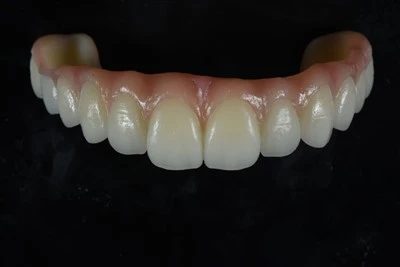
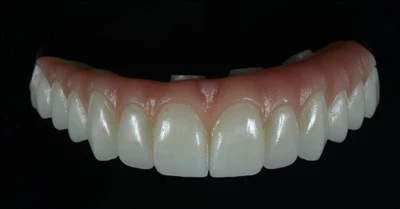
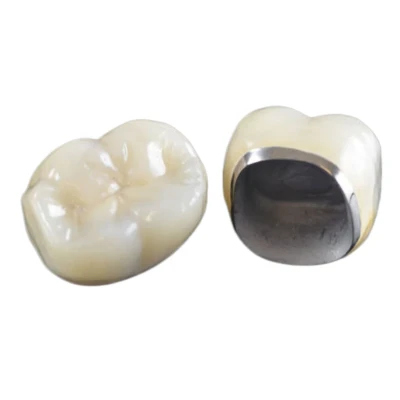
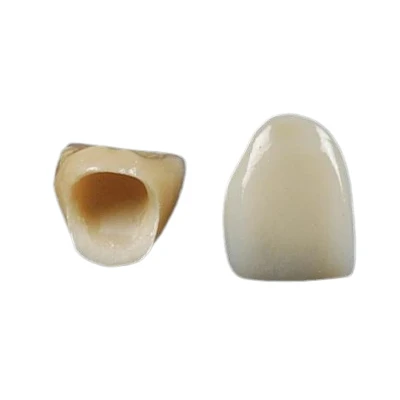
Multilayer zirconia is the primary choice for the majority of indirect restorations. Modern blocks feature gradient layers-denser, stronger dentin zones transitioning to more translucent enamel-like surfaces.
Flexural strength typically ranges from 850 to over 1200 MPa. Translucency reaches levels close to glass ceramics while keeping fracture resistance high. Monolithic designs eliminate layering failures.
Pros:
Reliable under heavy occlusal forces in posteriors and bridges.
No metal-related issues or gray show-through.
Consistent results with current shading systems.
Cons:
In very thin anterior cases, pure glass ceramics can still edge out on vitality.
Requires accurate shade communication for complex matches.
Best for: Posterior crowns, multi-unit bridges, implant-supported restorations. High-translucency grades now handle many anterior situations when gingival thickness allows.
Lithium Disilicate (e.max and Similar Systems)
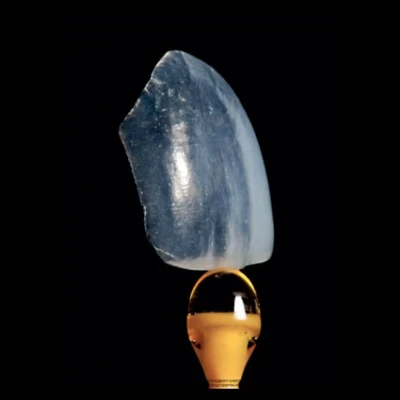
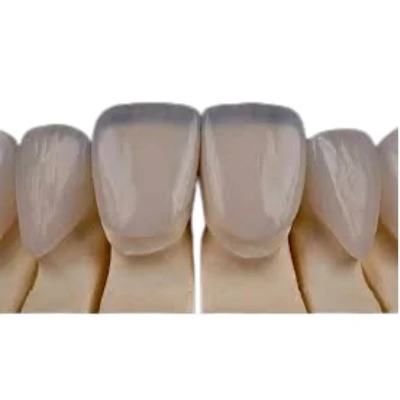
Lithium disilicate excels in esthetics. Strength falls in the 360–500 MPa range-adequate for single units and short spans.
Its translucency closely replicates natural enamel. Light transmission creates realistic depth and vitality.
Pros:
Outstanding appearance in visible zones.
Excellent adhesive bonding after hydrofluoric acid etching.
Allows conservative preparations.
Cons:
Not suited for heavy bruxers or long-span bridges.
More prone to fracture under extreme loads than zirconia.
Best for: Anterior crowns, veneers, inlays, onlays. Often combined with zirconia in mixed-arch cases.
Hybrid Ceramics and Nano-Hybrid Composites
These materials mix ceramic particles with polymer matrices. Examples include Vita Enamic, Cerasmart, and similar polymer-infiltrated options.
Their elastic modulus approximates dentin, which helps absorb stress and limit cracks. No sintering step means fast chairside or lab milling.
Pros:
Good polish retention and wear behavior.
Forgiving in bruxism or parafunction patients.
Simple intraoral adjustments.
Cons:
Lower overall strength (150–300 MPa) compared with pure ceramics.
Avoid in full-arch or extreme-load situations.
Best for: Inlays, onlays, long-term temporaries, or cases needing resilience. Nano-fillers in newer versions improve durability further.
Bioactive and Functional Materials
Bioactive composites release calcium, phosphate, or fluoride ions. They encourage apatite formation at interfaces and help limit secondary caries.
Many now include antibacterial agents or pH-responsive fillers.
Pros:
Active contribution to marginal seal and remineralization.
Useful in high-caries-risk patients or subgingival margins.
Growing evidence of reduced recurrent decay.
Cons:
Mechanical properties can trail behind high-strength ceramics in demanding zones.
Clinical track record continues to build.
Best for: Class V restorations, high-risk sites, or as liners/margins. Frequently layered with hybrids or used in preventive protocols.
Other Emerging Options
ZLS offers zirconia reinforcement inside a lithium silicate matrix-strength closer to zirconia with esthetics nearer lithium disilicate.
Fiber-reinforced polymers serve well for extended provisionals.
3D-printable resins and ceramics accelerate temporaries and custom shading.
Material Selection Guide & Comparison Table
Selection depends on tooth position, occlusal demands, esthetic priority, and patient habits. No material fits every scenario perfectly.
|
Material |
Flexural Strength (MPa) |
Translucency |
Primary Use |
Key Advantages |
Key Limitations |
Digital Compatibility |
|
High-Translucency Multilayer Zirconia |
850–1200+ |
High (gradient) |
Posterior crowns, bridges, implants |
High durability, monolithic reliability, no metal |
Less ideal for ultra-thin anteriors |
Excellent (CAD/CAM standard) |
|
Lithium Disilicate |
360–500 |
Very High |
Anterior crowns, veneers, inlays |
Natural vitality, strong bonding |
Limited in heavy posterior loads |
Excellent (press/mill) |
|
Hybrid Ceramics |
150–300 |
Medium |
Inlays/onlays, temporaries, bruxism cases |
Elasticity, fast processing, easy adjustments |
Lower strength |
High (chairside milling) |
|
Bioactive Composites |
Varies (200–400) |
Medium |
High-risk margins, Class V |
Remineralization, antibacterial support |
Mechanical trade-offs |
Growing (CAD/CAM compatible) |
Quick rules:
Visible anterior zone → lithium disilicate or high-translucency zirconia.
Posterior heavy function → multilayer zirconia.
Caries history → incorporate bioactive elements.
Speed or trial fit → hybrid or polymer-based.
Digital impressions and CAD/CAM processing make accurate outcomes routine across categories.
Trends & Future Outlook
Digital workflows are standard now-intraoral scans feed AI-assisted design for precise gradients, shades, and occlusion.
Zirconia continues to improve with better co-doping and microstructures that raise translucency without sacrificing strength.
Bioactive technologies expand-more composites and adhesives release ions effectively, targeting recurrent caries at the source.
Hybrids grow in chairside applications because they skip firing steps entirely.
Patients expect thinner preparations, natural gradients, and long-term marginal health. The direction points to more preventive, biology-driven restorations.
How ADS Supports Overseas Dentists
ADS Dental Laboratory specializes in reliable outsourcing for overseas clinicians and labs. We focus on consistent quality at scale.
We maintain current inventories and processing for:
Multilayer high-translucency zirconia.
Lithium disilicate systems.
Hybrid ceramics and bioactive materials.
Upload STL files-we handle design, milling or printing, finishing, and shipping with tight turnaround.
ISO-certified processes, full material traceability, and very low remake rates.
Pricing remains competitive with fast, dependable delivery that outperforms many local suppliers.
Send us a case. We review material options at no charge and can provide test pieces when helpful.
Conclusion
Successful restorations come from matching the material to the clinical reality-occlusal load, visibility, biology, and workflow.
Zirconia provides the backbone for strength. Lithium disilicate brings lifelike esthetics. Hybrids deliver speed and forgiveness. Bioactive options add active protection.
Combine the appropriate material with precise digital execution and a trusted production partner. Clinical results improve, patients notice the difference, and your schedule stays predictable.
Reach out to ADS for guidance on your next case or material questions. We keep overseas workflows running smoothly and current.