
In dental restorations, poor fit leads to adjustments, remakes, and shorter lifespan. CAD/CAM technology changes that. It delivers consistent precision at the micron level. Many clinics and labs now rely on it for crowns, bridges, veneers, and implant restorations.
This article explains what CAD/CAM is, why traditional methods fall short, how the digital workflow achieves better accuracy, direct comparisons with data, and why outsourcing to a specialized CAD/CAM lab often makes practical sense.

What Is CAD/CAM Technology in Dentistry?
CAD/CAM stands for Computer-Aided Design and Computer-Aided Manufacturing. In dentistry, it creates restorations from digital data instead of manual steps.
The process breaks down into three main parts:
- Digital scanning captures the preparation and occlusion.
- CAD software designs the restoration virtually.
- CAM equipment mills or prints the final piece from materials like zirconia, lithium disilicate, or composites.
Intraoral scanners or lab scanners provide high-resolution data, often down to microns. Design software allows precise control over anatomy, thickness, and contacts. CAM uses 5-axis milling machines for complex shapes with minimal error.
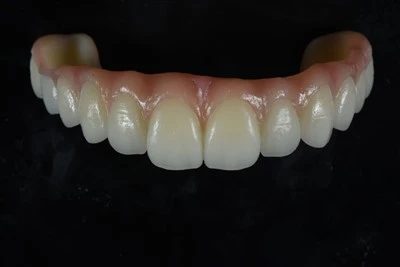
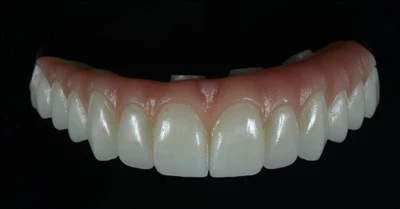
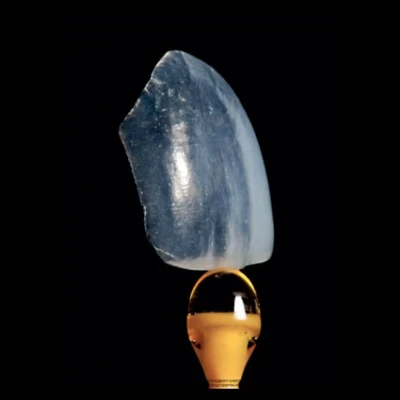
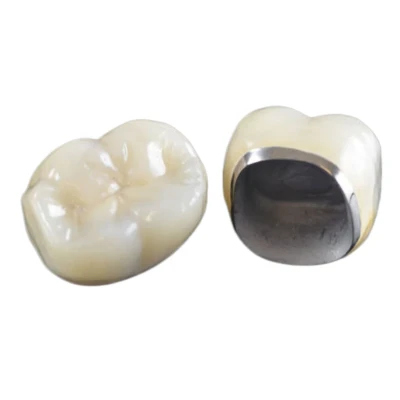
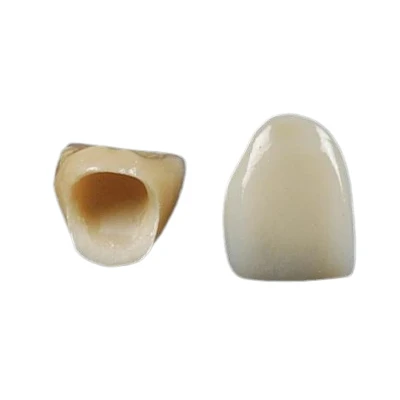
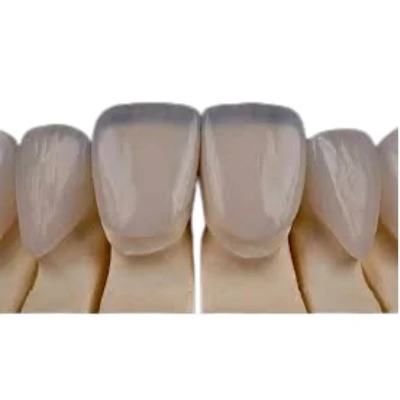
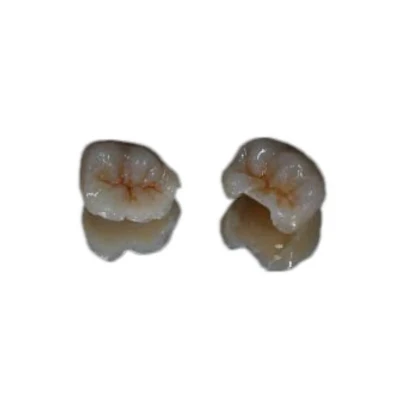
This applies to single crowns, bridges, veneers, inlays, onlays, and implant abutments. Materials stay compatible across systems.
The result is repeatable precision that manual techniques struggle to match.
Challenges in Traditional Dental Restoration Workflows
Traditional methods rely on physical impressions, stone models, and hand-built patterns.
The flow goes like this: take silicone impression, pour stone model, build wax-up, invest, cast metal framework, layer porcelain, sinter.
Each step introduces potential error:
Impression material shrinks or distorts.
- Stone expands slightly during setting.
- Wax patterns warp with temperature changes.
- Hand waxing or casting accumulates human variation.
These add up. Marginal gaps often range from 80 to 200 microns or more. Internal fit suffers too, with uneven cement spaces.
Clinical issues follow: poor marginal seal increases secondary caries risk, excess cement causes inflammation, frequent occlusal adjustments, higher remake rates.
Studies show traditional marginal gaps commonly exceed 100 microns, sometimes reaching 200+ microns in real cases.
These limitations push the industry toward digital solutions.
How the CAD/CAM Workflow Achieves Higher Precision
CAD/CAM removes most error sources by going digital early.
The complete workflow:
- Scan the preparation directly in the mouth with an intraoral scanner or scan a model in the lab. Resolution reaches 10-20 microns, no material distortion.
- Import data to CAD software. Design the restoration with exact margins, occlusion, and anatomy. Virtual adjustments catch issues before production.
- Send the file to CAM. A 5-axis mill cuts the blank precisely, or a 3D printer builds it layer by layer. Automation eliminates hand variability.
Key accuracy drivers:
- No impression shrinkage or model expansion.
- Digital design controls every micron of margin and internal surface.
- Precise machining holds tolerances under 50 microns in many cases.
Modern systems produce marginal gaps of 20-70 microns routinely. Internal fit becomes more uniform, reducing voids and improving cement distribution.
This workflow delivers consistency across cases and technicians.
CAD/CAM vs. Traditional: Accuracy Comparison
Data from multiple studies shows clear differences. Here is a summary comparison based on published research:
|
Aspect |
Traditional Method |
CAD/CAM Method |
Typical Advantage |
|
Marginal Gap |
80-200 碌m (often >100 碌m) |
20-70 碌m (some <30 碌m) |
50-70% reduction, better seal |
|
Internal Fit |
100-300 碌m, uneven |
50-150 碌m, more uniform |
Fewer voids, stronger bonding |
|
Remake Rate |
Higher due to fit issues |
Significantly lower |
Saves chair time and cost |
|
Clinical Acceptance |
Often borderline |
Well within <120 碌m limit |
Lower secondary caries risk |
Studies (e.g., from Journal of Prosthetic Dentistry , PubMed reviews) report digital impressions and CAD/CAM crowns with marginal gaps around 26-60 µm, compared to 49-209 µm for conventional. Five-axis systems push margins even lower, sometimes below 20 µm in ideal setups.
Direct digital scans outperform indirect ones in many cases. Overall, CAD/CAM fits stay clinically acceptable more reliably.
The gap reduction translates to fewer adjustments, better longevity, and happier patients.
Why Outsource to a Specialized CAD/CAM Dental Lab?
Many practices hesitate to invest in full in-house CAD/CAM. Scanners, mills, software, and trained staff cost heavily. Volume may not justify it.
Outsourcing to a dedicated lab solves this.
Benefits include:
Access to top-tier equipment and expert teams without capital spend.
- Lower per-unit cost while keeping high precision.
- Consistent quality from specialized workflows and quality checks.
- Fast turnaround via digital file transfer (STL files sent instantly).
- Focus on patient care instead of production.
For overseas doctors, labs in China with strong digital setups offer reliable options. They use international-standard machines and materials. Precision matches or exceeds local labs in many benchmarks. Turnaround stays competitive, often 5-10 working days.
At ADS Dental Laboratory Ltd , we focus on long-term outsourcing for overseas clients. Our CAD/CAM process delivers stable, high-accuracy custom restorations. Digital files make collaboration straightforward.

Conclusion
CAD/CAM improves dental restoration accuracy by eliminating distortion sources and automating precision steps. Marginal and internal fits reach levels traditional methods rarely achieve.
The result: fewer remakes, better clinical outcomes, less chair time.
For many practices, partnering with a specialized CAD/CAM lab provides the best balance of quality, cost, and efficiency. Digital workflows are now standard for reliable results.
FAQ
Does CAD/CAM really deliver much better accuracy than traditional methods?
Yes. Studies show marginal gaps drop by 50% or more on average, often from over 100 µm to under 60 µm.
Are digital impressions accurate enough for patients?
They are fast, comfortable, and eliminate gag reflex from trays. Accuracy exceeds conventional in most comparisons.
Is outsourcing to an overseas lab like one in China reliable for precision?
Specialized digital labs use the same high-end scanners, mills, and materials as Western ones. Quality controls ensure consistent micron-level fit.
What types of restorations work best with CAD/CAM?
Single crowns, bridges, veneers, inlays/onlays, implant crowns-almost all fixed prosthetics.
How long does turnaround usually take?
5-10 working days is common, depending on complexity and material.
How do we start outsourcing?
Send digital scans (STL) or physical models. We review, quote, and produce.
Contact us for case discussion or samples.