

Meta Description
Are ultra-thin feldspathic veneers strong enough? Learn how bonding, thickness, occlusion, and case selection affect their durability and clinical success.
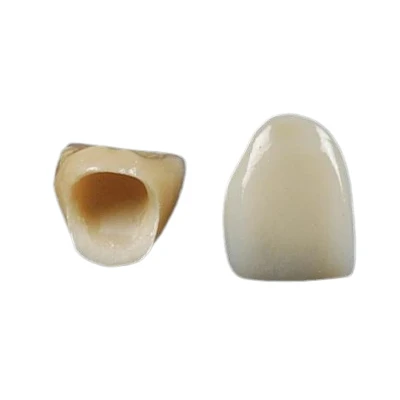
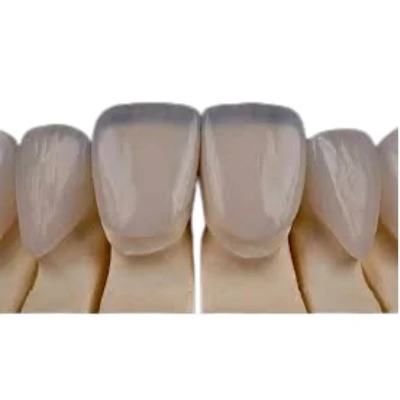
Ultra-thin feldspathic veneers can be strong enough for carefully selected cases. Their reliability does not come from high material strength alone. It comes from enamel support, adhesive bonding, controlled ceramic thickness, precise fabrication, and a favorable bite.
A feldspathic veneer that is fragile before bonding can perform predictably after it becomes part of a bonded tooth–resin–ceramic structure. The key is choosing the right case and respecting the limits of the material.

Are Ultra-Thin Feldspathic Veneers Strong Enough?
Yes, but not for every patient or every clinical situation.
Feldspathic porcelain is a glass-based dental ceramic known for high translucency and natural light transmission. It is widely used for anterior veneers because a skilled ceramist can reproduce fine shade transitions, incisal effects, surface texture, and enamel-like depth.
Its intrinsic strength is relatively low compared with lithium disilicate. Traditional feldspathic porcelain commonly has a flexural strength of approximately 60–100 MPa, depending on the specific ceramic and testing method. Lithium disilicate is often reported in the range of approximately 360–400 MPa.
Those numbers matter, but they do not tell the whole story.
Flexural strength is measured on standardized material specimens. An actual veneer is bonded to a tooth. Once properly cemented, it no longer functions as a free-standing ceramic shell. The tooth supports the restoration, while the resin cement transfers and distributes stress across the bonded surface.
That is why a thin feldspathic veneer may be clinically reliable even though the ceramic itself is much weaker than lithium disilicate.
The material is less forgiving, however. Poor case selection, weak enamel support, contamination during bonding, excessive occlusal load, or an unsupported ceramic edge can lead to fracture or debonding.
Ultra-thin feldspathic veneers are strong enough when the entire case is designed correctly.
How Thin Are Ultra-Thin Feldspathic Veneers?
"Ultra-thin" is a descriptive clinical term rather than a single standardized thickness.
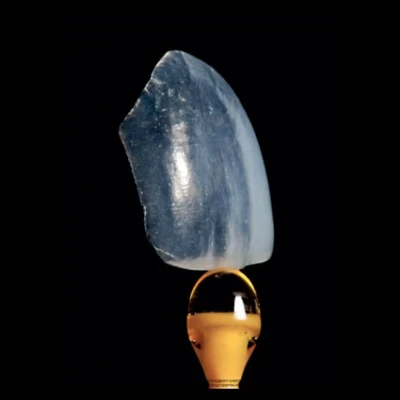
Feldspathic veneers are often fabricated at approximately 0.3–0.5 mm across facial areas. Their thickness is not uniform. The cervical region, middle third, incisal area, proximal extension, and margin may all require different amounts of ceramic.
A veneer used for a slight shape correction may be thinner than one used to mask discoloration or rebuild a worn incisal edge.
The Common 0.3–0.5 mm Range
A facial thickness of about 0.3–0.5 mm provides useful space for many conservative veneer cases. Within this range, the ceramist can usually create surface form, translucency, and basic internal color effects without making the restoration unnecessarily bulky.
The final thickness still depends on:
- The original position of the tooth
- The desired increase in length or width
- The amount of shade change
- The preparation design
- The incisal relationship
- The location of functional contacts
- The ceramic fabrication method
A tooth that already sits facially may require reduction to avoid overcontouring. A small or lingually positioned tooth may allow an additive design with little preparation.
Can Feldspathic Veneers Be 0.1–0.2 mm Thick?
Localized areas may sometimes be thinner than 0.3 mm, especially in carefully planned additive or minimal-prep cases. That does not make 0.1–0.2 mm a general target for the entire restoration.
At extremely low thickness, several problems become more important:
- The veneer becomes harder to handle before bonding.
- Edge damage is more likely during finishing, packing, transport, and try-in.
- The underlying tooth shade has a stronger influence on the final color.
- There is less room for internal characterization.
- Functional contacts can overload a very thin area.
- Small manufacturing defects become more significant.
Severe discoloration is particularly difficult to manage with an ultra-thin feldspathic veneer. Increasing opacity may reduce depth and vitality, while adding ceramic thickness may require more preparation.
The goal is not to make every veneer as thin as technically possible. The goal is to preserve enamel while maintaining enough ceramic for the required shade, contour, and function.
Material Strength Is Not the Same as Bonded Clinical Strength
An unbonded feldspathic veneer is fragile. It can crack if it is flexed, dropped, seated unevenly, or pressed against a localized interference.
That behavior is normal for a thin glass-based ceramic.
Clinical performance changes after adhesive cementation. A properly bonded veneer becomes supported by the underlying tooth. The restoration, resin cement, adhesive interface, and tooth structure function together.
This support reduces ceramic bending. It also helps distribute functional stress over a wider area instead of concentrating it at one weak point.
This distinction is essential:
|
Factor |
Unbonded Feldspathic Veneer |
Bonded Feldspathic Veneer |
|
Support |
Minimal |
Supported by tooth structure |
|
Resistance to flexure |
Low |
Improved by bonded support |
|
Handling risk |
High |
Lower after complete cementation |
|
Stress distribution |
Localized |
Spread across the bonded interface |
|
Clinical function |
Not ready for load |
Functions as part of an integrated system |
The ceramic itself does not suddenly gain a higher flexural strength after bonding. The restoration becomes more reliable because it is no longer working alone.
This is also why a direct comparison between 60–100 MPa feldspathic porcelain and 360–400 MPa lithium disilicate can be misleading. Lithium disilicate has a greater mechanical safety margin, especially during handling and under higher loads. It is not automatically the better material for every veneer.
A thin restoration bonded mostly to healthy enamel may perform very well even when its ceramic strength is lower. A stronger material placed over an unstable substrate or under poor occlusal conditions may still fail.
Material strength matters. The bonded system matters more.
What Determines the Fracture Resistance of a Thin Veneer?
The fracture resistance of an ultra-thin veneer depends on several connected factors. Thickness is only one of them.
Enamel Support and Adhesive Bonding
Healthy enamel is the preferred bonding substrate for conservative feldspathic veneers.
Enamel can be predictably etched with phosphoric acid, creating microscopic retention for the adhesive resin. Feldspathic porcelain is also a bondable glass ceramic. Its internal surface is typically treated according to the ceramic manufacturer's instructions, commonly with hydrofluoric acid followed by silane.
Silane promotes bonding between the inorganic ceramic surface and the organic resin material. Resin cement then connects the veneer to the prepared tooth.
A reliable protocol depends on more than selecting the correct products. The clinician must also control:
- Isolation from saliva and blood
- Ceramic surface cleanliness
- Tooth surface conditioning
- Complete seating
- Cement thickness
- Excess cement removal
- Light curing
- Final margin inspection
Large areas of exposed dentin make the procedure more technique-sensitive. Dentin bonding can be successful, but it is more complex than enamel bonding and may be more vulnerable to long-term interface degradation.
Preserving enamel is therefore not only biologically conservative. It also creates a more predictable adhesive foundation.
Ceramic Thickness and Preparation Design
A veneer does not need identical thickness everywhere, but abrupt thickness changes should be avoided. Sudden transitions can concentrate stress.
Other design problems include:
- Sharp internal line angles
- Unsupported ceramic margins
- Thin incisal extensions
- Narrow ceramic connections
- Margins placed in direct functional contact
- Excessive adjustment after fabrication
- Rough surfaces left after occlusal correction
Preparation should create enough space for the intended contour without removing unnecessary enamel. No-prep treatment is not automatically safer. When there is no restorative space, a no-prep veneer may become overcontoured, difficult to clean, and visually bulky.
Incisal design must also follow the bite. A butt-joint design may work well in one case, while another may require incisal overlap or a different restorative approach. The design should prevent direct loading on a thin unsupported edge.
Occlusion and Repeated Fatigue
Most veneer fractures are not caused by one normal bite. Repeated loading over months and years is often more important.
Bruxism, clenching, deep overbite, edge-to-edge contact, unstable anterior guidance, and strong lateral movements can all increase fatigue stress. A small contact placed on a thin ceramic edge may be more damaging than a larger contact supported by sound tooth structure.
A night guard may reduce risk in selected patients. It does not make an unsuitable case suitable, and it cannot correct a poor preparation or unsupported restoration.
The veneer must be protected by both design and occlusion.
Which Cases Are Suitable for Ultra-Thin Feldspathic Veneers?
Ultra-thin feldspathic veneers work best when the restorative change is conservative and the tooth provides a stable adhesive base.
Good Candidates
Suitable cases often include:
- Small diastema closure
- Mild tooth-size discrepancies
- Peg-shaped or undersized anterior teeth
- Minor contour correction
- Slight incisal lengthening
- Mild to moderate shade improvement
- Healthy enamel
- Stable occlusion
- Limited or controlled parafunctional activity
- Teeth positioned to allow natural final contours
These cases make good use of the material's main advantage: highly natural optical behavior at limited thickness.
Feldspathic porcelain is especially useful when the dentist and technician need to reproduce fine translucency, incisal halo effects, surface texture, subtle value differences, and individual characterization across multiple anterior teeth.
High-Risk or Unsuitable Cases
Risk increases when the restoration must compensate for major structural, positional, or functional problems.
Potential high-risk conditions include:
- Severe bruxism or clenching
- Deep overbite with heavy anterior contact
- Edge-to-edge occlusion
- Strong lateral contacts on the veneer margins
- Limited remaining enamel
- Large existing composite restorations
- Extensive tooth wear
- Severe fractures
- Significant tooth rotation or facial displacement
- Severe dark or tetracycline staining
- Poor moisture control
- Active caries or unstable periodontal health
A very dark tooth may require more ceramic thickness, greater opacity, or an alternative material. A heavily damaged tooth may need a restoration with broader coverage. A patient with severe bruxism may require occlusal treatment, a protective appliance, or a stronger restorative design.
Minimal-prep treatment is conservative only when the tooth position and treatment objective provide enough restorative space.

Feldspathic Veneers vs Lithium Disilicate
Feldspathic porcelain and lithium disilicate are both glass-based dental ceramics, but they have different microstructures and clinical strengths.
Feldspathic porcelain contains a high glass phase and relatively limited crystal reinforcement. This supports excellent translucency and detailed hand layering, but it also results in lower intrinsic strength.
Lithium disilicate contains a much higher proportion of reinforcing crystals within a glass matrix. These crystals improve resistance to crack propagation and provide a greater mechanical safety margin.
|
Factor |
Feldspathic Porcelain |
Lithium Disilicate |
|
Typical flexural strength |
Approximately 60–100 MPa |
Approximately 360–400 MPa |
|
Optical layering |
Excellent, especially when hand-layered |
Very good |
|
Handling before bonding |
More fragile |
More forgiving |
|
Conservative anterior cases |
Strong indication |
Also suitable |
|
Higher functional demand |
Requires stricter selection |
Greater safety margin |
|
Severe shade masking |
Limited when very thin |
More opacity options |
|
Fabrication |
Hand-layered or CAD/CAM, depending on system |
Pressed or CAD/CAM |
|
Main advantage |
Natural optical depth |
Strength–aesthetics balance |
When Feldspathic Porcelain Makes More Sense
Feldspathic porcelain is often preferred when:
- The enamel substrate is favorable.
- The treatment requires limited structural change.
- Maximum translucency is important.
- Fine internal characterization is required.
- The bite is stable.
- A highly conservative preparation is possible.
Its value is strongest in carefully selected anterior cases where subtle optical control matters more than maximum material strength.
When Lithium Disilicate May Be Safer
Lithium disilicate may be more appropriate when:
- The tooth has greater structural damage.
- More substantial contour changes are needed.
- The restoration will face higher functional load.
- Additional handling strength is desirable.
- More ceramic thickness is available.
- Greater shade control or opacity is needed.
Lithium disilicate is stronger, but strength should not be the only decision criterion. The material must still match the substrate, preparation, shade requirement, and occlusal environment.
The stronger material is not always the better veneer. The better material is the one that fits the case.
How Dentists and Dental Labs Reduce Failure Risk
Ultra-thin feldspathic veneers are highly technique-sensitive. Success depends on the clinician and laboratory working from the same treatment plan.
Clinical Controls
The dentist should provide:
- Accurate intraoral scans or impressions
- A stable bite record
- Preoperative photographs
- Shade photographs with reference tabs
- Information about the stump shade
- Details of parafunctional habits
- The planned incisal design
- The desired tooth length and contour
- A diagnostic wax-up or approved digital design when needed
Before preparation, the dentist should confirm that the planned restoration can fit within a natural contour. Depth-cutting guides or silicone indexes can help control reduction and preserve enamel.
During bonding, isolation and surface treatment are critical. A perfectly made veneer can still fail if saliva contaminates the bonding surface or if the restoration is not fully seated.
Laboratory Controls
The dental laboratory must check more than shade and shape.
Important quality-control points include:
- Minimum ceramic thickness
- Smooth thickness transitions
- Marginal integrity
- Internal porosity
- Microcracks
- Unsupported incisal or proximal ceramic
- Seating stability
- Contact strength
- Occlusal clearance
- Surface texture
- Final polish
- Packaging protection
For hand-layered feldspathic veneers , the ceramist must control condensation, firing cycles, shrinkage, and internal characterization. For digitally designed cases, the laboratory should also review restorative space and identify areas that may become too thin or overcontoured.
A responsible laboratory should not simply manufacture the material requested. When the scan, photographs, or occlusal records indicate a high-risk design, the case should be discussed before production.
This is particularly important in overseas dental lab outsourcing, where clear digital communication replaces chairside access to the patient.
How Long Do Ultra-Thin Feldspathic Veneers Last?
Well-selected and correctly bonded porcelain veneers can provide more than ten years of clinical service. Some restorations last considerably longer.
A fixed lifespan cannot be guaranteed. Long-term performance depends on:
- The amount of enamel retained
- Ceramic thickness and design
- Adhesive protocol
- Occlusal contacts
- Bruxism
- Oral hygiene
- Margin location
- Maintenance
- The condition of the supporting tooth
Clinical survival also does not mean that every veneer remains completely unchanged. A restoration may survive while developing minor marginal staining, surface wear, a small chip, or the need for polishing.
Patients can reduce risk by avoiding hard-object biting, maintaining good oral hygiene, attending regular examinations, and wearing a prescribed night guard when necessary. A non-abrasive toothpaste helps preserve the ceramic surface. Flossing protects the tooth and gingival margin around the restoration.
Feldspathic porcelain itself is resistant to staining. The resin cement and exposed margins may discolor over time, especially when margins are rough, poorly sealed, or affected by gingival recession.
Longevity is created by the original treatment quality and maintained by the patient's habits.

Conclusion
Ultra-thin feldspathic veneers can be strong enough for long-term clinical use. Their strength does not come from the porcelain alone. It comes from enamel support, adhesive bonding, suitable ceramic thickness, accurate laboratory fabrication, and controlled occlusal loading.
They are an excellent option for conservative anterior cases, but they should not be forced into high-risk situations involving severe bruxism, insufficient enamel, major structural damage, or inadequate restorative space.
ADS Dental Laboratory Ltd is a China-based digital dental laboratory providing customized restoration outsourcing services for overseas dentists and dental labs. For feldspathic veneer cases, our team can review digital scans, photographs, shade information, and occlusal records before production to support more predictable material selection and fabrication. Contact us to discuss your next veneer case or long-term dental lab outsourcing requirements.
FAQ
Do Ultra-Thin Feldspathic Veneers Break Easily?
They are fragile before bonding, but properly bonded veneers do not function as unsupported ceramic shells. Fracture risk remains low in suitable cases with healthy enamel, adequate thickness, stable occlusion, and reliable adhesive cementation.
Risk rises with bruxism, poor support, thin unsupported edges, contamination, and heavy anterior contact.
Are 0.2 mm Feldspathic Veneers Safe?
A localized area may be approximately 0.2 mm in a carefully selected additive case. That thickness should not be treated as a general recommendation for the entire veneer.
The safe design depends on tooth position, shade change, ceramic system, incisal form, preparation, and occlusal load.
Can Patients With Bruxism Receive Feldspathic Veneers?
Mild, controlled parafunction may be manageable after detailed occlusal assessment. Severe bruxism is a major risk factor.
These patients may require a different material, a different restoration design, occlusal management, and a custom night guard. A night guard reduces risk but does not eliminate it.
Are Feldspathic Veneers Stronger After Bonding?
The ceramic's intrinsic flexural strength does not change. The bonded restoration becomes more resistant to functional stress because the tooth supports it and limits bending.
It is more accurate to say that the bonded system is stronger than the unbonded veneer.
Are Feldspathic Veneers Better Than E.max?
Neither material is universally better.
Feldspathic porcelain is often preferred for ultra-conservative, high-aesthetic anterior cases with good enamel support. E.max, which is made from lithium disilicate, provides a greater mechanical safety margin and broader restorative versatility.
The correct choice depends on the tooth, bite, restorative space, shade requirement, and treatment objective.