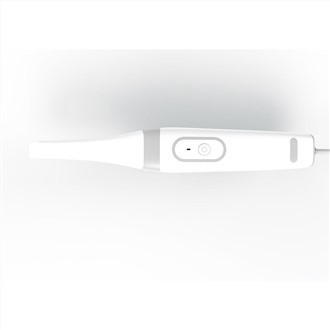



Wireless intraoral scanners have revolutionized the field of dentistry, offering dentists and dental professionals a more efficient and patient - friendly way to capture detailed 3D images of a patient's oral cavity. One crucial aspect that often comes under scrutiny is the battery life of these devices. As a supplier of intraoral scanners, I am well - versed in the ins and outs of their battery performance, and I'm here to shed some light on this important topic.
The Significance of Battery Life in Wireless Intraoral Scanners
In a busy dental practice, every minute counts. A wireless intraoral scanner with a poor battery life can disrupt the workflow, causing delays between patient appointments and potentially leading to a less - than - optimal patient experience. Imagine a situation where a scan is in progress, and suddenly, the scanner runs out of power. This not only interrupts the procedure but can also mean that the dentist has to start the scan from scratch, which is time - consuming for both the dentist and the patient.
Moreover, battery life is also relevant for portability. Wireless intraoral scanners are designed to offer flexibility, allowing dentists to move freely around the patient's mouth. If the battery drains quickly, the scanner's portability becomes a moot point, as it will need to be constantly tethered to a charging source.
Factors Affecting Battery Life
There are several factors that can influence the battery life of wireless intraoral scanners.
Scanner Model and Design
Different models of intraoral scanners come with different battery capacities. Manufacturers often make trade - offs between the size of the battery, the overall size of the scanner, and its performance. Some scanners are designed to be very compact, which may limit the size of the battery that can be installed. However, larger scanners may have the capacity to house a bigger battery, potentially leading to longer battery life.
Usage Frequency and Intensity
The way a scanner is used also plays a significant role in battery consumption. If a dentist is using the scanner continuously throughout the day for multiple patient scans, the battery will deplete much faster than if it is used sporadically for quick checks. Additionally, the complexity of the scans can also impact battery life. High - resolution scans that require more processing power will consume more energy compared to lower - resolution scans.
Connectivity Options
Many wireless intraoral scanners are equipped with multiple connectivity options, such as Bluetooth or Wi - Fi. Keeping these connectivity features enabled can drain the battery more quickly. For example, maintaining a constant Bluetooth connection to a computer or a tablet requires a certain amount of power. Dentists who are not actively using the connectivity features may want to turn them off when possible to conserve battery.
Typical Battery Life of Wireless Intraoral Scanners
On average, the battery life of wireless intraoral scanners can range from 2 to 8 hours on a single charge, depending on the factors mentioned above. Some entry - level scanners may offer only 2 - 3 hours of continuous use, which may be sufficient for smaller practices with fewer patients or for quick diagnostic checks.
For larger dental clinics or practices that perform a high volume of scans daily, scanners with a battery life of 6 - 8 hours are more desirable. These scanners can typically handle multiple patient scans without the need for frequent recharging.
It's important to note that manufacturers usually provide an estimated battery life based on ideal conditions. In real - world scenarios, factors such as the ones mentioned above can cause the actual battery life to be shorter.
Tips to Extend Battery Life
As a supplier, I often offer my customers some practical tips to extend the battery life of their wireless intraoral scanners:


Optimize Scan Settings
Using appropriate scan settings can significantly reduce battery consumption. Dentists should use the lowest resolution that still meets their diagnostic needs. For example, if a quick check of the dental arch is sufficient, using a lower - resolution scan can save a lot of power.
Turn off Unused Features
As mentioned earlier, turning off connectivity features like Bluetooth and Wi - Fi when not in use can help conserve battery. Additionally, some scanners may have other unnecessary features like vibration alerts or haptic feedback that can be turned off to save power.
Regular Charging and Battery Maintenance
Following the manufacturer's recommendations for charging and battery maintenance is crucial. Over - charging or under - charging the battery can reduce its overall lifespan and performance. It's also a good idea to have a spare battery on hand, especially for practices with a high patient volume.
Our Offerings at [Keep it open as no company name provided]
As a leading supplier of Intraoral Scanners, we understand the importance of reliable battery life. Our link text: Intraoral Dental 3D Scanners are designed with high - capacity batteries to ensure long - lasting performance. We offer a range of scanners with different battery life options to meet the diverse needs of dental practices.
Our entry - level scanners are ideal for small practices or those on a budget, offering a reasonable battery life of around 3 - 4 hours. For larger clinics with a high patient turnover, our premium scanners come with a battery life of up to 8 hours, ensuring that dentists can complete multiple scans without interruption.
In addition to our high - quality scanners, we also provide excellent customer support. Our team of experts is available to answer any questions you may have about battery life, charging, or maintenance. We can also offer customized solutions based on the specific requirements of your practice.
Contact Us for Procurement
If you are interested in learning more about our wireless intraoral scanners and their battery life, we encourage you to get in touch with us. Our sales team is ready to discuss your needs, provide detailed product information, and offer competitive pricing. Whether you are a small dental practice or a large multi - location clinic, we have the right intraoral scanner for you. Contact us today to start the procurement process and enhance the efficiency of your dental practice.
References
- Dental Equipment Technology Journal. (2022). Advancements in Wireless Intraoral Scanners. Volume 15, Issue 3.
- International Dental Association. (2021). Guidelines for the Use and Maintenance of Intraoral Scanners.
- Manufacturer's Brochures of Various Intraoral Scanners.