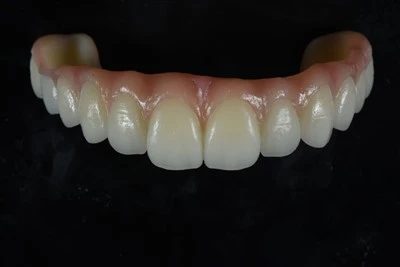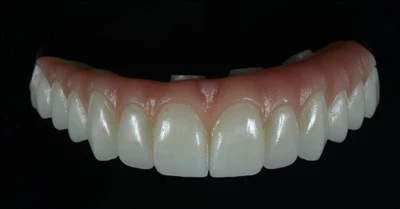
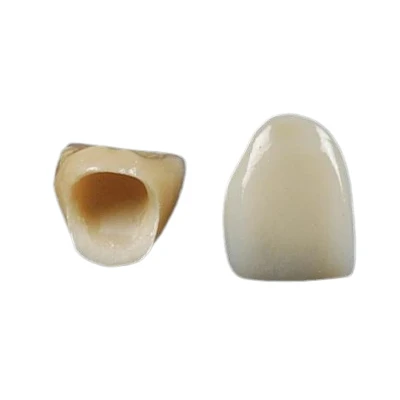
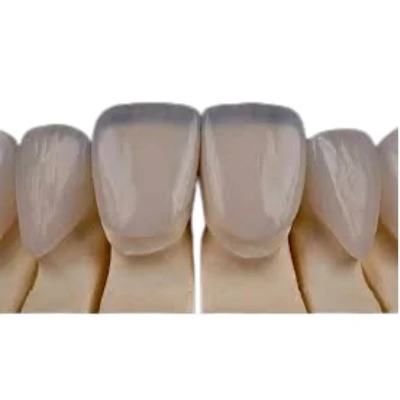
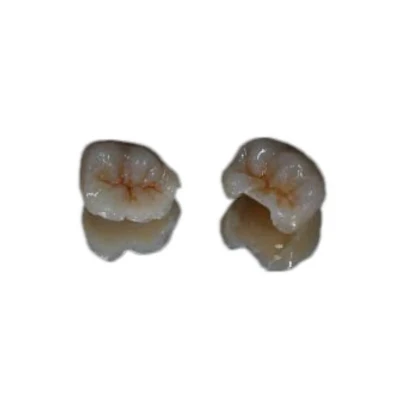
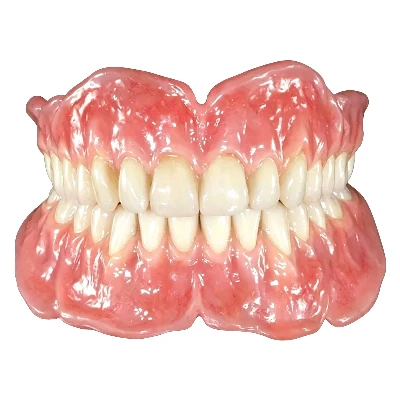

Dental crowns have come a long way. Patients and clinicians alike now expect restorations that blend seamlessly with natural teeth - not just in photos, but under real-world lighting and during everyday function. A natural looking dental crown isn't the result of choosing one "white" material. It emerges from the careful interplay of shade, translucency, shape, texture, margins, and laboratory craftsmanship.
This article breaks down exactly what creates that lifelike appearance, based on years of fabricating restorations for demanding clinical cases.

The Core Principle: A Natural Crown Is More Than Just "White"
A truly natural looking dental crown must match the surrounding dentition in multiple dimensions simultaneously. Shade alone rarely does the job. Even a perfect color match fails if the crown looks bulky, overly opaque, or sits with the wrong emergence profile.
Modern expectations go beyond "it doesn't look fake." Clinicians and patients want crowns that support healthy gingiva, feel comfortable in occlusion, and maintain aesthetics for a decade or longer. Achieving this requires precise coordination between clinical data and laboratory execution.
Material Selection – Foundation for Natural Aesthetics
Material choice sets the boundaries for what's possible aesthetically. No single material wins in every situation.
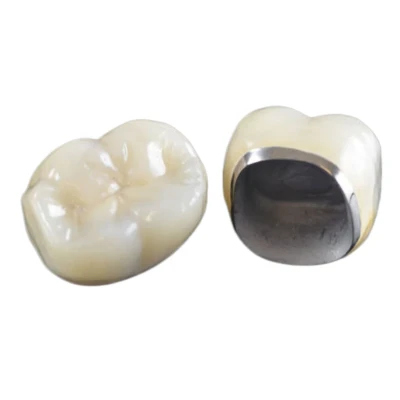
Zirconia Crowns (High-Translucent and Layered Options) High-translucent zirconia works well for many posterior cases and some anterior ones. Its strength exceeds 900 MPa in many formulations, yet newer multi-layer versions offer improved light transmission. These crowns handle heavy occlusal forces while allowing technicians to build subtle characterizations.
All-Ceramic and Lithium Disilicate Crowns Lithium disilicate (such as IPS e.max) excels in anterior aesthetics. Its glass-like translucency mimics enamel better than most zirconias in high-esthetic zones. These materials shine when space allows for proper layering and when masking a non-discolored preparation.
Layered vs Monolithic Approaches Layered restorations provide the highest esthetic potential through manual buildup of dentin, enamel, and incisal effects. Monolithic options prioritize strength and efficiency. The decision often comes down to available occlusal clearance, esthetic demands, and the patient's parafunctional habits.
The most natural crown material is the one matched to the specific clinical situation - tooth position, stump shade, and occlusal demands - rather than the strongest or most translucent on the market.
Color Matching – Beyond Picking a Single Shade
Color matching remains one of the most critical steps. A crown that fails here immediately stands out.
Key Dimensions: Hue, Chroma, Value, and Gradients Value (brightness) often matters more than hue. A crown that is too bright creates an unnatural "Chiclet" effect, especially in natural daylight. Experienced teams evaluate hue, chroma, and value together under standardized lighting.
Cervical, Body, and Incisal Transitions Natural teeth show clear gradients. The cervical third tends to be warmer and richer in chroma, the body carries the primary shade, and the incisal edge displays translucency with mamelon effects or halo characteristics. Uniform color across the entire crown is a common giveaway of artificial restorations.
Accurate shade communication includes multiple high-quality photographs, stump shade information, and sometimes digital shade mapping devices. Without this data, even the best laboratory must guess.

Translucency and Light Behavior – Making It Look Like Real Enamel
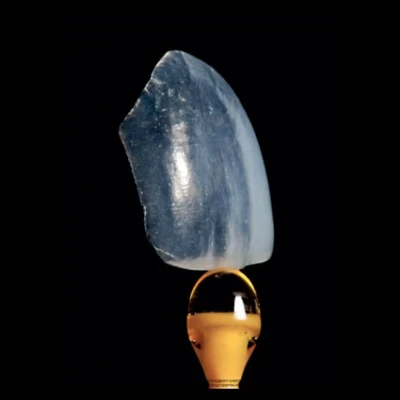
Translucency determines how light interacts with the crown. Too opaque and the restoration appears flat and dead. Too translucent and it may look gray or fail to mask underlying structures.
Natural enamel transmits light with a slight fluorescence and opalescence. Modern ceramics can replicate this, but only when the technician controls layering thickness and material selection carefully. In anterior cases, proper incisal translucency often makes the difference between "acceptable" and "undetectable."
Shape, Contour, Proportion, and Surface Texture
Critical Morphological Factors Tooth proportions, line angles, and emergence profiles must harmonize with adjacent teeth. A crown that is too wide, too long, or lacks proper proximal contacts disrupts the entire smile. Emergence profile - how the crown exits the gingiva - directly affects both aesthetics and tissue health.
Surface Texture and Characterization Techniques Natural teeth feature subtle perikymata, developmental grooves, and varying surface gloss. A perfectly smooth, high-gloss crown reflects light unnaturally and often looks artificial. Skilled technicians create these micro-details through careful staining, glazing, and selective polishing.
Even with perfect shade and material, incorrect contour or texture makes a crown look fake.
Margins, Gingival Integration, and Occlusion – The Often Overlooked Details
Margins must be precise. Poor marginal fit leads to visible dark lines, microleakage, or gingival inflammation over time. In esthetic zones, the transition from crown to tooth should be invisible.
Gingival harmony matters equally. The emergence profile supports papillae and follows the patient's natural scallop. In implant cases, this requires even more attention because of the absence of a natural periodontal ligament.
Occlusion completes the picture. A crown may look excellent in the mirror yet feel "high" or foreign during function. Proper occlusal anatomy and dynamic contacts ensure the restoration feels like it belongs.
The Power of Digital Technology in Modern Crown Fabrication
Digital workflows have dramatically improved consistency. Intraoral scans capture preparation details with high accuracy. CAD software allows virtual articulation and precise design of contours. CAM milling or 3D printing followed by careful sintering produces predictable results.
For overseas cases, digital files enable clear communication across time zones. Laboratories can review photos, scans, and shade information in detail before production begins. This reduces remakes and helps replicate a clinician's esthetic preferences across multiple cases.
Digital tools enhance precision, but they do not replace human judgment in layering, staining, and final characterization.
Why Some Dental Crowns Still Look Fake (And How to Avoid It)
Common Aesthetic Failures and Their Causes
- Excessive brightness or value: Crowns that ignore natural value ranges appear chalky or opaque.
- Lack of color gradient: Uniform color from cervical to incisal creates an artificial block appearance.
- Incorrect contour or bulk: Over-contoured crowns look bulky and disrupt lip dynamics.
- Overly smooth surface: Missing micro-texture makes restorations reflect light like plastic.
- Poor margin transition: Dark lines or abrupt color changes at the gingiva break the illusion.
- Inadequate communication: Missing clinical photos, bite records, or shade information forces laboratories to make assumptions.
Avoiding these issues requires complete clinical data and experienced laboratory execution.

The Crucial Role of Communication and Laboratory Craftsmanship
Natural outcomes depend heavily on collaboration. Clinicians provide accurate scans, opposing models, bite registrations, shade photos, and clear instructions. Laboratories then translate that data into material selection, design, layering, and finishing.
The technician's skill in staining, glazing, and creating individualized surface effects often determines the final result. Digital precision provides the foundation. Human expertise brings the restoration to life.
For dental practices and laboratories seeking consistent, high-aesthetic outcomes, a reliable digital partner makes a measurable difference in remake rates and case satisfaction.
A natural looking dental crown results from coordinated shade, translucency, morphology, texture, margins, and function - supported by strong clinical-laboratory partnership. When these elements align, the restoration becomes indistinguishable from natural teeth in daily life.
If you are looking for a stable, digitally advanced dental laboratory partner for custom restorations, ADS Dental Laboratory Ltd specializes in high-precision outsourcing solutions for overseas dentists and labs. Feel free to reach out with your cases - we're ready to discuss how we can support your aesthetic and functional goals.
FAQ
Q1: What makes a dental crown look fake?
A: Crowns often look artificial when they have overly bright value, lack natural color gradients, feature incorrect contours, or have a surface that is too smooth and glossy. Poor marginal fit creating dark lines at the gum or insufficient communication between the dentist and laboratory are also common culprits. A natural-looking dental crown requires attention to multiple factors working together, not just color.
Q2: Which material creates the most natural-looking dental crowns?
A: There is no single best material. Lithium disilicate and layered ceramics often excel in anterior high-esthetic cases due to superior translucency. High-translucent or multi-layer zirconia provides excellent strength and good aesthetics for posterior teeth or cases with limited space. The ideal choice depends on the tooth position, occlusion, stump shade, and esthetic demands of each individual case.
Q3: How important is digital technology in creating natural-looking crowns?
A: Digital technology significantly improves precision through intraoral scanning, CAD design, and accurate milling. It enhances consistency and communication, especially for overseas cases. However, digital tools alone do not guarantee natural aesthetics - experienced laboratory craftsmanship in layering, staining, and surface texture remains essential.
Q4: How can I ensure my dental crown matches my natural teeth perfectly?
A: Provide your laboratory with complete information: high-quality shade photos under natural light, intraoral scans or impressions, opposing arch records, bite registration, and detailed notes about your expectations. Working with an experienced lab that understands subtle gradients, translucency, and morphology greatly increases the chances of an excellent match.