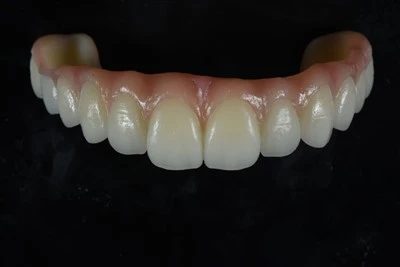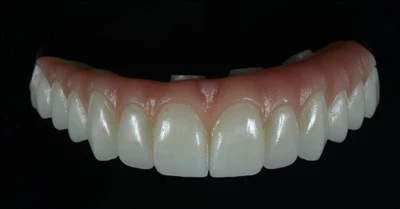
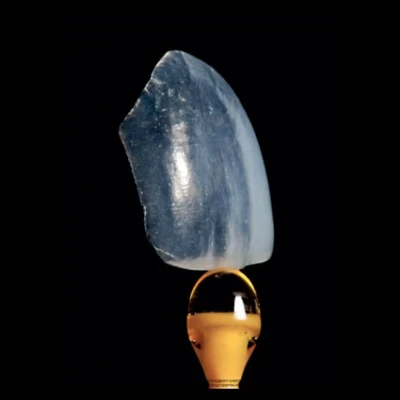
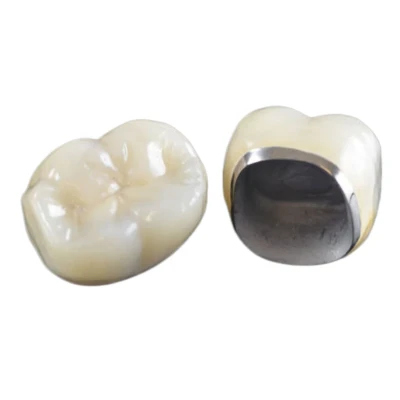
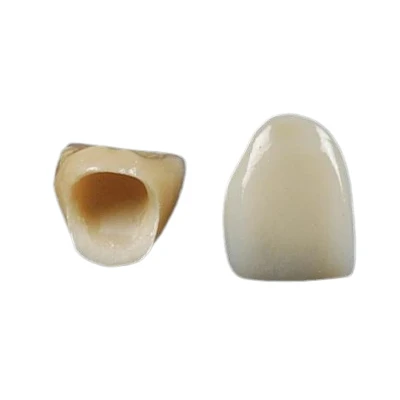
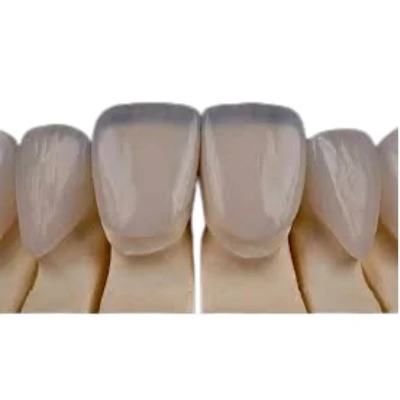

A feldspathic veneer is an ultra-thin porcelain veneer made from feldspathic ceramic, mainly used in anterior aesthetic restorations. It is typically fabricated through a hand-layering technique rather than pressing or milling, which allows precise control over translucency, shade, and surface detail.
In clinical terms, feldspathic veneers are selected when the priority is to replicate natural tooth appearance as closely as possible, rather than to maximize strength.

What Is a Feldspathic Veneer? And What Is It Made Of?
A feldspathic veneer is a thin porcelain shell, typically 0.3–0.7 mm thick, bonded to the facial surface of a tooth to improve esthetics. It is fabricated by hand-layering porcelain powder and liquid on a refractory die or platinum foil, then firing multiple times in a porcelain furnace.
The base material is feldspar porcelain-primarily ground feldspar (potassium feldspar KAlSi₃O₈ or sodium feldspar NaAlSi₃O₈), combined with quartz, kaolin, and other fluxes. After firing, the structure becomes a glassy matrix with a small amount of leucite crystals. This high glass content gives the material its exceptional translucency, opalescence, and fluorescence, closely replicating natural enamel optics.
Unlike lithium disilicate (e.max), which relies on a crystalline reinforcement for strength, feldspathic porcelain depends almost entirely on its glassy phase. That is why it transmits light so naturally but also why it requires careful case selection.
In practice, this composition allows technicians to build subtle dentin effects, incisal halos, and surface texture layer by layer-something CAD/CAM blocks struggle to reproduce at the same level of detail.
Key Advantages of Feldspathic Veneers
We see clinicians choose feldspathic when esthetics trump everything else. Here are the practical benefits we observe in daily production:
- Highest translucency and optical mimicry of natural teeth. Light passes through and reflects in a way that feels alive, especially in thin sections.
- Minimal or no tooth preparation possible in many cases. We routinely fabricate 0.3–0.4 mm veneers for additive-only approaches.
- Superior color matching and characterization. Hand-layering lets the ceramist fine-tune hue, chroma, value, and internal effects to blend seamlessly with adjacent teeth.
- Gentle on opposing dentition. The material wears similarly to enamel, reducing long-term abrasion risk compared to harder ceramics.
- Proven track record in anterior esthetics. Clinical studies show survival rates around 89–96% at 9–10 years when bonded properly to enamel.
These points hold up best in low-stress anterior applications where the patient has good occlusion and no heavy parafunction.
Limitations of Feldspathic Veneers
No material is perfect. Feldspathic porcelain has clear mechanical constraints.
- Flexural strength sits at 60–90 MPa. That makes it prone to chipping or fracture under heavy occlusal load, bruxism, or edge-to-edge bites.
- Not ideal for heavy discoloration. Thin layers offer limited opacity, so severe tetracycline staining or dark preps usually need more masking power.
- Technique-sensitive. Success depends heavily on the ceramist's skill, precise layering, and controlled firings. Inconsistent labs produce inconsistent results.
- Higher risk of technical complications over time. Long-term data shows chipping and fracture rates higher than with lithium disilicate.
In our experience, these limitations become issues mainly when the restoration is placed outside its ideal zone-posterior teeth, heavy function, or patients who clench hard.

Feldspathic Veneers vs E.max: What's the Difference?
Clinicians often ask us to compare the two. The decision usually comes down to esthetics versus durability.
Here is a straightforward side-by-side:
|
Feature |
Feldspathic Veneers |
E.max (Lithium Disilicate) Veneers |
|
Material |
Feldspar-based glassy porcelain |
Lithium disilicate glass-ceramic |
|
Translucency |
Excellent – enamel-like optics |
Good – slightly more opaque |
|
Flexural Strength |
60–90 MPa |
360–400 MPa |
|
Thickness / Prep |
Ultra-thin (0.3–0.7 mm), minimal/no prep |
Usually 0.6–1.0 mm, more reduction |
|
Fabrication |
Hand-layered, multiple firings |
Pressed or milled CAD/CAM |
|
Best For |
Pure anterior esthetics, additive cases |
Strength + esthetics, bruxers, masking |
|
Typical Lifespan |
10–15 years with care |
10–15+ years |
|
Fracture / Chipping Risk |
Higher in function |
Lower |
Feldspathic wins when the goal is the most lifelike result with conservative prep. E.max takes over when the case needs to withstand more force or cover darker substrates.
When Should You Choose Feldspathic Veneers?
We recommend feldspathic in these scenarios:
- Anterior teeth needing shape, length, or minor alignment correction without heavy reduction.
- Cases where maximum natural translucency is critical-young patients, high smile lines, thin gingiva.
- Minimal-prep or no-prep smile makeovers where preserving enamel is non-negotiable.
- Patients with normal occlusion and no significant parafunction.
Avoid it for posterior restorations, severe bruxism, deep discoloration requiring high opacity, or when the patient has edge-to-edge incisal contact without guidance.
In borderline cases, we sometimes suggest a hybrid: feldspathic layering over an e.max core for added strength without sacrificing too much esthetics.
How Are Feldspathic Veneers Made?
The process is labor-intensive and skill-dependent-that is why quality varies widely between labs.
- Model and die preparation - Create a refractory die (or use platinum foil) from the master cast to withstand firing shrinkage.
- Layering - Mix porcelain powder with liquid. The ceramist applies thin layers: opaque dentin body first, then incisal effects, mamelons, halo, and surface texture. Each layer is fired separately to control shrinkage and build depth.
- Multiple firings - Typically 5–8 cycles at 900–950°C. Each firing fuses the layer and allows fine contouring.
- Finishing - Cut back, add extrinsic stains if needed, glaze, and polish for natural luster.
Modern workflows combine digital design for form accuracy with hand-layering for characterization. At ADS, we use 3D-printed models and digital mock-ups to guide the ceramist, but the esthetic result still comes from manual buildup.
This is not fast production. It takes time because shortcuts compromise the optical outcome.
How to Choose a Reliable Dental Lab for Veneers?
When outsourcing veneers-especially feldspathic-focus on these practical points:
- Proven experience with hand-layered feldspathic. Ask for recent case photos showing natural blending and incisal effects.
- Clear communication protocol. Detailed shade maps, photos under different lights, and quick feedback loops reduce remakes.
- Quality control on materials and firing. Labs that use consistent, certified feldspathic powders and calibrated ovens deliver predictable shrinkage and fit.
- Turnaround and support. Overseas labs like ours offer competitive pricing and digital file transfer, but confirm they handle revisions efficiently.
- Hybrid capability. A good lab can switch to e.max or layered approaches if the prep changes.
We built ADS around long-term partnerships with overseas doctors. We handle the full digital-to-hand workflow so you get consistent esthetics without the overhead of an in-house ceramist.
Conclusion
Feldspathic veneers remain the benchmark for natural anterior esthetics when minimal prep and lifelike optics matter most. They demand careful patient selection and high-skill fabrication, but in the right hands they produce smiles that look untouched.
If your next case prioritizes that level of detail, reach out. At ADS Dental Laboratory, we specialize in feldspathic veneer and hybrid veneer production for international clinicians. Send us your prep scans or photos-we'll review and quote quickly.
FAQs
Is feldspathic more natural-looking than e.max?
Yes, in most anterior cases. Its higher translucency and hand-layering create better light dynamics than lithium disilicate.
How long do feldspathic veneers last?
Typically 10–15 years with good bonding and habits. Clinical data shows 90%+ survival at 10 years in ideal conditions.
Do feldspathic veneers require tooth grinding?
Often minimal or none. Many cases are additive only, especially for length or shape changes.
Are they suitable for patients who grind their teeth?
Not ideal. Bruxism increases fracture risk-consider e.max or protective splints if you proceed.
How much do feldspathic veneers cost through a lab?
Depends on the lab and case complexity. Overseas options like ADS usually offer better value than domestic high-end labs while maintaining quality.
Can feldspathic veneers mask dark teeth?
Limited. They excel at subtle changes; heavy discoloration usually needs more opaque materials.
Feel free to contact us at ADS Dental Laboratory for case discussions or sample work. We're here to help make your veneer cases predictable and esthetic.