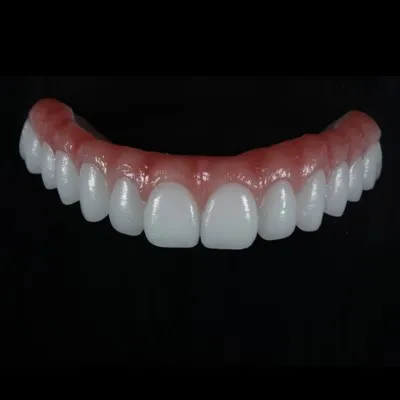


Zirconia and E-max require completely different surface treatments and cementation approaches. Treating them the same way is one of the fastest routes to trouble. This guide walks through the practical protocols we see working consistently in real clinical settings.

Why Cement Choice and Surface Prep Matter More Than Most Dentists Realize
Zirconia is a high-strength polycrystalline ceramic. It has no glass content, so it cannot be etched with hydrofluoric acid. Bonding relies on micromechanical retention from air abrasion plus chemical bonding through MDP (10-methacryloyloxydecyl dihydrogen phosphate) monomers.
max (lithium disilicate) is a glass-ceramic. It responds well to HF etching, which creates a micro-retentive pattern, followed by silane to form a chemical link to resin cement. Its higher translucency also makes color stability of the cement more important.
Many "universal" cements promise to simplify everything. In practice, they often fall short on high-strength zirconia or when aesthetics and retention are both critical. The substrate and preparation design should dictate the protocol - not the convenience of a single product.
Cement Types: Which One to Reach For and When
Three main categories cover most zirconia and E-max cases. Here's how they line up in daily practice:
|
Cement Type |
Best For |
Strengths |
Limitations |
Typical Use Case |
|
RMGI (Resin-Modified Glass Ionomer) |
Retentive zirconia preps |
Easy cleanup, moisture tolerant, simple steps |
Limited chemical adhesion |
Standard posterior zirconia crowns with good retention form |
|
Self-Adhesive Resin Cement |
Most zirconia cases |
No separate etch/prime on tooth, good strength |
Less ideal for thin translucent E-max |
Zirconia crowns where prep is adequate but not ideal |
|
Adhesive Resin Cement |
E-max, non-retentive zirconia, veneers |
Highest bond strength, color stable, aesthetic control |
Most technique sensitive, requires isolation |
All E-max restorations and short/non-retentive zirconia preps |
Retentive preparation generally means axial wall height greater than 3 mm with minimal taper. Below that, or with excessive taper, shift toward bonding protocols with adhesive resin cement.
Zirconia Cementation Protocol
Start with the preparation assessment. Measure axial height intraorally or on the digital model. If the prep offers solid mechanical retention, you can keep the process straightforward.
Surface preparation (best done by the lab)
We air-abrade the intaglio surface of every zirconia restoration we ship using 50 μm alumina at approximately 0.25 MPa. This creates the necessary roughness without over-stressing the material. If your lab does not do this, perform it chairside carefully - excessive pressure or prolonged blasting can reduce long-term bond performance.
After try-in
Saliva quickly contaminates the intaglio surface with phosphates. Clean it thoroughly. Options that work well include Ivoclean, 1% sodium hypochlorite, alcohol, or ultrasonic cleaning. Never use phosphoric acid on zirconia - it adds phosphates and works against you.
For retentive preps, proceed with RMGI or a self-adhesive resin cement such as PANAVIA SA or RelyX Unicem. Apply according to manufacturer instructions. These materials tolerate slight moisture better and clean up cleanly.
For non-retentive preps, add an MDP-containing primer (examples: Monobond Plus, Z-Prime Plus, Clearfil Ceramic Primer). On the tooth side, selective etch or use a universal adhesive, then apply adhesive resin cement. A desensitizer like Gluma can help reduce post-op sensitivity.
Application tips
Keep cement layer thin - ideally under 2 mm. For thicker restorations, consider incremental curing. Use a curing light of at least 1000 mW/cm² and cure each surface for a full 20 seconds. Room temperature around 23–25°C helps maintain proper flow.
Once seated, remove excess carefully and polish margins with dedicated zirconia polishing systems. Over-polishing the intaglio before cementation reduces micromechanical retention, so keep that surface matte until bonding is complete.
This protocol, when followed, delivers predictable results on zirconia. The key decision is almost always whether the preparation allows simple cementation or requires the extra steps of bonding.
E-max (Lithium Disilicate) Cementation Protocol
E-max demands adhesive bonding in nearly all cases because of its translucency and the need for maximum strength reinforcement.
Restoration surface treatment
Quality labs etch the intaglio with 5% hydrofluoric acid before shipping. Typical etch time for lithium disilicate is 20 seconds (some protocols suggest 10 seconds depending on the specific product - always check the manufacturer's IFU). After try-in, rinse thoroughly, ultrasonic clean if possible, then apply silane such as Monobond Plus and leave it for 60 seconds before drying.
Do not air-abrade E-max. It weakens the material.
Tooth preparation
Etch enamel for 30 seconds and dentin for 15 seconds with 37% phosphoric acid. Rinse, apply a compatible bonding agent, and consider a desensitizer. Adhesive resin cements from the Variolink Esthetic line perform well here. Choose light-cure for thin veneers and inlays where light penetration is excellent. Use dual-cure for crowns or thicker sections.
Isolation is non-negotiable. Rubber dam or excellent moisture control makes the difference between a clean field and early microleakage.
After seating, remove excess cement promptly. Final polishing of the margins helps reduce plaque accumulation.
E-max cases reward attention to the etching and silane steps. Skip or rush them, and even the best cement cannot compensate.

Common Pitfalls We See in the Lab
Most remakes that come back to us trace to a handful of repeatable issues:
- Using phosphoric acid to "clean" zirconia intaglio surfaces.
- Over-polishing the zirconia fitting surface before cementation.
- Delaying silane application on E-max after try-in.
- Inadequate isolation leading to contamination.
- Choosing self-adhesive cement for high-aesthetic or very thin E-max restorations where color stability matters.
- Insufficient light curing in deeper areas.
A quick bite-wing radiograph during try-in to confirm seating saves a lot of headaches later. Also, check occlusion carefully at delivery - early contacts on monolithic zirconia or E-max can lead to fracture over time.
Final Clinical Considerations
Preparation design still drives many decisions. Good axial walls and taper allow simpler protocols. Short or overly tapered preps push you toward full adhesive techniques.
Work in a clean, dry field. Temperature control and fresh materials matter more than most people admit. When in doubt, follow the specific manufacturer instructions for the cement and ceramic brand you are using.
At ADS Dental Laboratory, we manage the essential pre-treatment steps for both zirconia and E-max restorations, including zirconia air abrasion and E-max HF etching, so every case arrives ready for efficient chairside cementation. As a trusted China Dental Lab, we help reduce clinical variables, improve workflow efficiency, and deliver consistent quality for high-volume restorative cases.
If you are looking for a reliable outsourcing partner for zirconia and E-max restorations, our team is here to support your practice with dependable manufacturing and case-by-case assistance.