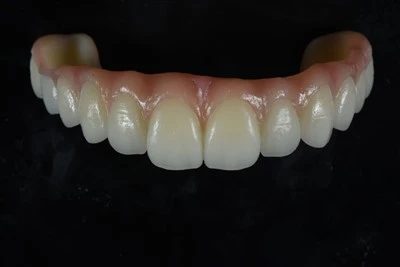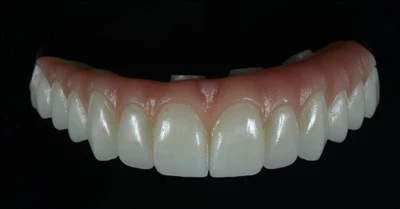
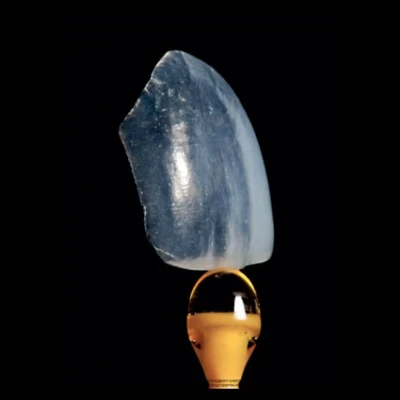
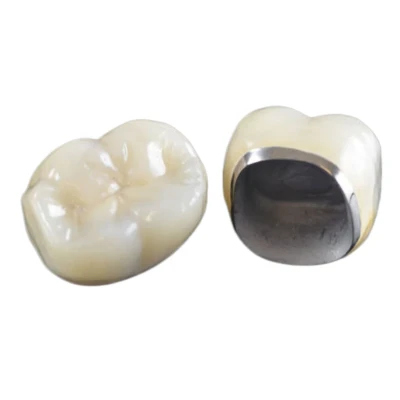
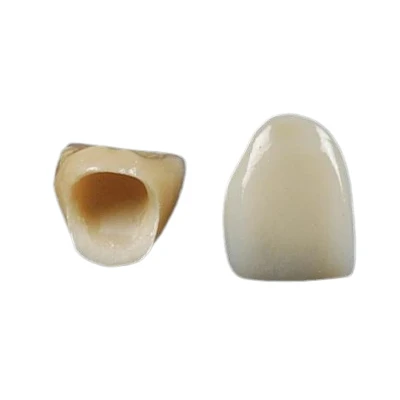
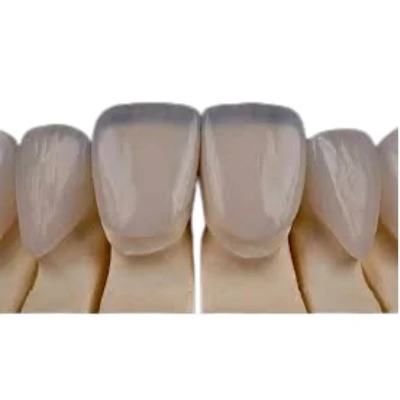
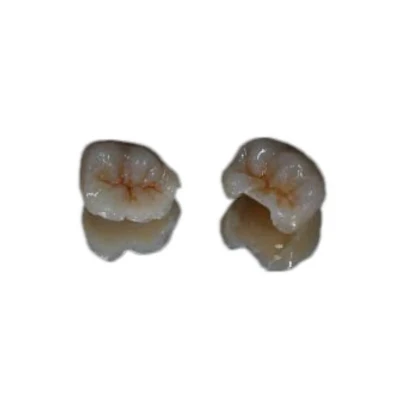
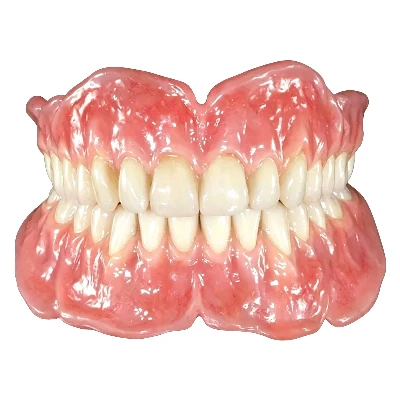


Minimal prep veneers involve light enamel reduction, typically in the range of 0.2–0.5 mm. This approach creates just enough space for a thin ceramic shell while preserving most of the natural tooth structure.
No-prep veneers, by contrast, require virtually no enamel removal. They bond directly onto the existing tooth surface, much like an ultra-thin contact lens.
Traditional veneers call for more substantial preparation, often 0.5–0.8 mm or greater, to accommodate thicker ceramic material and allow greater changes in shape, length, and color.
These distinctions matter because the preparation depth directly influences everything from final esthetics to long-term performance. In our lab work, we see how the right choice hinges on the starting condition of the teeth rather than a one-size-fits-all label.

The Core Philosophy: Balance Between Tooth Preservation and Esthetic Control
The central question is not which type of veneer is universally superior. Success comes from balancing enamel preservation with sufficient space for natural-looking ceramic design.
Too little preparation can force the restoration to sit bulky on the tooth. Excessive preparation removes healthy enamel unnecessarily and complicates bonding.
Experienced clinicians and labs evaluate case by case - tooth position, original shade, occlusion, and the patient's esthetic goals - before deciding. This case-driven mindset prevents disappointment and delivers predictable results.
Key Differences in Preparation and Procedure
Preparation philosophy shapes the entire patient journey.
Enamel Removal and Thickness Requirements
Minimal prep veneers typically use feldspathic porcelain or pressed lithium disilicate at 0.2–0.5 mm. Traditional designs allow 0.3–1.0 mm or more, giving technicians room to build translucency and mask darker underlying shades.
No-prep options stay under 0.3 mm in most cases but demand near-perfect tooth alignment from the start.
Procedure Steps and Patient Experience
Traditional veneer cases often involve local anesthesia, two or more appointments, and temporary restorations. Patients may experience sensitivity during the interim phase.
Minimal prep and no-prep workflows frequently skip anesthesia and temporaries entirely. Many can be completed in one or two visits with digital impressions.
The trade-off is clear: less chair time and discomfort with conservative options, but only when the case allows sufficient space for proper contours.
Pros and Cons Comparison
Both approaches deliver excellent outcomes in the right hands. Results depend on careful selection.
Advantages of Minimal Prep / No-Prep Veneers
- Maximum preservation of natural enamel for stronger bonding potential.
- Reduced risk of post-operative sensitivity.
- Faster treatment timelines that appeal to busy patients.
- Easier reversibility in select no-prep scenarios.
These shine in subtle enhancements where teeth are already well-aligned and lightly shaded.
Advantages of Traditional Veneers
Traditional preparation provides more ceramic volume. This extra space allows superior masking of dark stump shades, correction of significant misalignments, and precise control over length-to-width ratios.
In smile makeovers involving multiple teeth with noticeable gaps or old restorations, this control often produces more predictable integration with the patient's face and lips.
Potential Drawbacks and Risks
Minimal prep and no-prep veneers risk appearing bulky or over-contoured if teeth already sit too far forward or lack adequate facial space. Over-contouring creates cleaning challenges and can inflame gingival tissues.
Traditional veneers, while more invasive, carry the permanent loss of enamel and higher initial sensitivity. Poor execution in any category leads to marginal gaps or debonding over time.
|
Aspect |
Minimal Prep / No-Prep |
Traditional Veneers |
|
Typical Thickness |
0.2–0.5 mm |
0.3–1.0+ mm |
|
Enamel Removal |
Minimal or none |
0.5–0.8 mm typical |
|
Shade Masking |
Limited |
Excellent |
|
Esthetic Change |
Subtle to moderate |
Moderate to dramatic |
|
Treatment Visits |
Often 1–2 |
Usually 2+ with temporaries |

Clinical Indications: Which Option Fits Your Case?
Case selection separates good results from outstanding ones.
Ideal Cases for Minimal Prep Veneers
Choose minimal prep when teeth show minor chips, small diastemas, or slight discoloration, and the patient wants to preserve maximum natural structure. Teeth that are slightly undersized or well-positioned respond beautifully.
Patients seeking conservative improvement rather than a complete smile overhaul benefit most.
Ideal Cases for Traditional Veneers
Traditional preparation excels with moderate to severe discoloration, large gaps, or teeth requiring significant lengthening or reshaping. Cases replacing old restorations or addressing worn incisal edges gain from the extra design flexibility.
When No-Prep Veneers May Be Appropriate (and When Not)
No-prep works best on small, perfectly aligned teeth needing only minor brightening. It struggles with crowded or protrusive teeth, where added thickness makes the smile appear heavy.
Cases Where Neither May Be Ideal
Severe crowding, uncontrolled bruxism, or unstable periodontal conditions often require orthodontics or full-coverage crowns first. Rushing into veneers without addressing these foundations leads to premature failure.
The best preparation design supports both biology and esthetics for that specific patient.
Materials, Esthetics, and Longevity Considerations
Material choice influences outcomes as much as preparation depth.
Feldspathic porcelain delivers exceptional translucency for ultra-thin minimal prep cases but requires skilled layering. Lithium disilicate (e.max) offers a strong balance of strength and esthetics for both minimal and traditional designs. Layered zirconia or conventional feldspathic builds suit high-esthetic demands in traditional preparations.
Final appearance depends on ceramic thickness, surface texture, and incisal translucency rather than prep amount alone. A well-executed traditional veneer can look more natural than a bulky no-prep restoration.
Longevity varies. Conservative veneers bonded primarily to enamel often perform excellently for many years. Traditional designs in high-stress cases can last 10–15 years or longer with proper occlusion management. Success ultimately traces to marginal fit, cementation technique, and patient habits more than the label "minimal" or "traditional."
The Role of Digital Dental Laboratory in Veneer Success
Modern digital workflows have transformed veneer predictability. Labs receive STL files from intraoral scans, detailed shade maps, facebow records, and smile design photos.
This information allows precise planning of ceramic thickness, margin placement, and emergence profiles before production begins.
Collaborating closely with an experienced digital dental laboratory helps clinicians evaluate whether minimal prep will provide enough space or if traditional preparation better serves the final vision.
Maintenance, Periodontal Health, and Long-Term Success
Excellent margins and smooth contours matter more than preparation style. Patients maintain results through diligent hygiene, nightguard use when indicated, and regular professional cleanings.
Avoiding heavy occlusal contacts on veneers protects both the restoration and supporting teeth. A conservative veneer with clean, well-adapted margins often supports better gingival health than an over-contoured one.

Conclusion
The better question is not whether minimal prep veneers outperform traditional ones. The right choice depends on each tooth's starting condition, the desired outcome, and close collaboration between clinician and laboratory.
At ADS Dental Laboratory Ltd, we specialize in high-precision digital manufacturing of both conservative and traditional restorations. Send us your case files and photos - our team will help evaluate preparation options and deliver restorations engineered for natural esthetics and lasting performance. Contact us today to discuss your next veneer case.
FAQ
Are Minimal Prep Veneers Reversible?
No-prep veneers come closest to reversibility in ideal cases. Minimal prep usually involves some enamel modification and should be considered conservative rather than fully reversible.
Do Minimal Prep Veneers Look More Natural?
They can when tooth position allows proper contours. Traditional preparation sometimes achieves superior integration in challenging cases by providing adequate ceramic space.
How Long Do These Veneers Typically Last?
With proper case selection and maintenance, both options deliver many years of service. Longevity depends more on bonding to enamel, occlusion, and laboratory precision than preparation depth.
Which Veneers Are Better for Severely Discolored Teeth?
Traditional veneers generally provide superior masking due to greater ceramic thickness and layering options.