

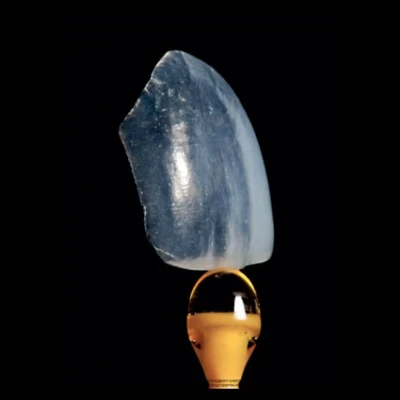
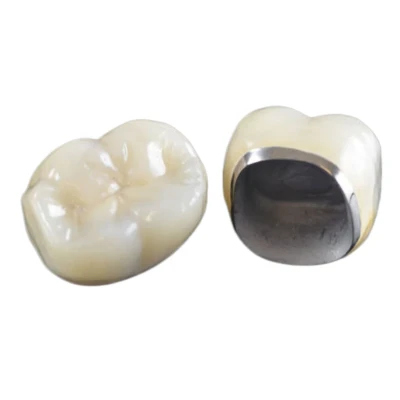
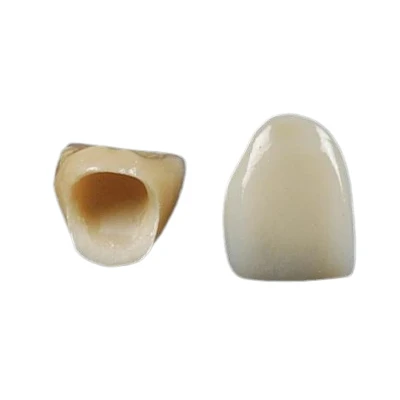
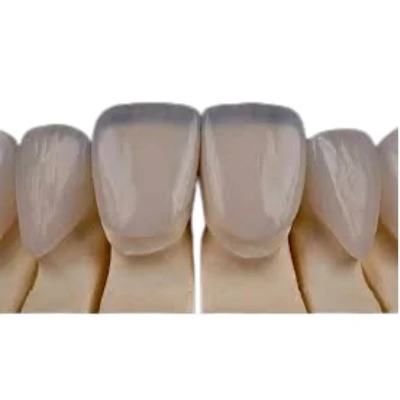
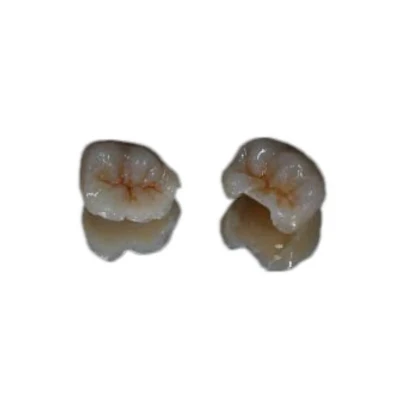
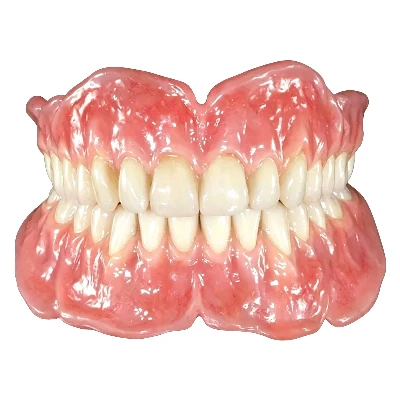
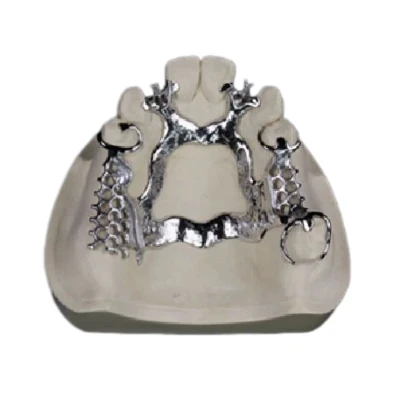
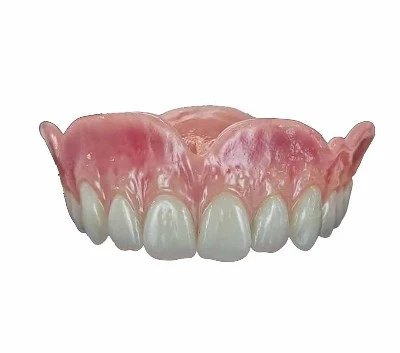


ADS Dental Lab Ltd. is one of the most experienced manufacturers and suppliers of zirconia crowns with natural incisal translucency in China, featured by quality products and low price. Please feel free to wholesale customized zirconia crowns with natural incisal translucency made in China here from our factory. For quotation, contact us now.
Zirconia crowns with natural incisal translucency are aesthetic anterior restorations designed to reproduce the gradual optical transition seen in natural front teeth. Rather than presenting a uniform shade from the cervical area to the incisal edge, these restorations can incorporate warmer body tones, reduced chroma toward the incisal region, subtle gray-blue effects, and controlled translucency for a more natural appearance.
Achieving natural-looking incisal effects depends on more than simply choosing a translucent zirconia. Zirconia material selection, crown thickness, incisal morphology, underlying stump shade, staining and characterization, surface texture, glazing, and polishing all influence the final result.
At ADS Dental Lab, we manufacture customized anterior zirconia crowns for overseas dentists and dental laboratories using digital CAD/CAM production combined with technician-led aesthetic finishing. Patient photographs, shade information, stump shade, neighboring tooth references, and clinical instructions can all be incorporated into the case workflow.
Send your anterior zirconia crown case to ADS Dental Lab for shade evaluation, incisal design, and customized aesthetic finishing.


Product Specifications
| SpecificationDetails | |
| Product Type | Zirconia crowns with natural incisal translucency |
| Applicable Teeth | Central incisors, lateral incisors, canines |
| Material Options | High-translucency, multilayer, or case-selected dental zirconia |
| Main Aesthetic Focus | Incisal translucency, shade transition, optical depth |
| Shade Options | VITA shade system and customized shade matching |
| Incisal Effects | Translucent zones, subtle gray-blue effects, individualized characterization |
| Finishing Options | Staining, glazing, polishing, surface texture refinement |
| Case Submission | STL files or traditional impressions with patient and shade photos |
What Creates Natural Incisal Translucency?
Natural anterior teeth rarely have the same optical appearance from cervical margin to incisal edge. Recreating this transition requires several restorative factors to work together.
Cervical-to-Incisal Shade Transition
The cervical portion of a natural tooth often appears slightly warmer and more chromatic, while the incisal area typically becomes lighter in chroma and more translucent.
For aesthetic zirconia cases, ADS technicians can create a controlled transition between these areas rather than applying one uniform shade across the entire crown.
Controlled Gray-Blue Incisal Effects
Natural incisors may exhibit subtle gray, blue, milky, or translucent effects around the incisal edge. When these characteristics are visible in the patient's natural dentition, they can be incorporated into the restoration using the supplied clinical photographs as references.
The goal is not to make every incisal edge blue, but to reproduce the optical characteristics appropriate to the individual case.
Appropriate Zirconia Translucency
The selected zirconia has a direct influence on light transmission. High-translucency or multilayer zirconia may be considered for anterior cases where optical depth is important.
However, greater translucency is not always the best solution. A dark stump shade, limited restorative space, or a strong masking requirement may call for a different balance between translucency and opacity.
Crown Thickness and Incisal Design
Material thickness also influences how light passes through a zirconia crown. During digital design, our technicians consider:
- Incisal thickness
- Labial contour
- Crown length
- Available restorative space
- Internal crown structure
- Relationship with neighboring teeth
Natural incisal translucency therefore begins at the design stage-not only during final staining.
Surface Texture and Light Reflection
Surface morphology affects how the restoration reflects and scatters light. Subtle facial texture, developmental grooves, glazing, polishing, and controlled luster can make the incisal region appear more dimensional and lifelike.
Natural Incisal Translucency vs. Uniform Zirconia Shade
| FeatureNatural Incisal TranslucencyUniform Shade Appearance | ||
| Cervical Area | Can show warmer or more chromatic tones | More consistent shade throughout |
| Body Area | Gradual shade transition | Relatively uniform color |
| Incisal Area | More translucent with customized optical effects | Similar opacity to crown body |
| Visual Depth | Greater optical variation | Simpler visual appearance |
| Typical Focus | Aesthetic anterior restorations | General restorative requirements |
Neither approach is automatically right for every patient. The appropriate amount of translucency and characterization should follow the clinical situation, surrounding teeth, and desired aesthetic outcome.
Key Features & ADS Manufacturing Advantages

Patient Photo-Based Incisal Analysis
For anterior aesthetic cases, clinical photographs are important references. A VITA shade alone cannot communicate the exact distribution of translucency, brightness, surface texture, or gray-blue incisal effects.
We recommend sending:
- Smile photographs
- Retracted anterior photographs
- Shade-tab photos
- Close-up images of neighboring teeth
- Pre-operative photographs
These references help our technicians understand how the incisal area should be characterized.
Case-Based Zirconia Material Selection
ADS evaluates stump shade, restorative space, tooth position, target shade, required translucency, and masking needs before selecting an appropriate zirconia solution.
Instead of automatically using the most translucent material available, the objective is to find a suitable balance between aesthetics, masking ability, and structural requirements.
Digital Anterior Crown Design
Natural anterior aesthetics also depend on morphology. Our CAD technicians consider:
- Central and lateral incisor proportions
- Incisal edge position
- Crown length
- Facial contour
- Line angles
- Proximal contacts
- Gingival transition
- Symmetry and natural variation
For multi-unit anterior restorations, crowns are designed to coordinate as a group without making every tooth look mechanically identical.
Customized Incisal Characterization
After milling and sintering, experienced technicians can refine the incisal region according to the clinical references.
Depending on the case, this may include:
- Translucent incisal zones
- Subtle gray-blue effects
- White or milky highlights
- Cervical-to-incisal color gradients
- Localized characterization
- Controlled incisal brightness
Surface Texture and Luster Control
Aesthetic finishing includes more than shade. Facial microtexture, developmental anatomy, glazing, and polishing influence how light reflects across the crown.
ADS technicians adjust surface detail according to the desired age, morphology, and appearance of the restoration.
Detailed Aesthetic and Margin Inspection
Before delivery, each restoration is reviewed for margin, fit, contact, crown contour, shade transition, incisal effects, surface texture, and luster.
ADS uses digital magnification to support detailed evaluation of margins and finishing details. Original Amann Girrbach articulators are also used where indicated to assist with occlusal verification.
Clinical Indications
Zirconia crowns with natural incisal translucency may be suitable for:
- Anterior zirconia crowns
- Central incisor restorations
- Lateral incisor restorations
- Canine restorations
- Multi-unit anterior zirconia crowns
- Smile-zone restorations
- Cases requiring customized incisal translucency
- Cases requiring subtle gray-blue incisal effects
- Front teeth requiring cervical-to-incisal shade transitions
- Natural-looking zirconia crown restorations
- Aesthetic cases requiring customized optical characteristics
Case Selection Notes
Higher translucency does not automatically produce a better anterior restoration. The final appearance also depends on stump shade, zirconia type, crown thickness, available space, shade requirements, and the clinical background beneath the restoration.
For dark preparations or cases requiring stronger masking, ADS can evaluate whether a different zirconia material, multilayer solution, PFZ crown, or another restorative option may be more appropriate.
What to Send for the Best Result
For a routine anterior zirconia case, please provide:
- Prepared arch STL file or traditional impression
- Opposing arch
- Bite record
- Tooth number
- Target shade
- Restoration prescription
For cases requiring customized incisal translucency, we recommend additionally providing:
- Patient smile photo
- Retracted frontal photo
- Close-up anterior photo
- Shade-guide photograph
- Stump shade
- Pre-preparation photograph
- Temporary restoration scan or photo
- Desired tooth length
- Neighboring tooth photographs
- Incisal translucency or characterization references
If you would like ADS to reproduce specific gray-blue, translucent, milky, or other natural incisal effects, clear close-up photographs are more useful than a shade number alone.
Our Cooperation and Manufacturing Workflow

Stage 1 - Case Submission
Clients submit STL files or traditional impressions together with the prescription, bite record, shade information, and aesthetic photographs.
Stage 2 - Shade and Incisal Analysis
Our technicians review the target shade, cervical tone, body value, incisal characteristics, neighboring dentition, and stump shade.
Stage 3 - Zirconia Material Selection
A suitable zirconia option is selected according to required translucency, masking ability, restorative space, and the dentist's prescription.
Stage 4 - Digital Anterior Crown Design
The crowns are digitally designed with attention to tooth proportion, labial morphology, contacts, crown length, and incisal edge position.
Stage 5 - Design Confirmation When Required
For multi-unit, highly aesthetic, or complex anterior cases, ADS can provide an STL or HTML design preview for client confirmation before production.
Stage 6 - CAD/CAM Milling and Sintering
The approved restoration is milled from the selected zirconia material and sintered according to the appropriate workflow.
Stage 7 - Individual Incisal Characterization
Experienced technicians refine cervical-to-incisal shade transitions, translucent areas, subtle gray-blue effects, surface characteristics, and other individualized details according to the clinical references.
Stage 8 - Glazing, Polishing and Aesthetic QC
The restoration is glazed or polished as required, then inspected for shade, translucency, morphology, texture, surface luster, margin, contacts, and overall harmony.
Stage 9 - Worldwide Shipping
Finished restorations are securely packaged and shipped internationally through FedEx, UPS, DHL, or LINEX.
Why Choose ADS Dental Lab

ADS Dental Lab is a digital dental laboratory in Shenzhen, China, manufacturing custom restorations for overseas dentists and dental laboratories. We accept both STL digital cases and traditional impressions, supporting individual aesthetic cases as well as long-term outsourcing cooperation.
With more than 400 skilled dental technicians, CAD/CAM production capability, 40+ customer service representatives, and 363-day online support, ADS combines digital manufacturing with technician-led aesthetic finishing.
For anterior zirconia cases, our team supports patient photo-based aesthetic analysis, case-specific zirconia selection, digital anterior morphology design, customized incisal translucency, cervical-to-incisal shade transitions, surface texture refinement, digital magnification inspection, and design confirmation when required.
Send your anterior zirconia crown case to ADS Dental Lab and evaluate our incisal translucency, shade transition, morphology, aesthetic finishing, and communication from your first case.

FAQ
Q1: What is natural incisal translucency in a zirconia crown?
It refers to the controlled reduction in opacity and increase in optical depth toward the incisal edge, often combined with subtle gray-blue, milky, or translucent effects that resemble characteristics seen in natural anterior teeth.
Q2: Can zirconia crowns reproduce gray-blue incisal effects?
Yes, depending on the zirconia material, crown thickness, clinical reference, and aesthetic requirements. These effects can be customized when they are appropriate for the patient's natural dentition.
Q3: Which zirconia material is best for incisal translucency?
There is no single material that is best for every case. High-translucency or multilayer zirconia may be considered, but stump shade, masking requirements, crown thickness, and functional needs must also be evaluated.
Q4: Is higher translucency always better for anterior crowns?
No. Excessive translucency may allow a dark underlying preparation to influence the final shade. The correct balance between translucency and masking ability depends on the individual case.
Q5: What photos should I send for an aesthetic anterior case?
We recommend a smile photo, retracted frontal image, close-up anterior photos, a shade-tab photograph, stump shade, and neighboring tooth references.
Q6: Can ADS customize the incisal effect to match natural teeth?
Yes. Our technicians can use the supplied clinical photos and prescription to customize shade gradients, incisal translucency, subtle color effects, texture, and surface luster.
Q7: Can I review the crown design before production?
Yes. For aesthetic, multi-unit, or complex anterior cases, ADS can provide an STL or HTML design preview for confirmation when required.
Q8: Can I start with one aesthetic zirconia case?
Yes. You can begin with a single case to evaluate our digital design, incisal characterization, shade handling, surface finishing, communication, and delivery workflow.
Hot Tags: zirconia crowns with natural incisal translucency, China zirconia crowns with natural incisal translucency manufacturers, suppliers, factory, bonded hyrax appliance, braces mouth expander, hawley retainer with clear wire, narrow upper arch teeth, palate spacer for teeth, quad helix palate expander


