

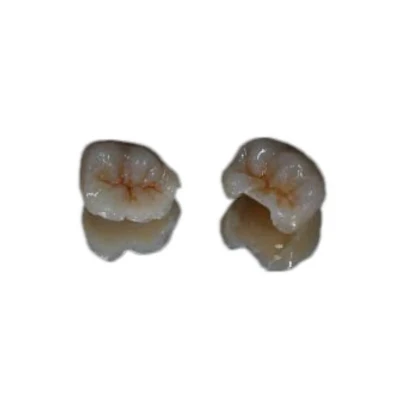


ADS Dental Lab Ltd. is one of the most experienced manufacturers and suppliers of minimal invasive e.max inlay solutions in China, featured by quality products and low price. Please feel free to wholesale customized minimal invasive e.max inlay solutions made in China here from our factory. For quotation, contact us now.
Minimal invasive restorative dentistry is no longer just a clinical preference. For many posterior cases, it is the more responsible treatment direction. When the remaining tooth structure is still strong enough, dentists do not always need to reduce the entire tooth for a full crown. A well-designed E.max inlay can restore function, protect the weakened area, and preserve more natural enamel and dentin.
At ADS Dental Lab, we provide customized Minimal Invasive E.max Inlay Solutions for overseas dentists, dental clinics, and dental laboratories. Using lithium disilicate ceramic and a precise digital workflow, we fabricate E.max inlays that support conservative preparation concepts while maintaining reliable strength, marginal accuracy, and natural posterior aesthetics.
This type of restoration is especially valuable for cases where direct composite may not be durable enough, but full crown preparation would remove too much healthy tooth structure. With accurate CAD/CAM design, proper bonding space, controlled contact, and refined occlusal anatomy, an emax inlay can become a practical and long-term solution for minimally invasive posterior restoration.
Send your minimally invasive E.max inlay case to ADS Dental Lab and evaluate our fit, communication, and consistency with a trial case.


What Makes E.max Inlay a Minimally Invasive Solution?
An E.max inlay is designed to restore only the defective or prepared internal area of the tooth. Unlike a crown, it does not require circumferential reduction of the entire clinical crown. When the cusps, marginal ridges, and remaining walls are stable, the dentist can preserve more natural structure and use adhesive bonding to support the restoration.
This is the main reason lithium disilicate inlay restorations are widely used in minimally invasive dentistry. The material offers strength, aesthetics, and bonding compatibility, while the preparation remains conservative.
For patients, this can mean less tooth reduction and a more natural restoration. For clinicians, it offers a predictable indirect ceramic solution between direct composite fillings and full-coverage crowns.
Product Specifications
Specification | Details |
| Product Name | Minimal Invasive E.max Inlay Solutions |
| Product Type | Adhesive ceramic inlay / indirect posterior restoration |
| Material | Lithium disilicate glass ceramic |
| Main Application | Conservative restoration of molars and premolars |
| Preparation Concept | Minimal tooth reduction with preserved healthy structure |
| Strength | Approx. 400 MPa flexural strength after crystallization |
| Shade Options | VITA Classical shades / customized shade matching |
| Manufacturing Method | CAD/CAM design, milling, crystallization, stain and glaze |
| File Acceptance | STL files accepted; conventional impressions also accepted |
| Case Requirements | Preparation scan or impression, bite record, shade, patient photos when needed, prescription |
| Turnaround Time | Usually completed within 4–5 days after case received |
| Payment Methods | Bank transfer and PayPal accepted |
Key Features
Tooth Structure Preservation
The biggest advantage of a minimally invasive E.max inlay is tooth preservation. Instead of preparing the whole tooth for a crown, the dentist can focus only on the damaged area. This helps preserve sound enamel, dentin, cusps, and natural tooth anatomy whenever clinically possible.
For early to moderate posterior defects, this approach can be more conservative than full-coverage restoration while still offering stronger performance than a large direct filling.
Adhesive Bonding Compatibility
E.max lithium disilicate is suitable for adhesive bonding with resin cement. When the preparation provides enough enamel and proper isolation can be achieved, the bonded restoration can work together with the remaining tooth structure.
This adhesive concept is important for minimally invasive dentistry. The restoration does not only fill the cavity; it becomes part of a bonded ceramic-tooth complex designed to restore strength and function.
Accurate Marginal Fit for Conservative Cavities
Conservative preparations often leave more complex cavity forms. That means the lab must pay close attention to margin clarity, internal fit, insertion path, and contact relationship.
At ADS Dental Lab, each emax inlay case is reviewed before production. Our technicians check the preparation margin, occlusal clearance, adjacent teeth, and bite relationship. The goal is to fabricate an inlay that seats smoothly and requires less chairside adjustment.
Natural Posterior Aesthetics
Although E.max inlays are often used in posterior teeth, aesthetics still matter. Patients increasingly prefer metal-free restorations that blend naturally with their own teeth.
Lithium disilicate ceramic offers good translucency and shade integration, making it a strong choice for cosmetic dental lab cases where function and appearance are both required. We can work with standard shade information or patient photos to improve color matching.
Controlled Contact and Occlusion
For posterior inlays, fit alone is not enough. The restoration must also restore stable proximal contact and functional occlusal anatomy. Weak contact may cause food impaction, while excessive occlusal contact may lead to discomfort or adjustment time.
Our technicians refine contact points, grooves, ridges, and occlusal surfaces carefully before final glazing. This helps overseas dentists receive restorations that are more predictable during try-in.
Suitable for Dental Lab Outsourcing
Minimal invasive ceramic restorations require communication, consistency, and accurate case handling. ADS Dental Lab supports overseas dentists and dental laboratories with both digital and traditional workflows.
You can send STL files directly, or ship physical impressions through FedEx, UPS, DHL, Linex, or other couriers. For cases requiring confirmation, we can send an STL file or HTML design preview before production. We proceed only after the client confirms the design.
Clinical Indications
Minimal invasive E.max inlay solutions are suitable for posterior cases where the remaining tooth structure is adequate and full crown preparation is not necessary.
Common indications include:
· Small to moderate posterior defects
· Class I and Class II cavity restorations
· Replacement of old composite fillings
· Molars and premolars with stable remaining cusps
· Conservative restoration planning for posterior teeth
· Patients who prefer metal-free ceramic restorations
· Cases requiring better wear resistance than direct composite
· Restorations where natural shade integration is important
· Teeth with enough enamel surface for reliable adhesive bonding
· Dental clinics looking for long-term lithium disilicate inlay outsourcing
In cases with severe tooth structure loss, cracked cusps, insufficient remaining walls, or heavy bruxism without protection, an E.max onlay, overlay, or crown may be a better option. Our team can review the case and provide feedback before production.
Digital Case Requirements
To achieve a stable minimally invasive E.max inlay case, complete case information is important. The more clearly the dentist communicates the preparation, shade, bite, and clinical expectation, the more accurately the lab can fabricate the restoration.
For digital cases, we accept STL files from intraoral scanners. For traditional cases, clients can send impressions or models by international courier. To improve accuracy, we recommend providing the following information whenever available:
· STL scan file or physical impression
· Pre-preparation record
· Post-preparation scan or model
· Bite record
· Stump shade or tooth shade
· Patient photos for shade and morphology reference
· Temporary restoration scan if available
· Case prescription and special clinical instructions
· Desired occlusal anatomy, contact strength, or tooth morphology when relevant
For cases that need design confirmation, ADS Dental Lab can prepare a digital preview and send an STL file or HTML file for client review. Production begins after approval.
Manufacturing Workflow
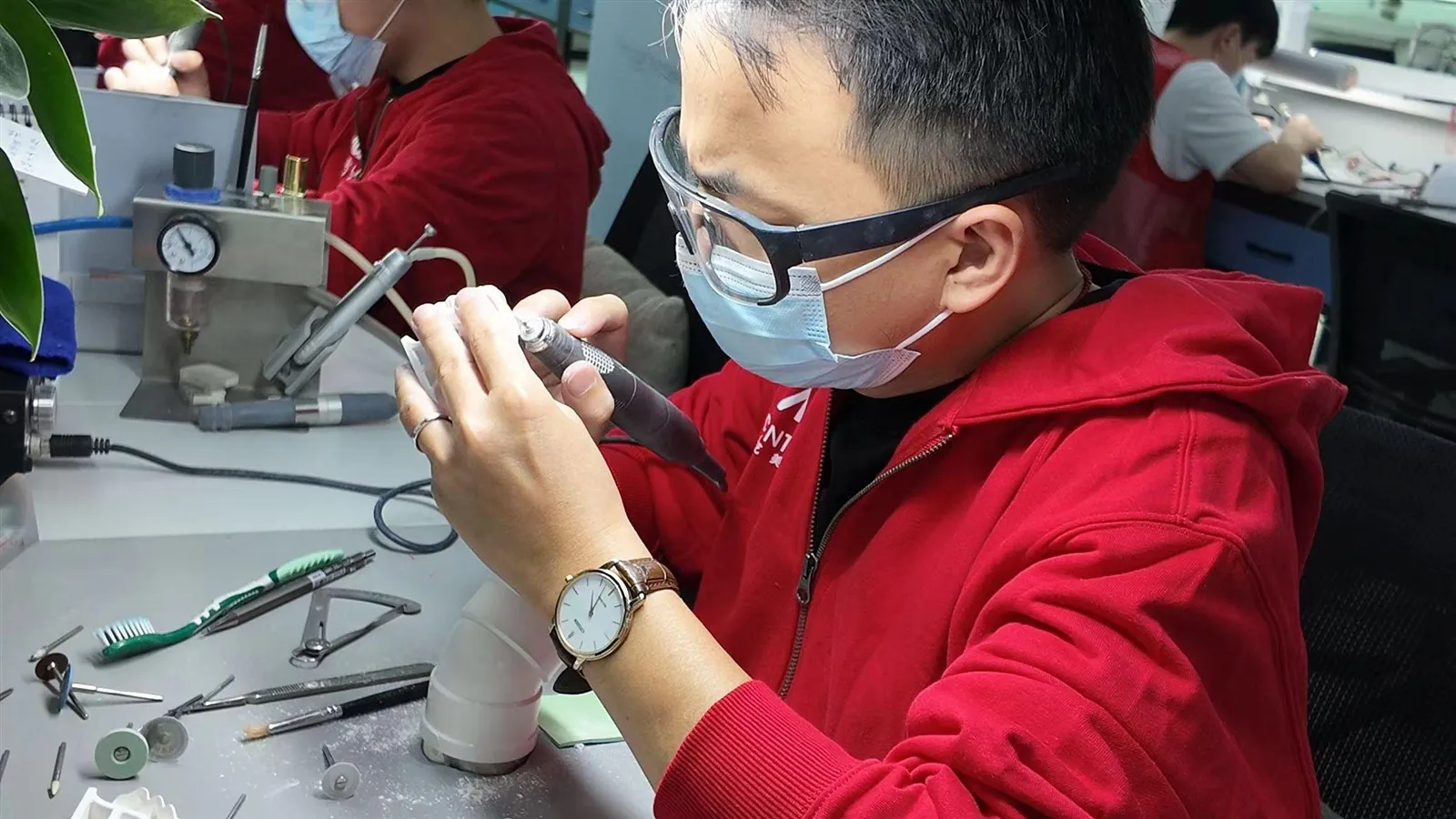
1. Case Submission
Clients send STL files online or ship conventional impressions to ADS Dental Lab. We accept physical cases through FedEx, UPS, DHL, Linex, and other international courier services. Clear prescriptions, shade details, bite records, and preparation information help us begin the case efficiently.
2. Preparation and Margin Review
Our technical team reviews the case before design. For minimal invasive E.max inlay cases, we pay particular attention to margin clarity, remaining tooth structure, cavity form, occlusal space, and adjacent contact areas. If information is missing, we contact the client before moving forward.
3. Digital Design Preview
Our CAD team designs the lithium disilicate inlay according to the preparation, bite, and restorative requirements. When needed, we can send an STL file or HTML file for client confirmation. This step is especially useful for overseas outsourcing because it reduces misunderstanding before production.
4. CAD/CAM Milling
After approval, the restoration is milled from lithium disilicate ceramic. CAD/CAM milling helps control the internal fit, margin accuracy, and anatomical design of the inlay, which are essential for conservative cavity preparations.
5. Crystallization
The milled restoration is crystallized in a ceramic furnace to achieve its final strength and shade properties. This step gives the E.max inlay the mechanical performance required for posterior function.
6. Contact and Occlusion Refinement
Our technicians refine the proximal contact, occlusal anatomy, grooves, and functional surfaces. The aim is to provide a restoration that fits the clinical situation and reduces unnecessary chairside adjustment.
7. Stain, Glaze, and Final Finish
The inlay is characterized, stained, and glazed according to the required shade and natural tooth appearance. Surface texture and luster are adjusted to help the restoration blend with surrounding posterior teeth.
8. Quality Control and Shipping
Before delivery, each E.max inlay is checked for marginal fit, internal adaptation, contact, occlusion, shade, and surface finish. The finished restoration is then securely packed and shipped internationally. Most cases are completed within 4–5 days after we receive the case.
Why Choose ADS Dental Lab

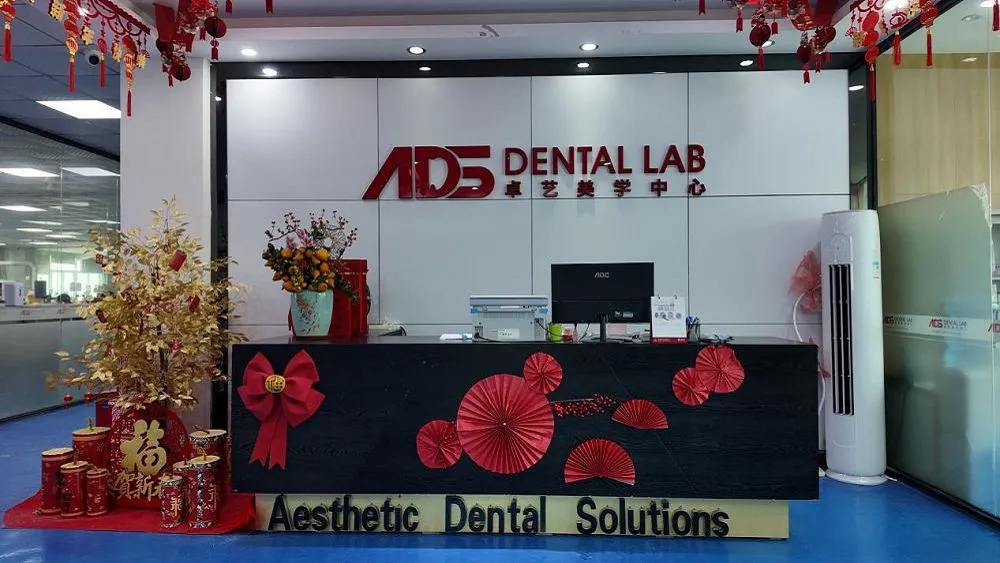
ADS Dental Lab is a China digital dental lab serving overseas dentists, clinics, and dental laboratories with customized fixed restorations, veneers, crowns, bridges, implant restorations, inlays, onlays, and other dental lab products.
For minimal invasive E.max inlay cases, we focus on the details that matter clinically: preparation review, accurate margin fit, stable contact, proper occlusion, natural shade integration, and dependable turnaround time. Our team understands the needs of international clients who require consistent quality and clear communication from an outsourcing dental lab.
We accept STL digital files as well as traditional impressions. Most E.max inlay cases can be completed within 4–5 days after receiving the case. We support trial orders, regular clinic cases, and long-term lab-to-lab cooperation. Payment can be made by bank transfer or PayPal.
As both a dental lab China partner and a cosmetic dental lab, ADS Dental Lab helps clients complete lithium disilicate inlay restorations with a practical digital workflow and reliable international delivery.
Start with a trial minimal invasive E.max inlay case and see how ADS Dental Lab can support your restorative workflow.

FAQ
Q1: What is a minimal invasive E.max inlay?
A minimal invasive E.max inlay is a lithium disilicate ceramic restoration designed to restore damaged posterior tooth structure while preserving as much healthy enamel and dentin as possible. It is commonly used when a direct filling is not enough but a full crown is unnecessary.
Q2: When should dentists choose an E.max inlay instead of a crown?
Dentists may choose an E.max inlay when the tooth still has stable cusps and enough remaining structure. If the defect is moderate and the tooth does not need full coverage, an inlay can be a more conservative option than a crown.
Q3: Do you accept STL files?
Yes. ADS Dental Lab accepts STL files for E.max inlay cases. We also recommend sending bite records, shade information, patient photos when needed, and a clear prescription.
Q4: Can I send physical impressions?
Yes. We accept traditional impressions and models. You can ship them to us through FedEx, UPS, DHL, Linex, or other international couriers.
Q5: How long does production take?
Most E.max inlay cases are completed within 4–5 days after we receive the case and all necessary information. International shipping time depends on the destination and courier service.
Q6: Can you send a design preview before production?
Yes. For suitable cases, we can send an STL file or HTML design preview for client confirmation. We start production only after the design is approved.
Q7: What information should I provide for an E.max inlay case?
Please provide the STL scan or impression, bite record, shade information, preparation details, and case prescription. Patient photos, pre-preparation records, post-preparation scans, and temporary restoration scans can also help improve the final result.
Q8: Do you accept trial cases from overseas dentists or dental labs?
Yes. We welcome trial cases. A single E.max inlay case is a good way to evaluate our fit, contact, occlusion, shade control, turnaround time, and communication before starting regular outsourcing cooperation.
Hot Tags: minimal invasive e.max inlay solutions, China minimal invasive e.max inlay solutions manufacturers, suppliers, factory, acrylic resin partial denture, expansion appliance dental, expansion plate orthodontics, fixed palatal expander, Natural Looking And Aesthetic Emax Veneer, spacers and expanders


