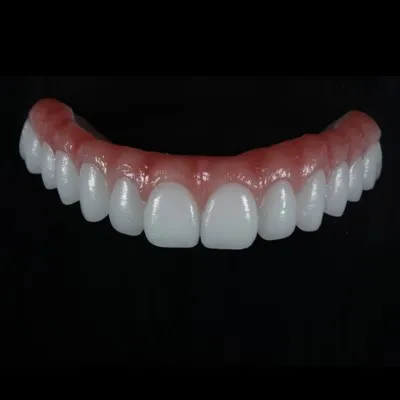
PFM crowns consist of a metal substructure covered with porcelain layers. Porcelain crowns in most clinical discussions refer to metal-free all-ceramic restorations, such as those made from zirconia or lithium disilicate.
The right choice depends on tooth position, occlusal forces, esthetic needs, available preparation space, and budget. No single material wins every case. Dentists succeed by matching the restoration to the specific clinical situation rather than following trends.

What Are PFM and Porcelain Crowns?
What Is a PFM Crown?
A PFM crown, or porcelain-fused-to-metal crown, features a metal coping that provides the core strength. Porcelain layers cover this coping to create the tooth color and shape.
For decades, this design served as the standard for crown and bridge work. The metal framework delivers reliable support under load, while the porcelain handles visible surfaces. Many labs still produce high volumes of PFM restorations for posterior teeth and multi-unit bridges because the metal coping resists flexure effectively.
However, the metal base creates limitations. It blocks light transmission, forcing technicians to use opaque porcelain layers that reduce natural depth. Over years of service, especially with gingival recession, the metal margin can become visible as a dark line at the gumline.
What Is a Porcelain Crown?
In patient searches and everyday communication, "porcelain crown" usually means a metal-free all-ceramic crown. These restorations use materials like zirconia, lithium disilicate (e.max), or feldspathic ceramics for the entire structure.
Each ceramic system behaves differently. Zirconia offers flexural strength of 900–1200 MPa and excels in high-load areas. Lithium disilicate provides 360–400 MPa with superior translucency for anterior esthetics. The absence of metal allows light to pass through more naturally, mimicking enamel better than PFM options.
Terminology confusion arises because PFM restorations also contain porcelain. In this article, porcelain crown refers specifically to metal-free all-ceramic options.
PFM vs Porcelain Crowns: Key Differences
Structure and Material Behavior
PFM crowns combine a metal coping (often nickel-chromium, gold-palladium, or other alloys) with veneered porcelain. The metal supplies rigidity. All-ceramic crowns build strength from the material itself, whether monolithic zirconia or layered lithium disilicate.
This structural difference affects everything from minimum thickness requirements to failure modes. PFM tolerates thinner preps in some scenarios due to the metal core, while all-ceramic needs adequate bulk for fracture resistance.
Esthetics, Translucency, and Shade Matching
All-ceramic crowns deliver superior light transmission. They replicate the translucent halo and incisal effects of natural teeth more convincingly, especially in anterior zones with high smile lines or thin gingival biotypes.
PFM crowns appear more opaque. The metal core requires opaque porcelain to mask gray tones, which flattens the appearance. Shade matching remains challenging near the cervical area where metal influence shows.
In high-esthetic cases, technicians often prefer all-ceramic systems for better blend with adjacent teeth.
Strength, Chipping Risk, and Longevity
PFM crowns provide consistent performance under load thanks to the metal framework. Studies show 5-year survival rates around 94-96% for metal-ceramic crowns.
All-ceramic performance varies by material. High-strength zirconia often matches or exceeds PFM longevity in posterior applications, with some 5-year studies showing 98% survival for monolithic designs. Lithium disilicate works well anteriorly but requires careful case selection posteriorly.
Chipping remains a real risk for both. In PFM, porcelain can delaminate from the metal if unsupported or if occlusion is heavy. In layered all-ceramic, veneering porcelain may chip off zirconia cores. Monolithic designs reduce this issue significantly.
Gumline Appearance and Metal Visibility
PFM crowns carry a known long-term risk: the dark metal line. As gums recede naturally over time or due to periodontal changes, the metal collar becomes exposed. This creates visible gray shadowing, particularly problematic in patients with thin biotypes or high smile lines.
All-ceramic crowns avoid this entirely. The uniform material maintains a more natural emergence profile even with mild recession.
When to Choose PFM Crowns
PFM crowns still solve specific problems effectively.
Posterior Crowns and Functional Load In molars and premolars with heavy occlusal forces, the metal framework provides dependable support. Patients with bruxism or parafunctional habits often benefit from this rigidity when combined with proper occlusal design.
Bridge Cases and Cost-Controlled Restorations For multi-unit bridges, especially longer spans, PFM frameworks offer excellent connector strength and resistance to flexure. When budget constraints matter, PFM frequently delivers a practical balance of durability and cost, assuming the lab controls alloy quality and porcelain application.
Cases Requiring Strong Masking Ability Deeply discolored stumps, metal posts, or endodontically treated teeth with dark dentin respond well to PFM's opaque layering. The metal substructure blocks underlying colors more predictably than some translucent ceramics.
When to Choose Porcelain or All-Ceramic Crowns
All-ceramic options shine in esthetic and biocompatibility-focused situations.
Anterior and High-Esthetic Cases Front teeth demand natural translucency, surface texture, and seamless gumline integration. Lithium disilicate or high-translucency zirconia variants deliver results that PFM rarely matches in visible zones.
Metal-Free Restorations and Biocompatibility Concerns Patients with metal sensitivities or those who prefer avoiding metal altogether need all-ceramic solutions. These materials generally show excellent soft tissue response.
Cases with Suitable Space and Material Selection Success requires adequate reduction. Lithium disilicate suits conservative preps in low-load anterior areas. Zirconia handles higher demands but still needs proper thickness to prevent fracture.
Clinical Factors That Should Guide Crown Selection
Tooth position drives many decisions. Anterior teeth prioritize esthetics and light transmission. Posterior teeth demand strength and wear resistance.
Preparation space matters critically. Insufficient reduction leads to overcontoured restorations or compromised material performance. PFM tolerates certain thin areas better due to metal, but all-ceramic requires bulk for both strength and optics.
Stump color and gingival conditions influence choice heavily. Dark preparations may need stronger masking. Thin gingival biotypes increase the visibility risk of PFM metal margins.
Occlusal load and patient habits complete the picture. Bruxers need materials and designs that manage forces effectively, often favoring high-strength zirconia or well-designed PFM.
Quick Selection Guide: PFM vs Porcelain Crowns by Case Type
|
Clinical Situation |
Usually Better Option |
Reason |
|
Front tooth, high esthetic demand |
All-ceramic (LiSi or translucent zirconia) |
Superior translucency and gumline harmony |
|
Posterior crown, heavy load |
PFM or high-strength zirconia |
Structural support under chewing forces |
|
Budget-sensitive posterior case |
PFM |
Good strength-to-cost ratio |
|
Patient wants metal-free |
All-ceramic |
No metal substructure |
|
Thin gingival biotype / high smile line |
All-ceramic |
No risk of dark metal line |
|
Long-span bridge |
PFM or zirconia framework |
Connector strength and rigidity |
|
Bruxism / heavy wear |
Monolithic zirconia or PFM |
Fracture resistance and occlusal stability |
|
Dark stump color |
PFM or opaque zirconia |
Better masking capability |
This table offers directional guidance. Final decisions always incorporate full case details and lab communication.

Laboratory Factors That Affect the Final Result
Material choice alone does not determine success. Framework design, margin quality, and occlusion play equally important roles.
In PFM production, the metal coping must support porcelain adequately while allowing proper thickness. Poor framework design leads to chipping or esthetic failures. Bridges require precise connector dimensions and pontic shaping.
Digital workflows improve consistency. Accurate STL files, opposing models, bite records, and detailed shade documentation (including stump shade photos) reduce remakes. Labs with strong CAD/CAM capabilities deliver better marginal fit and contact points, especially important for overseas outsourcing.
For dental practices and labs sending cases internationally, the real question extends beyond PFM versus all-ceramic. Can the partner lab maintain tight margins, stable occlusion, predictable shading, and low remake rates over hundreds of units?
ADS Dental Laboratory Ltd operates as a China-based digital dental lab focused on long-term outsourcing partnerships. We produce PFM crowns, zirconia, lithium disilicate, and bridgework with consistent quality control for overseas dentists and laboratories.

Conclusion
PFM crowns deliver reliable strength and masking in posterior and bridge applications. All-ceramic options provide superior esthetics and biocompatibility for anterior and metal-free needs. Success comes from evaluating each case on tooth position, occlusion, preparation, stump color, and patient expectations.
At ADS Dental Laboratory Ltd, we support overseas dental practices and labs with stable, high-quality custom restorations in both PFM and all-ceramic systems. Contact us to discuss your outsourcing needs for consistent crown and bridge production.
FAQ
Is a PFM crown the same as a porcelain crown?
No. PFM has a metal core with porcelain veneer. Porcelain crowns in common usage mean metal-free all-ceramic restorations.
Which looks more natural?
All-ceramic crowns usually appear more natural due to better light transmission and absence of metal shadowing, particularly in anterior regions.
Are PFM crowns still used today?
Yes. They remain practical for many posterior cases, bridges, and situations needing strong masking or cost efficiency.
Which is stronger?
It depends on the specific all-ceramic material. High-strength zirconia often outperforms traditional PFM in fracture resistance, while lithium disilicate suits lower-load areas.
Can porcelain crowns be used for molars?
Yes, with proper material selection. Monolithic zirconia handles posterior demands well. Layered glass ceramics require more caution in high-load zones.
What should dentists send to the lab for crown fabrication?
Provide digital scans or impressions, opposing arch, bite registration, multiple shade photos under different lighting, stump shade if possible, margin design preferences, and any occlusal or esthetic notes.