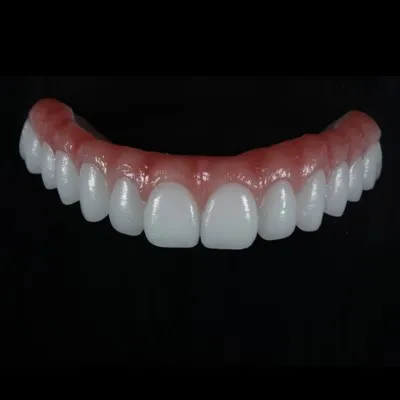
Dental crown technology is not just about choosing "zirconia" or "porcelain." For dentists, dental clinics, and labs, the real decision is more practical: which crown material fits the case, which fabrication method gives predictable results, and which lab workflow can keep quality consistent over time.
A dental crown is a custom restoration that covers the visible part of a prepared tooth or implant abutment. It restores shape, function, strength, and appearance. But different crown technologies behave very differently in the mouth. A crown for an anterior smile-zone case does not need the same material logic as a molar crown for a bruxism patient. A single lithium disilicate crown is not planned the same way as a full-arch zirconia restoration.
The best dental crown technology depends on the case.
That sounds simple, but this is where many selection problems start.

How Are Dental Crown Technologies Compared?
Dental crown technologies are usually compared by four factors: material type, fabrication method, clinical indication, and lab execution.
Material determines strength, translucency, wear behavior, and long-term risk. Fabrication method affects fit, repeatability, surface finishing, and turnaround time. Clinical indication decides whether beauty, load resistance, margin behavior, or cost should take priority. The dental lab then determines whether those choices are translated into a restoration that actually fits, functions, and matches the prescription.
In general:
- Zirconia crowns are often selected for posterior crowns, implant crowns, bridges, bruxism cases, and strength-driven restorations.
- Lithium disilicate crowns, often known by the E.max system, are commonly chosen for anterior crowns and cases where translucency and natural esthetics matter most.
- PFM crowns still have value in selected posterior or cost-sensitive cases, but they are less ideal where metal-free margins and high translucency are required.
- Full metal crowns are durable but limited to low-visibility functional areas.
- Resin or composite crowns are mainly used for temporary, provisional, pediatric, or transitional restorations.
No material solves every problem. The correct choice comes from matching the crown to the tooth position, occlusal load, esthetic demand, preparation design, budget, and production workflow.
Main Dental Crown Materials Compared
Dental crown materials can be divided into several major groups: zirconia, lithium disilicate, porcelain-fused-to-metal, full metal, and resin-based materials. Each one has a clear place in modern restorative dentistry.
The mistake is treating them as interchangeable.
Zirconia Crowns: Strength-Driven and Versatile
A zirconia crown is an all-ceramic crown made from zirconium dioxide. In modern dental labs, zirconia crowns are usually designed digitally and milled with CAD/CAM equipment before sintering, staining, glazing, and finishing.
Zirconia has become one of the most widely used dental crown materials because it offers high strength, good biocompatibility, and a metal-free structure. It works especially well when the case requires durability and predictable production.
But "zirconia crown" is not one single category.
Monolithic zirconia crowns are milled from one solid piece of zirconia. There is no separate porcelain layer on top, so the risk of veneer chipping is lower than layered restorations. This makes monolithic zirconia a common choice for molars, implant crowns, bruxism patients, and full-arch restorations.
Layered zirconia crowns use a zirconia core with hand-layered porcelain on the visible surface. This allows better depth, translucency, and surface texture, especially in anterior cases. The trade-off is that the porcelain layer depends heavily on technician skill and may chip under excessive force.
High-translucency and multilayer zirconia improve esthetics compared with older opaque zirconia. These materials are useful in cases that need better shade transition, but they should not be treated the same as traditional high-strength zirconia. Higher translucency often comes with different mechanical behavior, so case selection matters.
Zirconia is strong, but it is not automatic insurance against failure. Poor occlusal design, insufficient clearance, incorrect sintering, rushed finishing, or weak shade control can still create problems.
For a digital dental lab, zirconia crown quality depends on the whole chain: scan quality, CAD design, milling strategy, sintering parameters, staining, glazing, contact adjustment, and final inspection.
Lithium Disilicate Crowns: Esthetic-First Restorations
Lithium disilicate is a glass-ceramic material widely used for esthetic crowns, veneers, and selected premolar restorations. Many dentists know it through IPS E.max, one of the best-known lithium disilicate systems.
Its main strength is optical behavior.
Lithium disilicate transmits and reflects light in a way that can look closer to natural enamel than many high-strength ceramic materials. This makes it valuable for anterior crowns, smile-zone restorations, and cases where shade matching is demanding.
It can be made through pressing or CAD/CAM milling. Pressed lithium disilicate can deliver good marginal adaptation and esthetic results when handled by skilled technicians. Milled lithium disilicate works well in digital workflows, especially where speed and repeatability matter.
The limitation is load.
Lithium disilicate is not usually the first choice for heavy posterior forces, severe bruxism, long-span bridges, or cases with poor preparation support. It also requires careful tooth preparation and bonding. If the preparation lacks enough thickness, the margins are unclear, or the adhesive protocol is poorly controlled, the restoration can become risky.
A simple way to frame it: lithium disilicate is often an esthetic-first material, not a universal high-load posterior solution.
PFM Crowns: Proven but Less Esthetic Than All-Ceramic Options
A PFM crown, or porcelain-fused-to-metal crown, has a metal coping covered by tooth-colored porcelain. This crown type has been used for decades and still appears in many restorative workflows.
PFM crowns remain useful because they balance strength, cost, and clinical familiarity. In posterior areas or cases where the budget is limited, they can still be a practical option.
Their limitations are also well known.
The metal coping blocks light transmission, so PFM crowns usually look less natural than all-ceramic crowns in highly visible areas. If the gingiva recedes, a dark metal margin may show near the gumline. The porcelain layer can also chip away from the metal substructure, especially when occlusal force is high or the design is not well supported.
PFM is not obsolete. But it is no longer the default answer for every crown.
For anterior smile-zone cases, lithium disilicate, layered zirconia, or high-translucency zirconia often provide a better esthetic direction. For posterior cost-sensitive cases, PFM may still make sense when designed and finished properly.
Metal, Resin, and Composite Crowns: Specific Use Cases
Full metal crowns are made from metal alloys such as gold alloy, cobalt-chromium, or other dental alloys. Their main advantage is durability. They require less occlusal space than many ceramic solutions and can perform well in posterior low-visibility areas.
Their weakness is obvious: esthetics.
A full metal crown is rarely suitable for anterior teeth or visible smile-zone restorations. It is a function-first choice.
Resin and composite crowns serve a different role. They are cost-effective, relatively quick to produce, and useful for temporary or transitional cases. In digital labs, printed or milled resin materials may be used for provisionals, try-ins, or short-term restorations.
They should not be positioned as the main long-term solution for high-load permanent crowns.
Resin-based crowns have value. That value is usually provisional, not definitive.

Dental Crown Material Comparison Table
|
Crown Material |
Best Used For |
Strength |
Esthetics |
Common Fabrication Method |
Main Limitation |
|
Monolithic Zirconia |
Molars, implant crowns, bruxism cases, full-arch restorations |
Very high |
Medium to good |
CAD/CAM milling |
Less translucent than esthetic ceramics |
|
Layered Zirconia |
Anterior crowns, smile-zone cases, selected esthetic bridges |
High |
Very good |
Zirconia coping + porcelain layering |
Veneer chipping risk; technician-dependent |
|
Lithium Disilicate |
Front teeth, veneers, selected premolars |
Medium to high |
Excellent |
Pressing or CAD/CAM milling |
Not ideal for heavy posterior load |
|
PFM |
Posterior crowns, cost-sensitive cases |
High |
Moderate to good |
Metal coping + porcelain layering |
Metal margin and porcelain chipping risk |
|
Full Metal |
Low-visibility molars, limited clearance cases |
Very high |
Low |
Casting or milling |
Poor esthetics |
|
Resin / Composite |
Temporary crowns, provisionals, transitional cases |
Low to medium |
Moderate |
Manual, milled, or 3D printed |
Limited long-term durability |
This table should not be used as a fixed prescription. It is a selection map. The final decision still depends on preparation design, occlusion, restoration span, patient habits, and lab capability.
Dental Crown Fabrication Methods Compared
Fabrication method matters because the same material can perform differently depending on how it is designed, processed, and finished.
A zirconia crown from a well-controlled CAD/CAM workflow is not the same as a zirconia crown made with poor margin marking, weak milling strategy, and rushed staining. A layered anterior crown from an experienced ceramist is not the same as one built with poor support and uneven porcelain thickness.
The material sets the potential. The fabrication method decides how much of that potential is delivered.
Traditional Fabrication: Still Useful for Selected Cases
Traditional dental crown fabrication usually starts with a physical impression. The lab pours a stone model, makes a wax-up, fabricates the coping or framework, applies porcelain if needed, and completes finishing and adjustment.
This method is slower than digital production, but it still has a place. Complex esthetic cases, custom layering, and certain traditional workflows may benefit from the eye and hand skills of an experienced technician.
The drawback is consistency.
Manual processes depend heavily on technician experience. For overseas cases, physical impressions and models also add shipping time, handling risk, and communication delay. When a practice or dental lab needs regular production of crown and bridge cases, traditional workflow alone may become difficult to scale.
CAD/CAM and Milling: The Core of Modern Digital Crown Production
CAD/CAM dental crowns are designed by software and manufactured with computer-controlled equipment. A typical digital crown workflow includes:
intraoral scan or digital impression
- CAD design
- CAM milling
- Sintering or crystallization
- Staining and glazing
- Contact and occlusion adjustment
- Final quality control
This workflow is especially common for zirconia crowns, lithium disilicate crowns, implant crowns, and bridges.
The practical advantage is not just speed. Digital workflows make communication easier. A clinic or partner lab can send STL, PLY, or OBJ files across borders without shipping physical models first. The lab can review margins, design contacts, plan occlusion, and communicate case questions before production starts.
For B2B outsourcing, that matters.
A stable CAD/CAM workflow reduces variation across repeat cases. It also makes remakes easier to analyze because the original file, design, and production parameters can be reviewed.
Still, CAD/CAM does not autmatically mean better quality. A bad scan produces a bad design. A poorly marked margin creates a poor fit. Milling accuracy, bur condition, sintering cycles, material selection, and final finishing all affect the restoration.
Digital production improves control. It does not replace judgment.
3D Printing: Useful, but Not a Universal Permanent Crown Solution
3D printing has become an important part of the digital dental lab workflow, but its role should be understood correctly.
For crown and bridge work, 3D printing is commonly used for:
- Dental models
- Temporary crowns
- Try-ins
- Surgical guides
- Mock-ups
- Diagnostic setups
It improves workflow efficiency and helps doctors, labs, and patients visualize the case before final fabrication. For example, a printed model or provisional crown can help check emergence profile, occlusion, and esthetic direction before milling a final zirconia restoration.
But 3D printing should not be exaggerated as a universal replacement for zirconia, lithium disilicate, or PFM permanent crowns.
For many definitive restorations, milled ceramics and properly processed materials remain the more established route.

How to Choose the Right Crown Technology by Case Type
The fastest way to choose a crown material is to start with the case, not the product catalog.
Tooth position, occlusal load, esthetic visibility, implant status, span length, and patient habits should lead the decision. The crown material comes after that.
Anterior Crowns
Anterior crowns are usually esthetic-driven. The main concerns are translucency, shade matching, surface texture, margin behavior, and harmony with adjacent teeth.
For these cases, lithium disilicate, layered zirconia, or high-translucency zirconia are often considered. The final choice depends on how much strength is needed and how demanding the esthetic result is.
A single central incisor crown, for example, is much harder to match than a full anterior set. The crown must match the neighboring natural tooth in value, chroma, translucency, incisal edge character, and surface texture. In that case, material selection and technician skill both matter.
For anterior work, "white enough" is not enough.
Posterior Crowns
Posterior crowns are function-driven. Molars face higher chewing forces, less visibility, and more risk from bruxism or insufficient clearance.
Monolithic zirconia is often the preferred option for posterior crowns because it provides strong fracture resistance and works well in CAD/CAM production. PFM can still be used in selected cost-sensitive posterior cases. Full metal crowns may be considered when esthetics are not a priority and space is limited.
The risk in posterior cases is over-prioritizing translucency.
A highly esthetic ceramic material may look attractive, but if the patient has heavy bite force, limited occlusal clearance, or parafunctional habits, strength and occlusal design should come first.
Implant-Supported Crowns
Implant-supported crowns require a different level of planning because the implant does not behave like a natural tooth with a periodontal ligament. Force distribution, emergence profile, screw access, abutment design, and passive fit all matter.
Common options include zirconia implant crowns, PFM implant crowns, and selected porcelain-fused-to-zirconia solutions. The design may be screw-retained or cement-retained depending on the clinical situation.
For a dental lab, the case information must be complete:
- Implant system
- Platform size
- Scan body data
- Abutment preference
- Screw channel position
- Shade information
- Soft tissue profile
- Occlusal scheme
Missing implant information can create delays, remakes, or poor fit. This is one reason digital case communication is so important for outsourced implant crown work.
Bruxism, Bridges, and Full-Arch Cases
Bruxism and high bite-force cases should be handled conservatively. Monolithic zirconia is often safer than highly translucent esthetic ceramics in these situations, but material alone is not enough.
Occlusal design matters.
For bridges and full-arch restorations, connector design, framework thickness, passive fit, and material consistency become more important than the appearance of one single crown. A beautiful material can still fail if the framework is under-designed or if occlusal forces are not controlled.
Full-arch zirconia restorations, for example, require careful digital design, proper nesting, correct sintering, controlled staining, and final fit verification. This is not just a crown material decision. It is a lab workflow decision.
Common Mistakes When Comparing Dental Crown Technologies
Many crown selection problems come from oversimplified comparisons. The most common question is, "Which crown material is best?" That question is too broad.
A better question is: best for which case?
Assuming All Zirconia Crowns Are the Same
This is one of the most common mistakes.
Traditional high-strength zirconia, monolithic zirconia, high-translucency zirconia, multilayer zirconia, and layered zirconia do not behave the same way. They differ in strength, translucency, esthetic potential, and recommended indications.
If a posterior bruxism case is treated with the same logic as an anterior high-esthetic case, the material choice may be wrong even if both are called "zirconia."
Choosing Esthetics Over Function in High-Load Areas
A crown has to survive before it can look good for years.
In posterior teeth, bruxism patients, implant restorations, and long-span bridges, strength and design should not be sacrificed just to gain more translucency. Esthetic materials can work well when the case is suitable. They become risky when used outside their mechanical comfort zone.
This is where experienced case evaluation matters. The decision should be based on load, preparation, clearance, and restoration type, not just shade expectations.
Believing CAD/CAM Automatically Means Better Quality
Digital dental crowns are not automatically better than traditional crowns. They are more controllable when the workflow is well managed.
A good CAD/CAM crown depends on:
- Accurate scan or impression
- Clear margin
- Correct design parameters
- Proper material selection
- Calibrated milling equipment
- Correct sintering or crystallization
- Careful staining and glazing
- Final fit and occlusion check
Digital tools reduce many manual errors, but they can also repeat the same mistake very efficiently if the input is wrong.
For dentists and partner labs, the real question is not whether a lab has CAD/CAM equipment. The better question is whether the lab has a controlled digital workflow.
What to Check Before Outsourcing Crown Cases to a Digital Dental Lab
For overseas dentists and dental laboratories, outsourcing crown cases is not only a cost decision. It is a production stability decision.
A low unit price has little value if the cases need repeated adjustment, shade correction, remake, or delayed shipment. The lab partner should be evaluated by workflow, communication, material consistency, and quality control.
Digital File Compatibility and Case Communication
A digital dental lab should be able to receive and process common file types such as STL, PLY, OBJ, and intraoral scan exports from major scanning systems.
But file compatibility is only the starting point.
The lab should also communicate clearly about:
- Margin clarity
- Shade requirements
- Occlusion
- Contact tightness
- Implant system
- Screw-retained or cement-retained design
- Material preference
- Turnaround expectations
In cross-border crown production, many problems are not caused by milling machines. They are caused by incomplete case information.
A stable communication process can reduce remake rates and chairside adjustment time.
Material Consistency, QC, and Turnaround Stability
For long-term outsourcing, consistency matters more than one perfect sample case.
A good crown and bridge lab should have a repeatable process for material selection, CAD design review, milling, sintering, staining, fit check, shade review, and final inspection. If the lab changes materials frequently, uses inconsistent design standards, or lacks final QC, the clinic or partner lab will feel the problem chairside.
Turnaround stability also matters. A crown lab may handle one rush case well, but the real test is whether it can deliver regular cases week after week with predictable communication and acceptable remake handling.
For overseas dental labs and clinics, the right partner should support both technical quality and production capacity.

The Best Dental Crown Technology Depends on the Case and the Lab Behind It
Dental crown technologies should be compared by material, fabrication method, clinical indication, and lab workflow. Zirconia is often the better direction for strength-driven posterior, implant, bruxism, bridge, and full-arch cases. Lithium disilicate is better suited to high-esthetic anterior cases. PFM still has a place in selected functional or cost-sensitive restorations. Metal crowns are functional but limited esthetically. Resin and composite crowns are mainly provisional.
The final restoration quality does not come from the material name alone. It comes from case planning, preparation, scan accuracy, design control, fabrication method, technician finishing, and final QC.
ADS Dental Laboratory Ltd is a China-based digital dental laboratory supporting overseas dentists and dental labs with custom crown and bridge restorations, including zirconia crowns, PFM crowns, implant crowns, and CAD/CAM-based workflows. For stable long-term crown outsourcing, contact us to discuss your case types, material requirements, and production needs.