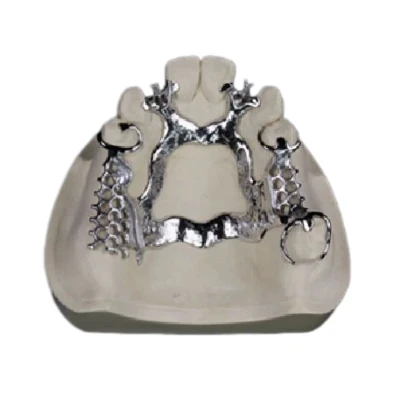
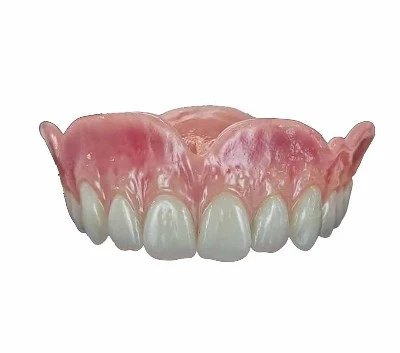
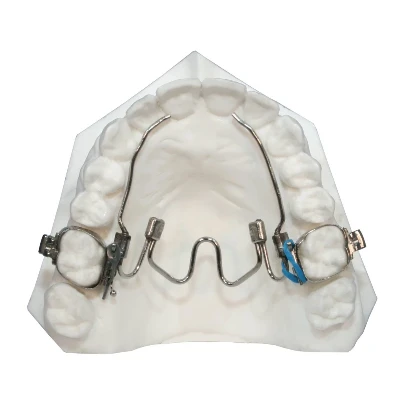
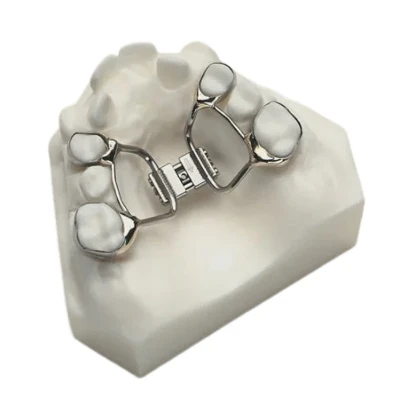


1. Hawley's retainer is composed of a palatal base, a double lip arch and a pair of molar single arm clasps. The base can cover all the hard palate or can be made into a horseshoe shape. The lip arch should be in slight contact with 4 incisors or 6 anterior teeth without any pressure. It has the function of preventing the lingual and palatal orientation of the teeth, the labial orientation of the anterior teeth, and the torsion and recurrence of the teeth. It is most commonly used in clinic.
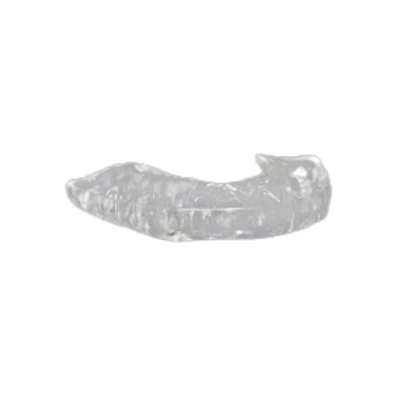
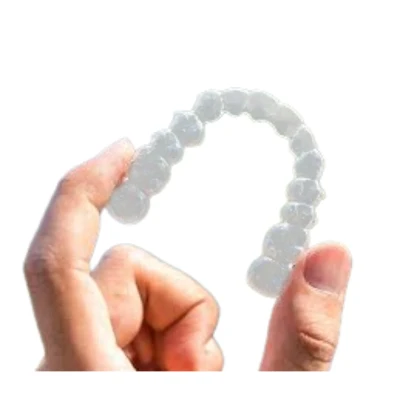
2. Transparent hard glue holder
3. The improved Hawley's retainer is composed of a base and a long lip arch with a vertical curve on both sides of the dental arch. The lip arch enters the base from the distal part of the last molars on both sides. Gently adjusting the vertical curve of the lip arch can increase the retention of the retainer. Since there is no steel wire passing through the occlusal abduction space, this retainer allows the teeth to be spontaneously adjusted slightly after correction, so as to form a more ideal occlusal relationship during retention. It is often used for keeping after extensive tooth movement.
4. The two plastic bases on the labial and lingual sides of the splint type retainer are connected to form splints by steel wires crossing the two abduction spaces between the canine and the lateral incisor and between the molar and the premolar. Steel wires with diameters of 0.9mm and 0.1mm are embedded in the plastic base to increase the strength. The upper edge of the lingual side of the splint was stopped above the lingual protuberance of the anterior teeth, and the other parts were stopped above the contour high point of the crown. The lower margin should cover the attached gingiva and extend to the buccal lingual groove of the first molar. The thickness of plywood is 1.5-2.0mm. Pay attention not to put the steel wire on the occlusal surface at the tooth extraction position, so as to prevent the closed tooth extraction space from spreading again. This kind of retainer can be used to keep the teeth after the width and length of the dental arch change and complex tooth movement. It is suitable for the adults with periodontal disease or tooth loosening after correction. It can be used as limited or permanent retention, mainly for the lower jaw.
5. The positioner is an integral structure made of soft rubber or elastic plastic, which can cover the crown of the whole dentition after being in place, and the upper and lower edges of the labial buccal side can extend to the attached gingiva covering the upper and lower dentition. It can also be used in a single jaw. The occlusal wax at the ideal occlusal position after correction shall be obtained to make the occlusal distance not exceed the rest and rest jaw space, but not less than 2mm. Transfer the wax to the frame, and then rearrange the teeth with incomplete correction, such as high, low, torsion, lip tongue orientation, etc. on the model, and finally make a positioner at the ideal alignment position. If the wax occlusal relationship is transferred with the facial arch, the positioner can be in a functional state after being put into the mouth without disturbing the temporomandibular joint. The positioner is named because it has a small amount of adjustment effect on the teeth. It is suitable for the correction and maintenance of slight individual tooth dislocation with incomplete or no gap. The advantages of the positioner are: clean; Not easy to damage; It can stimulate the elasticity of gingival tissue, and is beneficial to the recovery of normal tissue elasticity and hardness for those who have gingival hyperplasia during correction. Its disadvantages are:; The wearing time is limited, and it cannot be worn during eating, speaking and other oral functions. Therefore, this intermittent force against the natural muscle balance may make the teeth loose continuously. In addition, due to the limited wearing time, the recurrence of deep overlap cannot be prevented. The positioner cannot be used in patients with nasal airway obstruction.
6. Functional orthotics for retention functional orthotics are characterized by transmitting and transferring natural forces in the oral environment, inhibiting and stimulating the growth process. Therefore, for some malocclusions where the muscle strength is not balanced and the growth and development are still in progress after correction, functional orthotics is a desirable method to maintain.